

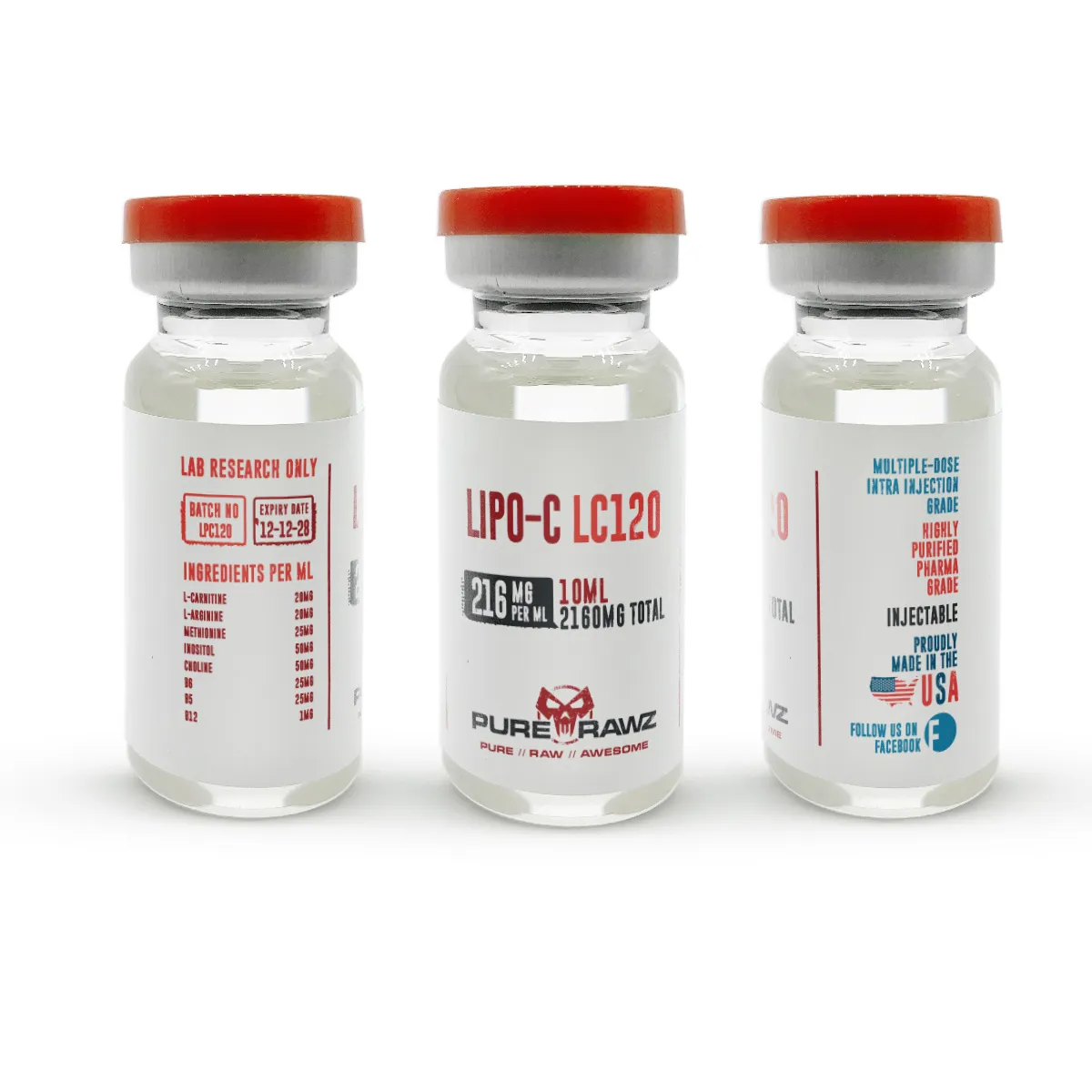
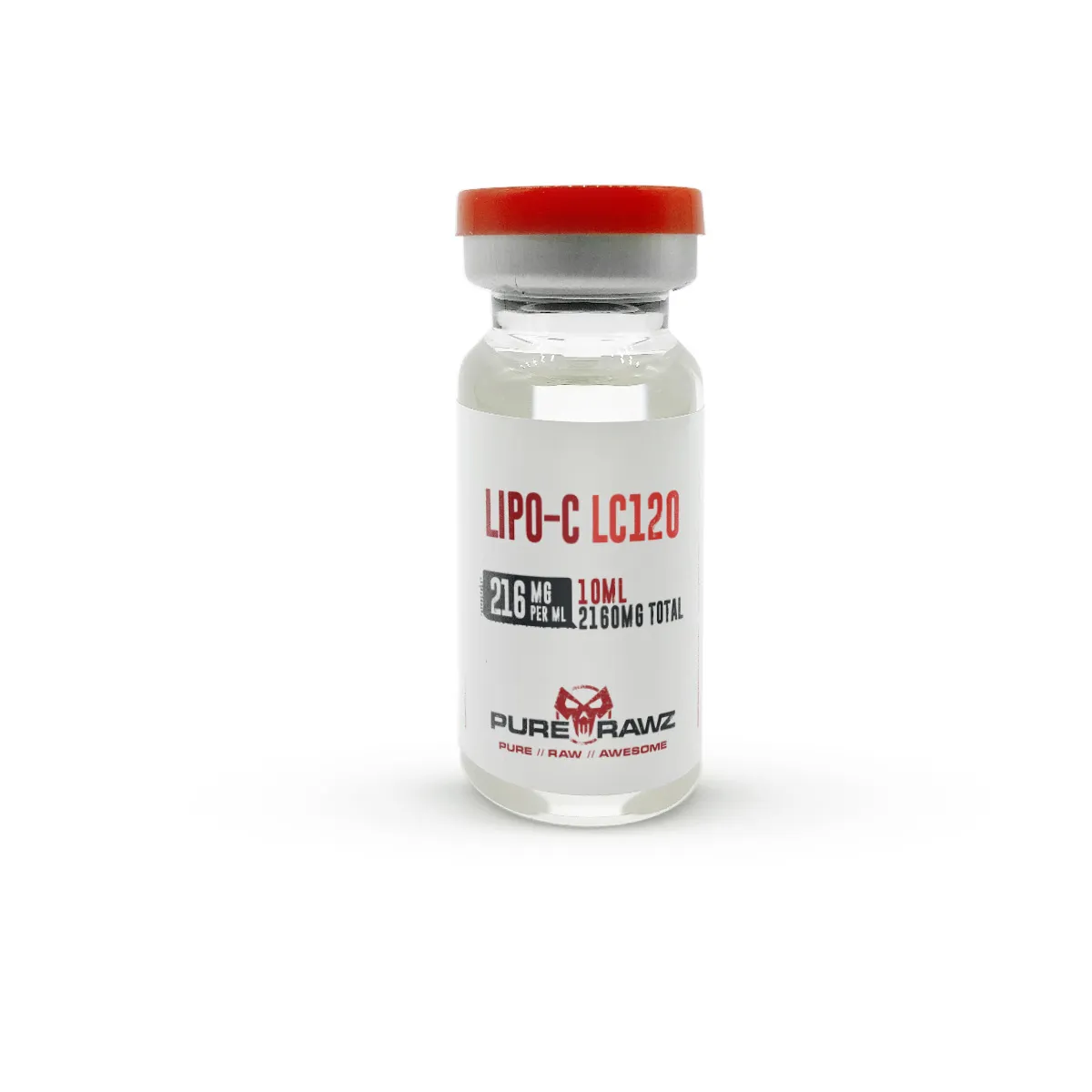


Lipo-C LC216 Research Blend
$70.00
Earn 70 points upon purchasing this product.
Note: We recommend using sterile Bacteriostatic Water for reconstitution.
✅ 99% Purity – Third-Party Tested
🚚 Free U.S. Shipping on Orders $100+
 Proudly Made in the USA
⚡ Fast & Reliable Shipping
🔒 Secure Checkout Guaranteed
All products are strictly intended for laboratory and research purposes only and are not approved for veterinary or human use.
Description
Overview
Lipo-C LC216 is an eight-component lipotropic and B-vitamin research blend formulated as an injectable solution at 216mg/mL total concentration. Components include L-carnitine (20mg/mL), L-arginine (20mg/mL), L-methionine (25mg/mL), inositol (50mg/mL), choline chloride (50mg/mL), pyridoxine HCl (B6, 25mg/mL), dexpanthenol (B5 provitamin, 25mg/mL), and cyanocobalamin (B12, 1mg/mL). No component is a peptide, and none has androgen receptor activity. The blend is classified as a lipotropic/B-vitamin amino acid complex for laboratory research. It is not FDA-approved for any use, is not a dietary supplement, and is supplied strictly for laboratory research.
Chemical Properties
| Property | Details |
| Product Format | Injectable research blend | 10mL vial at 216mg/mL total |
| Compound Class | Lipotropic Amino Acid/B-Vitamin Complex | NOT a peptide | NOT a SARM |
| Component 1 | L-Carnitine | CAS 541-15-1 | 20mg/mL |
| Component 2 | L-Arginine | CAS 74-79-3 | 20mg/mL | MW 174.20 |
| Component 3 | L-Methionine | CAS 63-68-3 | 25mg/mL |
| Component 4 | Inositol (Myo-inositol) | CAS 87-89-8 | 50mg/mL | MW 180.16 |
| Component 5 | Choline Chloride | CAS 67-48-1 | 50mg/mL |
| Component 6 | Pyridoxine HCl (Vitamin B6) | CAS 58-56-0 | 25mg/mL | MW 205.64 |
| Component 7 | Dexpanthenol (Vitamin B5 provitamin) | CAS 81-13-0 | 25mg/mL |
| Component 8 | Cyanocobalamin (Vitamin B12) | CAS 68-19-4 | 1mg/mL |
| Physical Form | Clear aqueous injectable solution |
| Purity | ≥98% per component (HPLC verified) |
| Storage | Refrigerate at 2–8°C; protect from light (B12 photosensitive) |
| Classification | Research Use Only (RUO) |
Mechanisms Investigated in Preclinical Research
L-Carnitine → CPT-1/OCTN2 Long-Chain Fatty Acid Mitochondrial Transport: L-Carnitine is observed in preclinical models to function as an obligate co-substrate for carnitine palmitoyltransferase-1 (CPT-1), the rate-limiting enzyme at the outer mitochondrial membrane that transfers long-chain acyl groups from acyl-CoA to carnitine to form acylcarnitine. This acylcarnitine then crosses the inner mitochondrial membrane via the carnitine-acylcarnitine translocase (CACT) for subsequent β-oxidation by CPT-2. Published data (Longo et al. 2016, Biochim Biophys Acta, PMID 26828774) indicate that OCTN2 (SLC22A5), the high-affinity Na⁺-dependent carnitine transporter, mediates cellular carnitine uptake and renal reabsorption, with defects in OCTN2 producing primary carnitine deficiency in animal models.
Choline and Methionine → Hepatic Methyl Carbon Metabolism and VLDL Export: Choline and methionine have been investigated in bovine neonatal hepatocyte models for their differential effects on methyl carbon metabolism. Published data (Chandler & White 2017, PLoS ONE, PMID 28192459) indicate that increasing choline chloride concentration increased expression of MTR and MTHFR (one-carbon pathway genes), increased VLDL export, and decreased ROS accumulation in hepatocyte media - suggesting choline may protect against hepatic lipid accumulation via VLDL secretion enhancement. Methionine's role as the universal methyl donor (via S-adenosylmethionine, SAM) is observed to regulate phosphatidylcholine synthesis through the PEMT pathway.
L-Arginine → Nitric Oxide Synthase (eNOS/iNOS) and Urea Cycle Substrates: L-Arginine is investigated in preclinical vascular and metabolic models as the obligate substrate for nitric oxide synthase (NOS) isoforms (eNOS, iNOS, nNOS), which catalyse the conversion of L-arginine to L-citrulline and nitric oxide (NO). In hepatocyte models, arginine also enters the urea cycle at the arginosuccinate lyase step, linking nitrogen metabolism to hepatic ammonia detoxification. This dual metabolic entry point makes arginine relevant to both vascular biology and hepatic metabolism research applications.
Inositol → Phosphoinositide Second Messenger System: Myo-inositol is the headgroup precursor for phosphatidylinositol (PI) and the downstream PI(4,5)P₂/IP3/DAG second messenger cascade. In cell model research, inositol supplementation or depletion is investigated for effects on insulin receptor signalling, intracellular calcium mobilisation, and PKC pathway activation. As a lipotropic agent, inositol has been studied for its role in hepatic lipid clearance in preclinical fatty liver models.
Research Applications
- Comparative lipotropic component activity: arginine/carnitine/choline/methionine contribution isolation in hepatic lipid metabolism cell model systems
- L-Arginine/NO pathway research in vascular endothelial cell models: eNOS substrate availability and NO production kinetics
- Phosphoinositide second messenger cascade investigation using inositol supplementation/depletion in insulin-responsive cell models
- One-carbon metabolism multi-cofactor studies: methionine (SAM donor) + B6 (transsulfuration cofactor) + B12 (methionine synthase cofactor) combined pathway research
- Mitochondrial energy metabolism: B5/CoA + L-carnitine/CPT-1 combined substrate availability studies in primary cell models
Risk & Handling
Handling Precautions
- Trained laboratory personnel only. PPE: nitrile gloves, laboratory coat, eye protection
- Protect from light during handling - cyanocobalamin (B12) is photosensitive; amber vials or light-opaque wrapping recommended
Exposure Risks
- Risk Tier: MODERATE - eight essential amino acid/vitamin components at supratherapeutic injectable concentrations. No acute toxicity at research concentrations. No human safety data has been established for this specific injectable co-formulated blend.
Storage
- Refrigerate at 2–8°C; protect from light. Do not freeze. Stable ≥24 months.
Quality Assurance
- Identity confirmation by nuclear magnetic resonance (NMR) spectroscopy and/or mass spectrometry (MS)
- Purity ≥98% by high-performance liquid chromatography (HPLC)
- Moisture content tested per USP standards where applicable
- Microbial testing for aerobic bacteria, yeast, and mould per USP <61> and <62>
- Heavy metals analysis (Pb, Cd, As, Hg) per USP <232>/<233> standards
- Full batch traceability with unique lot number documentation
- Certificate of Analysis (COA) available upon request for every batch
- Safety Data Sheet (SDS) available for all products
Why PureRawz
PureRawz supplies Lipo-C LC216 as a rigorously tested research-grade compound. Each batch undergoes independent third-party identity confirmation by NMR and HPLC, with purity ≥98% verified. Where supplier specifications for complex blends or novel fusion compounds vary across vendors, PureRawz applies batch-specific molecular identity confirmation to verify component presence and ratio accuracy. A Certificate of Analysis (COA) documenting identity, purity, and lot traceability is available for every batch. A Safety Data Sheet (SDS) is provided for all products. Researchers requiring absolute certainty on batch composition for publication-quality study design should request COA documentation before initiating protocols.
References
- Longo N, Frigeni M, Pasquali M. Carnitine transport and fatty acid oxidation. Biochimica et Biophysica Acta. 2016;1863(10):2422–2435. https://pubmed.ncbi.nlm.nih.gov/26828774/ [PMID 26828774]
- Chandler TL, White HM. Choline and methionine differentially alter methyl carbon metabolism in bovine neonatal hepatocytes. PLoS ONE. 2017;12(2):e0171080. https://pubmed.ncbi.nlm.nih.gov/28192459/ [PMID 28192459]
Disclaimer: Preclinical and published scientific research indicates potential mechanisms of action for this compound in laboratory and animal models. Any references to published studies are for informational purposes only and do not constitute a claim that this product produces the same effects in humans. The safety and efficacy of this compound in humans have not been established.
ATTENTION: All products sold by PureRawz are intended for laboratory and research purposes only and are not approved for human consumption, veterinary use, or any other use. Products are not evaluated by the FDA and are not intended to diagnose, treat, cure, or prevent any disease. Customers assume full responsibility for the lawful use of these products in accordance with all applicable federal, state, and local regulations.

About Team PureRawz
Team PureRawz is dedicated to providing accurate, science-based information on research chemicals, including Peptides, Nootropics, and SARMs. Our team of expert writers, researchers, and editors is committed to delivering reliable, up-to-date content you can trust.
Our mission is to build an educated and informed community spanning researchers, laboratories, and general readers empowering them to make confident, well-informed decisions when selecting the right research chemical.
Related products
-

BPC-157 ARG
Price range: $89.19 through $535.18 Select options This product has multiple variants. The options may be chosen on the product page -

Sermorelin + GHRP-6 Blend
$97.81 Select options This product has multiple variants. The options may be chosen on the product page -

Spartan 3 (Mod GRF 1-29 + GHRP-6)
$97.81 Select options This product has multiple variants. The options may be chosen on the product page - Sale!

FOXO4-DRI (Proxofim)
Original price was: $327.39.$271.69Current price is: $271.69. Select options This product has multiple variants. The options may be chosen on the product page