

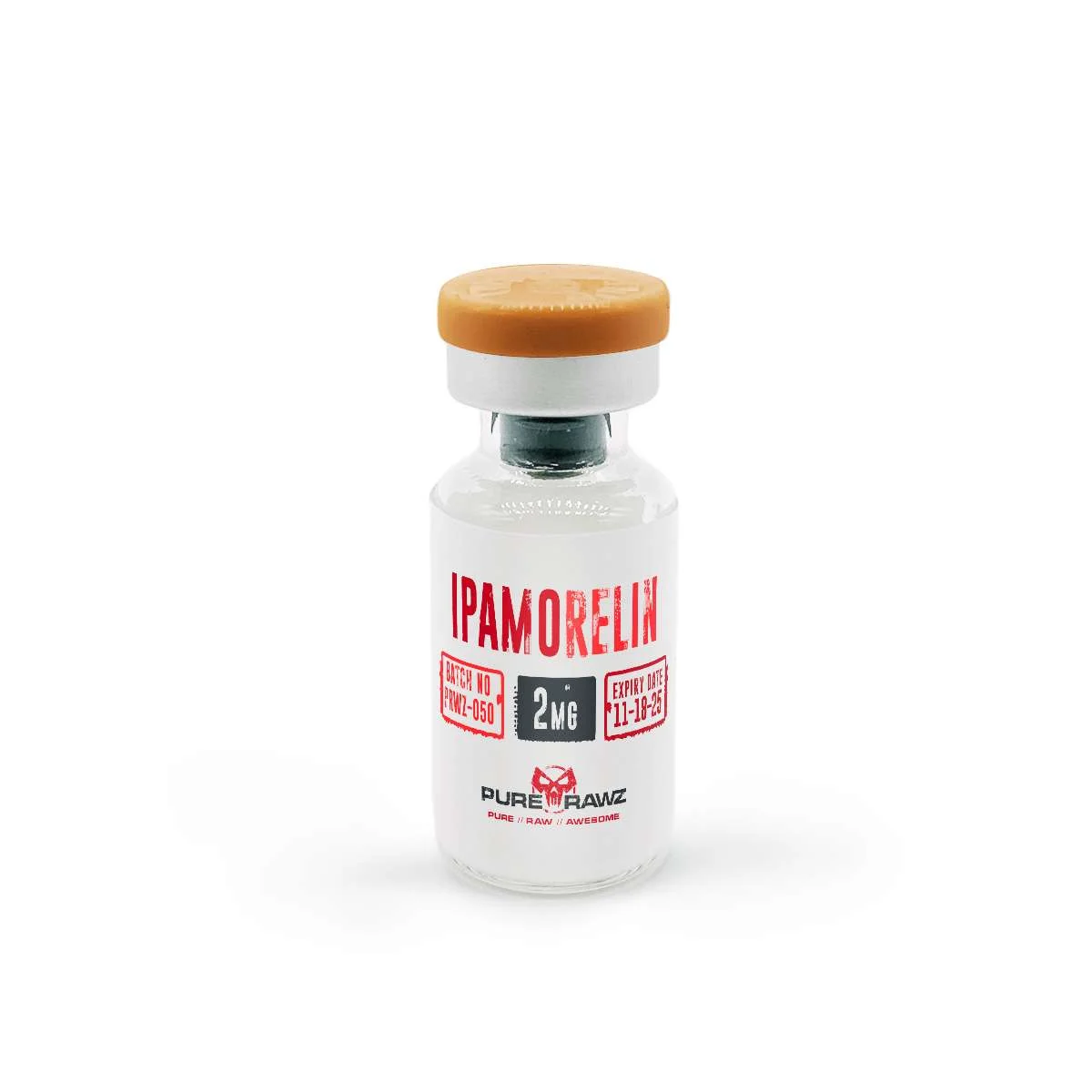
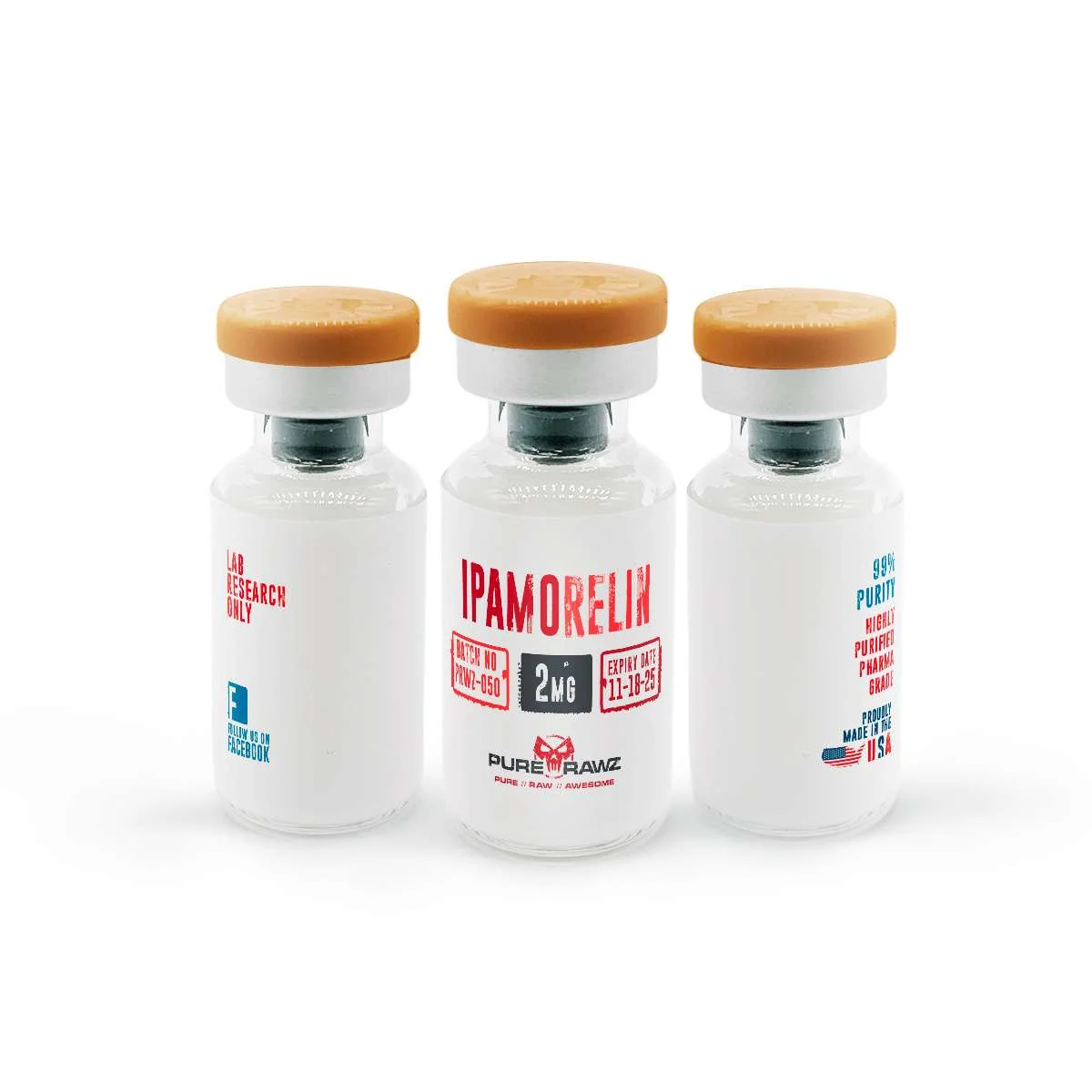
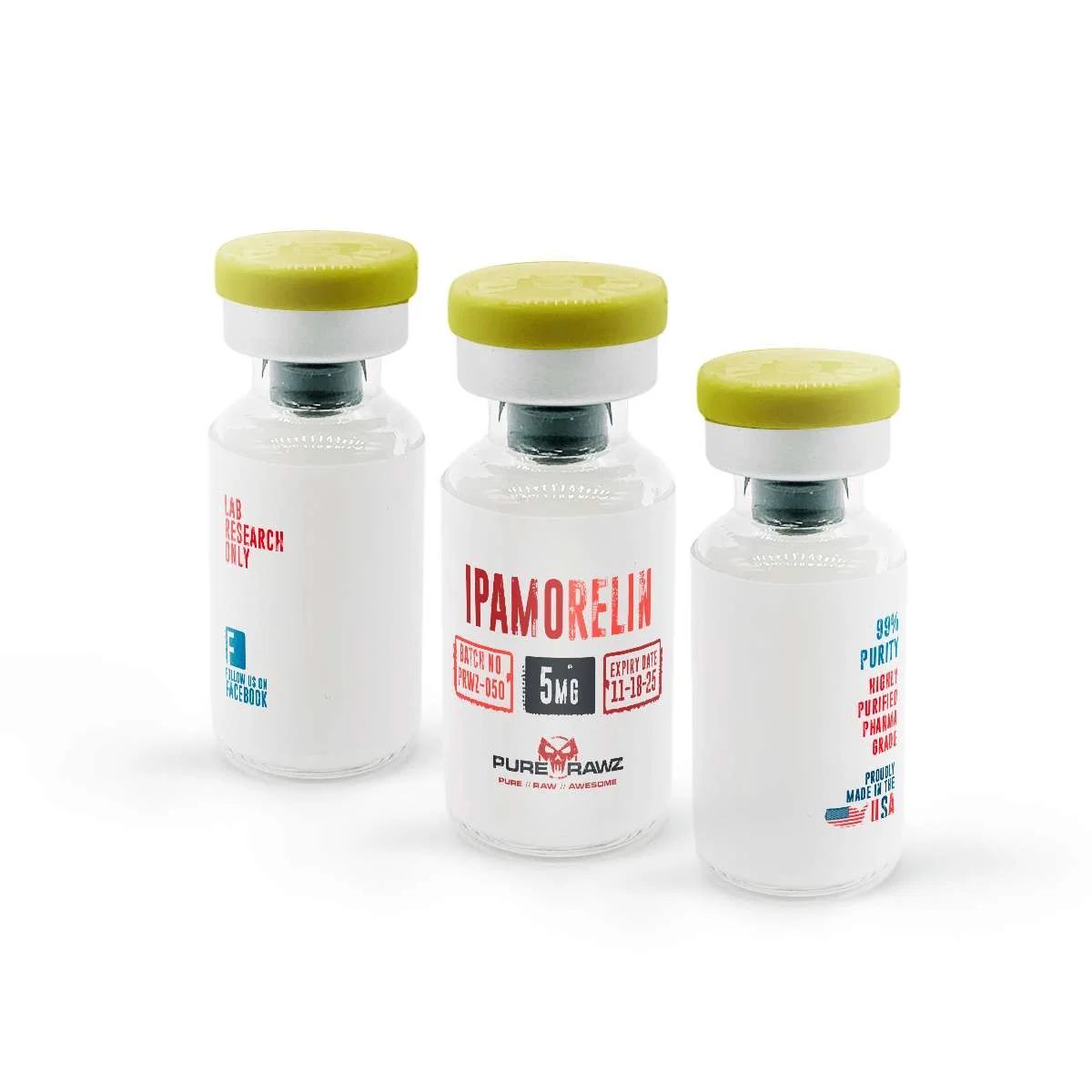

Ipamorelin
Price range: $29.23 through $111.58
Earn 29 - 112 points upon purchasing this product.
✅ 99% Purity – Third-Party Tested
🚚 Free U.S. Shipping on Orders $100+
 Proudly Made in the USA
⚡ Fast & Reliable Shipping
🔒 Secure Checkout Guaranteed
All products are strictly intended for laboratory and research purposes only and are not approved for veterinary or human use.
Description
Overview of GHRP-2
GHRP-2 (Growth Hormone Releasing Peptide-2) is a synthetic hexapeptide belonging to the growth hormone secretagogue (GHS) class of investigational compounds.
Structurally, it was developed as part of ongoing preclinical efforts to understand endogenous growth hormone (GH) regulation pathways. GHRP-2’s preclinical research explores its interaction with the ghrelin receptor system and downstream neuroendocrine signaling.
Researchers study GHRP-2 peptide to learn its potential role in mechanisms governing somatotropic axis activity.
Disclaimer:
The products sold by Purerawz are intended solely for laboratory and research purposes. They are not FDA-approved for human or animal consumption, and Purerawz does not sell these compounds for use in humans or animals. All compounds are strictly for use by qualified researchers in controlled, non-clinical laboratory environments in compliance with applicable regulations.
Chemical Properties
| Pubchem CID | 6918245 |
| Molecular Weight | 818.0 g/mol |
| Synonyms | Pralmorelin, KP-102, GPA-748, Hexapeptide-2, Melanostatine-5, His(1)-lys(6)-GHRP, GH-Releasing hexapeptide 2 |
| 2D Structure |  |
| Sequence | D-Ala-D-2Nal-Ala-Trp-D-Phe-Lys |
| Molecular Formula | C45H55N9O6 |
| CAS | 158861-67-7 |
| IUPAC | (2S)-6-amino-2-[[(2R)-2-[[(2S)-2-[[(2S)-2-[[(2R)-2-[[(2R)-2-aminopropanoyl]amino]-3-naphthalen-2-ylpropanoyl]amino]propanoyl]amino]-3-(1H-indol-3-yl)propanoyl]amino]-3-phenylpropanoyl]amino]hexanamide |
| Physical Form | White to off-white lyophilized powder |
| Stability | Stable for 24 months lyophilized; use reconstituted solution within 30 days at 4°C |
Proposed Working Mechanism of GHRP-2
Preclinical studies indicate that GHRP-2 works by binding to the growth hormone secretagogue receptor type 1a (GHSR-1a), the endogenous receptor for the hormone ghrelin.
Research suggests that upon binding to GHSR-1a, GHRP-2 initiates intracellular signaling cascades primarily through Gq/11-coupled pathways.
Studies indicate that GHSR-1a activation results in increased intracellular calcium mobilization. It also increases downstream activation of growth hormone release from somatotroph cells of the anterior pituitary in preclinical investigational models.
There is evidence from preclinical research that further indicates that GHRP-2 may function synergistically alongside endogenous growth hormone-releasing hormone (GHRH).
Research models have also documented GHRP-2's potential involvement in ghrelin-associated orexigenic and metabolic signaling pathways in preclinical models.
Possible Research Applications of GHRP-2
-
Neuroendocrine Signaling Research
Preclinical findings suggest GHRP-2 may serve as a reliable biochemical tool for investigating GHSR-1a receptor pharmacology in research models, with data pointing to consistent and measurable receptor activation profiles.
-
Somatotropic Axis Investigation
In vivo preclinical data indicate a potential role for GHRP-2 in studies examining the regulation of pituitary GH secretion, with research models demonstrating dose-dependent pituitary responsiveness.
-
Metabolic and Energy Homeostasis Research
Preliminary preclinical data suggest GHRP-2 may influence metabolic signaling pathways in research models, with findings pointing to interactions with ghrelin-associated circuits involved in energy balance regulation.
-
IGF-1 Pathway Studies
Preclinical research models have been used to investigate the downstream effects of GHSR-1a activation on hepatic IGF-1 expression, with evidence suggesting GHRP-2 may serve as a useful probe in studies examining GH/IGF-1 axis dynamics.
Risk and Handling
GHRP-2 is a research-grade peptide and must be handled exclusively by qualified researchers operating within controlled, non-clinical laboratory environments. As with all peptide-based research compounds, standard laboratory safety protocols are required.
Storage: GHRP-2 should be stored at −20°C in a dry, dark environment when not in active use.
Lyophilized (freeze-dried) preparations are considered stable under these conditions; reconstituted solutions should be aliquoted to minimize repeated freeze-thaw cycles and stored at 4°C for short-term use.
Handling Precautions: Researchers are advised to wear appropriate personal protective equipment (PPE), including nitrile gloves, a laboratory coat, and eye protection, when handling this compound.
Avoid inhalation of lyophilized powder during preparation. Work in a biosafety cabinet or well-ventilated area when reconstituting.
This compound is for research use only. It should be handled by qualified researchers in a controlled laboratory environment. Researchers are advised to consult the Safety Data Sheet (SDS) before handling.
Why Choose Purerawz to Buy GHRP-2?
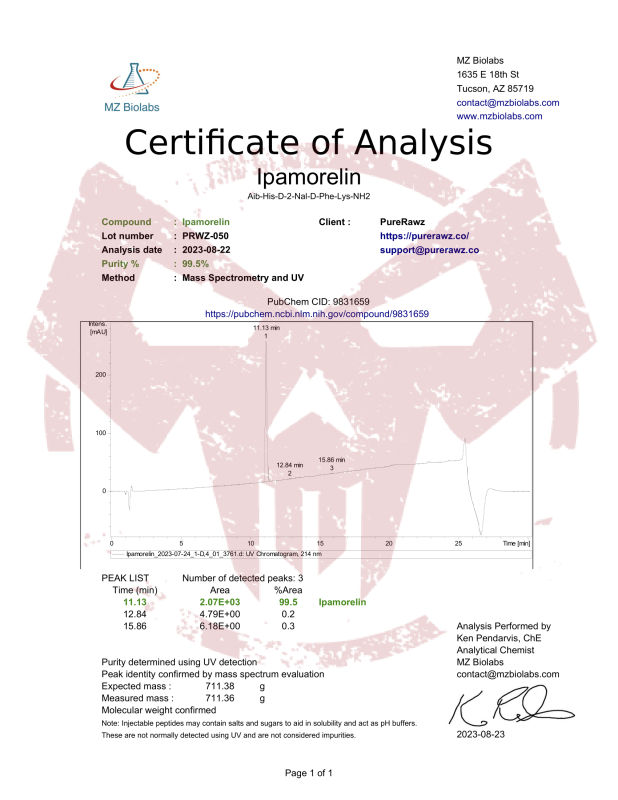
Purerawz is committed to supplying investigational compounds that meet the rigorous standards expected by research professionals. Every batch of GHRP-2 undergoes independent third-party testing, with a Certificate of Analysis available per lot before purchase.
Purerawz maintains a 99%+ purity standard, confirmed through independent batch testing protocols. Researchers can access batch-specific COA documentation to validate compound integrity before use, supporting data reproducibility and research accuracy.
FAQs
How does GHRP-2 work at the molecular/receptor level?
Preclinical research indicates that GHRP-2 acts as an agonist at the growth hormone secretagogue receptor 1a (GHSR-1a), the same G-protein-coupled receptor that binds the endogenous hormone ghrelin. Receptor activation initiates Gq/11-mediated intracellular signaling, leading to elevated intracellular calcium concentrations and stimulation of growth hormone secretion from anterior pituitary somatotrophs.
What preclinical research has been conducted on GHRP-2?
Researchers study its role in GH secretion, its receptor binding kinetics at GHSR-1a, its potential influence on IGF-1 axis activity. They also investigate its involvement in metabolic and orexigenic signaling research.
How should GHRP-2 be stored and handled in a laboratory setting?
GHRP-2 in lyophilized form should be stored at −20°C, protected from light and moisture, until reconstitution is required. Once reconstituted, aliquoted solutions should be maintained at 4°C and used within 30 days to preserve compound integrity.
Is GHRP-2 approved for human or clinical use?
No. GHRP-2 is not approved by the FDA or any equivalent regulatory authority for human or animal use. It is classified as an investigational research compound intended solely for use by qualified researchers in controlled, non-clinical laboratory environments.
Disclaimer
This information is for educational purposes only and not medical advice. Products are for research use only. Research must follow IRB or IACUC guidelines. Verify information independently before purchasing. By ordering, you agree to our Terms and Conditions. If you are not 100% satisfied with the product you received, please contact us at support@purerawz.co
Reference Links
Note: Cited for receptor pharmacology context only. This reference documents human clinical research and does not apply to the research-grade formulation supplied here.
- Bowers, C. Y., & Granda-Ayala, R. (2001). Growth hormone/insulin-like growth factor-1 response to acute and chronic growth hormone-releasing peptide-2, growth hormone-releasing hormone 1-44NH2 and in combination in older men and women with decreased growth hormone secretion. Endocrine, 14(1), 79–86. https://doi.org/10.1385/ENDO:14:1:079
- Gondo, R. G., Aguiar-Oliveira, M. H., Hayashida, C. Y., & Toledo, S. P. (2001). Growth hormone-releasing peptide-2 stimulates GH secretion in GH-deficient patients with mutated GH-releasing hormone receptor. Journal of Clinical Endocrinology & Metabolism, 86(7), 3279–3283. https://doi.org/10.1210/jcem.86.7.7694
- Horikawa, R., Tachibana, T., Katsumata, N., & Tanaka, T. (1996). Diagnostic studies with intravenous and intranasal growth hormone-releasing peptide-2 in children of short stature. Journal of Clinical Endocrinology & Metabolism, 80(10), 2987–2992. https://doi.org/10.1210/jcem.80.10.7559885
- Mano-Otagiri, A., Ohata, H., Iwasaki-Sekino, A., Nemoto, T., & Shibasaki, T. (2009). Growth hormone-releasing peptide-2 stimulates secretion and synthesis of adrenocorticotropic hormone in mouse pituitary. Journal of Endocrinology, 203(3), 297–305. https://doi.org/10.1677/JOE-09-0286
- Sheriff, S., Joshi, R., Friend, L. A., James, J. H., & Balasubramaniam, A. (2009). Ghrelin receptor agonist, GHRP-2, attenuates burn injury-induced MuRF-1 and MAFbx expression and muscle proteolysis in rats. Peptides, 30(10), 1909–1913. https://doi.org/10.1016/j.peptides.2009.06.029
- Veldhuis, J. D., Bowers, C. Y., & Shah, N. (2009). Preservation of GHRH and GHRP-2 efficacy in young men with experimentally induced hypogonadism. Journal of Clinical Endocrinology & Metabolism, 94(8), 3087–3094. https://doi.org/10.1210/jc.2009-0358

About Team PureRawz
Team PureRawz is dedicated to providing accurate, science-based information on research chemicals, including Peptides, Nootropics, and SARMs. Our team of expert writers, researchers, and editors is committed to delivering reliable, up-to-date content you can trust.
Our mission is to build an educated and informed community spanning researchers, laboratories, and general readers empowering them to make confident, well-informed decisions when selecting the right research chemical.
Related products
-

Thymosin Alpha 1
Price range: $79.45 through $424.10 Select options This product has multiple variants. The options may be chosen on the product page -

Sermorelin + GHRP-6 Blend
$97.81 Select options This product has multiple variants. The options may be chosen on the product page -

IGF-1 LR3
Price range: $49.49 through $386.03 Select options This product has multiple variants. The options may be chosen on the product page -

Adipotide
Price range: $50.62 through $119.07 Select options This product has multiple variants. The options may be chosen on the product page