

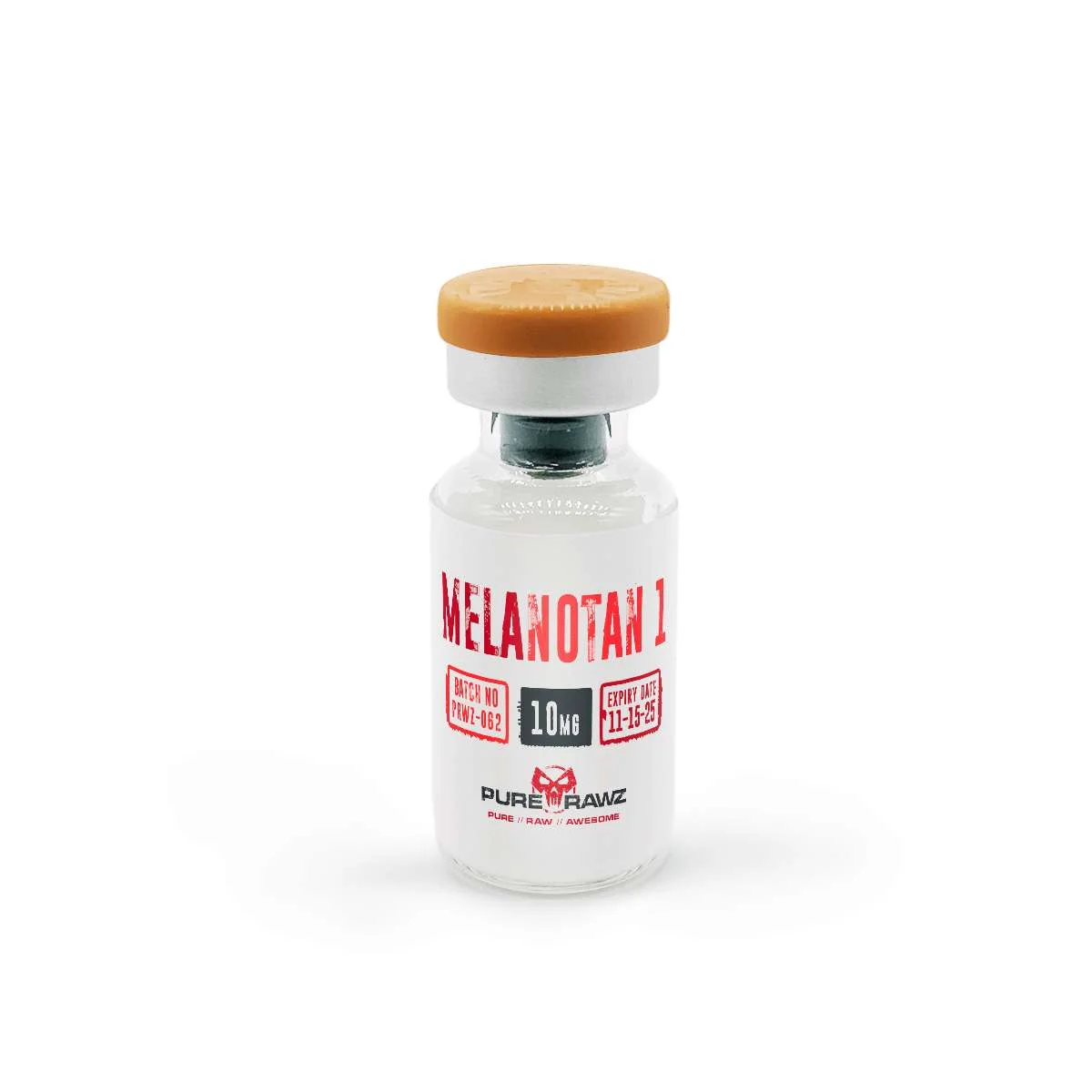
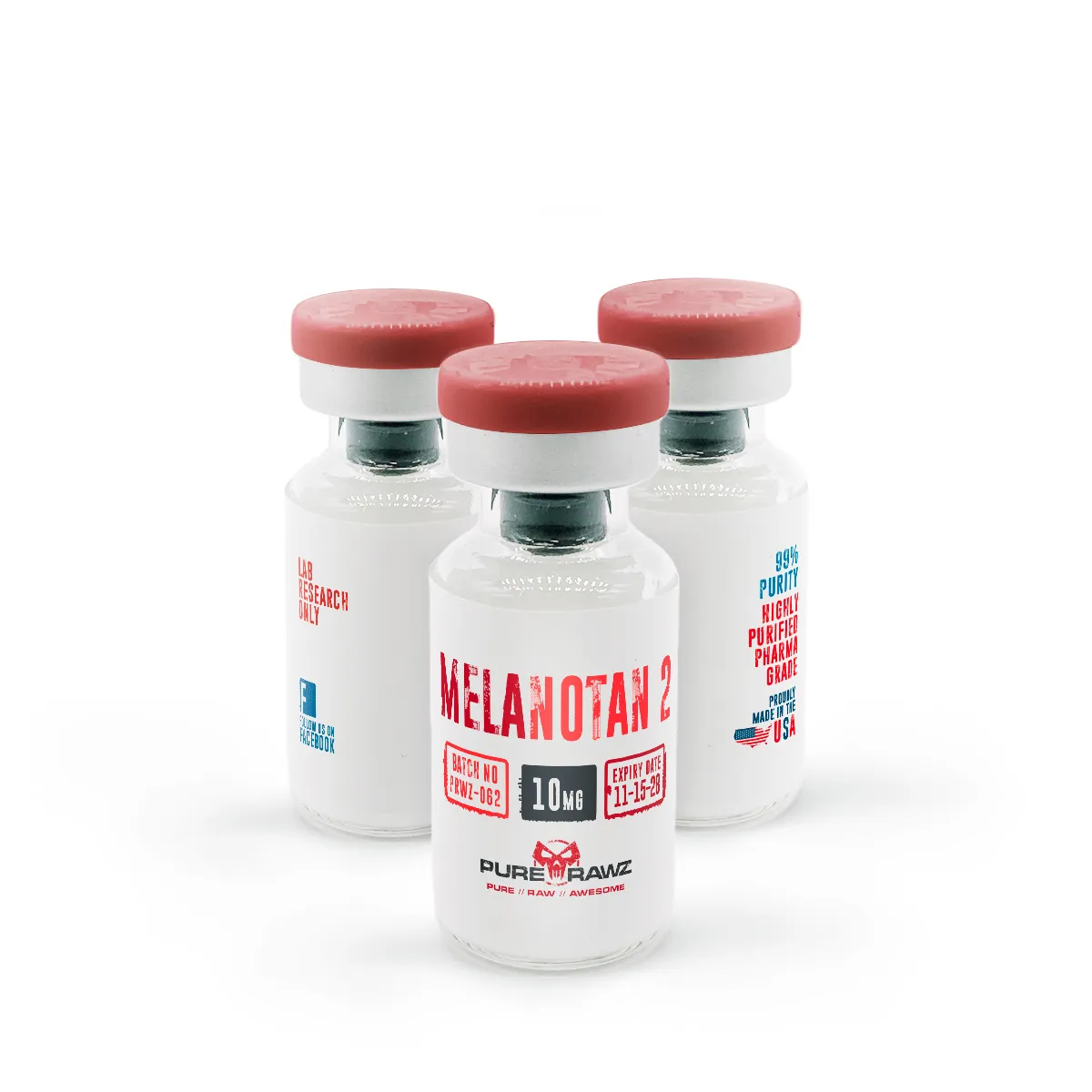

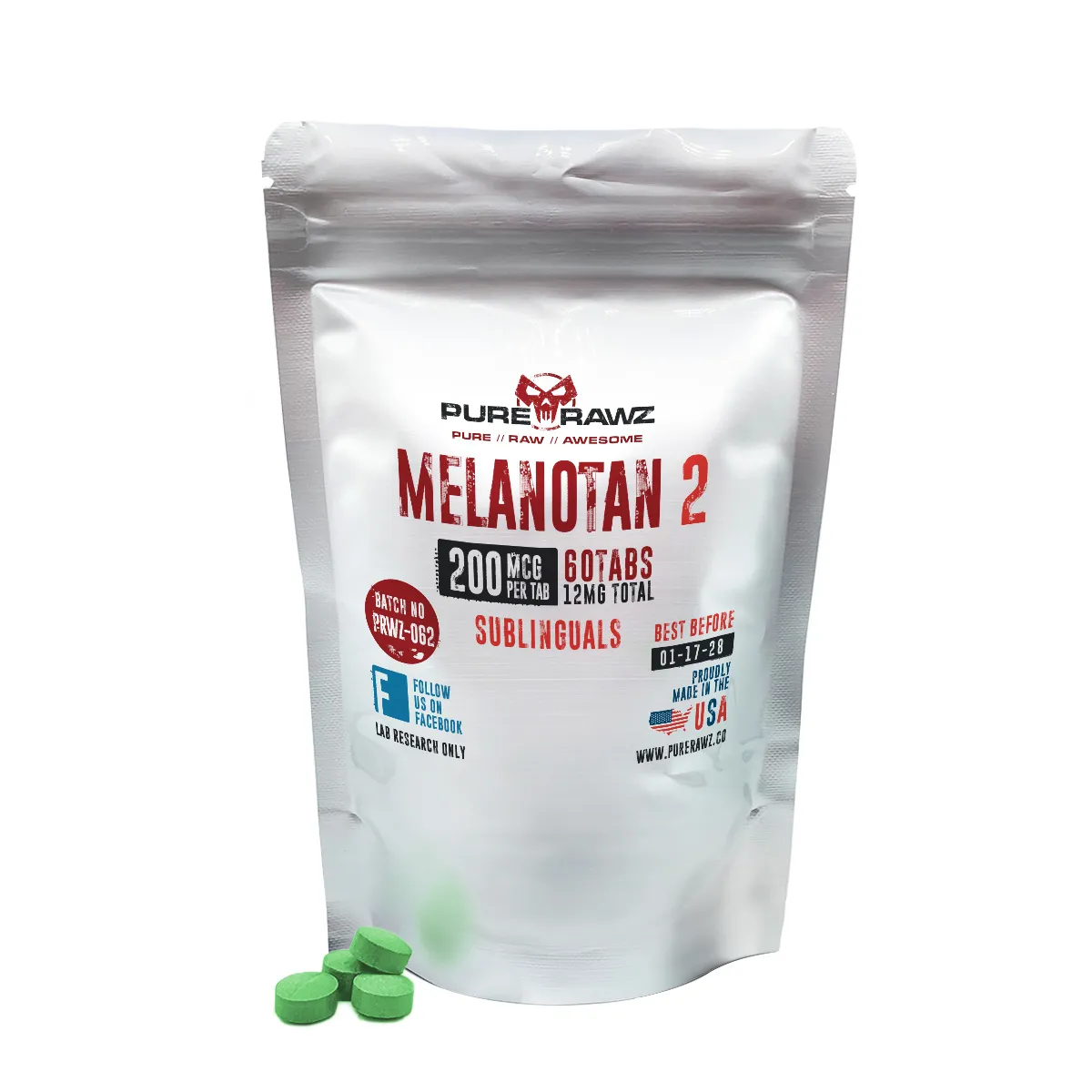


Melanotan
Price range: $27.08 through $81.26
Earn 27 - 81 points upon purchasing this product.
Note: We recommend using sterile Bacteriostatic Water for reconstitution.
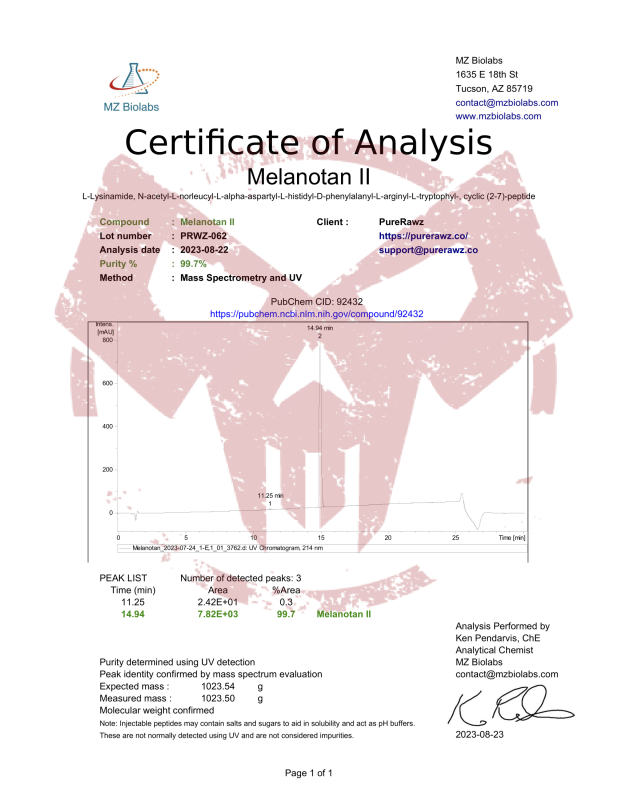
✅ 99% Purity – Third-Party Tested
🚚 Free U.S. Shipping on Orders $100+
 Proudly Made in the USA
⚡ Fast & Reliable Shipping
🔒 Secure Checkout Guaranteed
All products are strictly intended for laboratory and research purposes only and are not approved for veterinary or human use.
Description
Melanotan Overview
Melanotan is a synthetic peptide modeled after the naturally occurring hormone alpha-melanocyte-stimulating hormone (α-MSH). This peptide was developed to support scientific investigations involving melanocortin signaling pathways and melanin production processes.
In controlled laboratory settings, researchers examine melanotan for its potential interaction with cellular mechanisms related to pigmentation and melanocyte activity. Because melanin plays a central role in pigmentation biology, melanotan has become a subject of interest in studies exploring pigment regulation and melanocortin receptor signaling.
Chemical and Molecular Properties
| PubChem CID | 92432 |
| Molecular Formula | Melanotan I - C78H111N21O9 Melanotan II - C50H69N15O9 |
| Molecular Weight | 1024.2 g/mol |
| Synonyms | MT-II Ac-Nle-cyclo[Asp-His-D-Phe-Arg-Trp-Lys]-NH2 |
| IUPAC | (3S,6S,9R,12S,15S,23S)-15-[(N-Acetyl-L-norleucyl)amino]-9-benzyl-6-{3-[(diaminomethylene)amino]propyl}-12-(1H-imidazol-5-ylmethyl)-3-(1H-indol-3-ylmethyl)-2,5,8,11,14,17-hexaoxo-1,4,7,10,13,18-hexaaza cyclotricosane-23-carboxamide |
| CAS | 121062-08-6 |
| Labeling | Research Use Only (RUO), not for human or animal consumption |
| Chemical Structure Depiction | 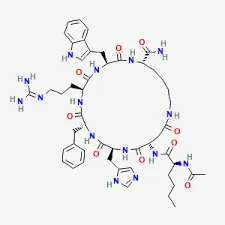 |
| Purity | 99% Purity |
| Classification | Research Use Only (RUO) |
| Storage Temperature | Store at -20°C (-4°F) for long-term stability |
| Solubility | Water, DMSO (research-grade solvents) |
| Safety | Handle with gloves, a lab coat, eye protection; use a fume hood if dust/aerosol is possible |
Mechanisms of Action
Within laboratory models, melanotan peptides are studied for their interaction with melanocortin receptors, particularly:
- MC1R (Melanocortin-1 Receptor)
- MC3R (Melanocortin-3 Receptor)
- MC4R (Melanocortin-4 Receptor)
Activation of these receptors in experimental systems has been associated with intracellular signaling pathways involved in melanin synthesis and melanocyte activity. Research models suggest that receptor activation may influence cellular processes related to pigmentation.
Melanotan II has also been investigated for broader melanocortin signaling interactions, including pathways associated with energy regulation and metabolic signaling in preclinical and experimental environments.
Potential Research Applications
Based on available scientific literature, melanotan peptides are studied in several areas of laboratory research:
Pigmentation and Melanin Studies
Researchers investigate how melanotan interacts with melanocortin receptors to influence melanin production in cellular and experimental models.
Ultraviolet (UV) Radiation Research
Experimental studies explore melanotan-related melanocortin signaling to better understand potential cellular responses to ultraviolet exposure.
Metabolic Signaling Research
Preclinical studies involving melanotan II examine melanocortin receptor pathways that may influence energy balance and metabolic signaling in laboratory models.
Disclaimer
This information is for educational purposes only and not medical advice. Products are for research use only. Research must follow IRB or IACUC guidelines. Verify information independently before purchasing. By ordering, you agree to our Terms and Conditions. If you are not 100% satisfied with the product you received, please contact us at support@purerawz.co
ATTENTION: All our products are for LABORATORY AND RESEARCH PURPOSES ONLY, not for veterinary or human use
References:
- Skin pigmentation and pharmacokinetics of melanotan-I in humans. (1997b). PubMed. https://doi.org/10.1002/(sici)1099-081x(199704)18:3
- Dorr, R. T., Ertl, G., Levine, N., Brooks, C., Bangert, J. L., Powell, M. B., Humphrey, S., & Alberts, D. S. (2004). Effects of a superpotent melanotropic peptide in combination with solar UV radiation on tanning of the skin in human volunteers. Archives of Dermatology, 140(7), 827-835. https://doi.org/10.1001/archderm.140.7.827

About Team PureRawz
Team PureRawz is dedicated to providing accurate, science-based information on research chemicals, including Peptides, Nootropics, and SARMs. Our team of expert writers, researchers, and editors is committed to delivering reliable, up-to-date content you can trust.
Our mission is to build an educated and informed community spanning researchers, laboratories, and general readers empowering them to make confident, well-informed decisions when selecting the right research chemical.
Related products
-

Sermorelin + GHRP-2 Blend
$97.81 Select options This product has multiple variants. The options may be chosen on the product page -

Spartan 3 (Mod GRF 1-29 + GHRP-6)
$97.81 Select options This product has multiple variants. The options may be chosen on the product page -

GHRP-6
Price range: $37.28 through $122.22 Select options This product has multiple variants. The options may be chosen on the product page -

KP-102
Price range: $35.50 through $127.32 Select options This product has multiple variants. The options may be chosen on the product page