

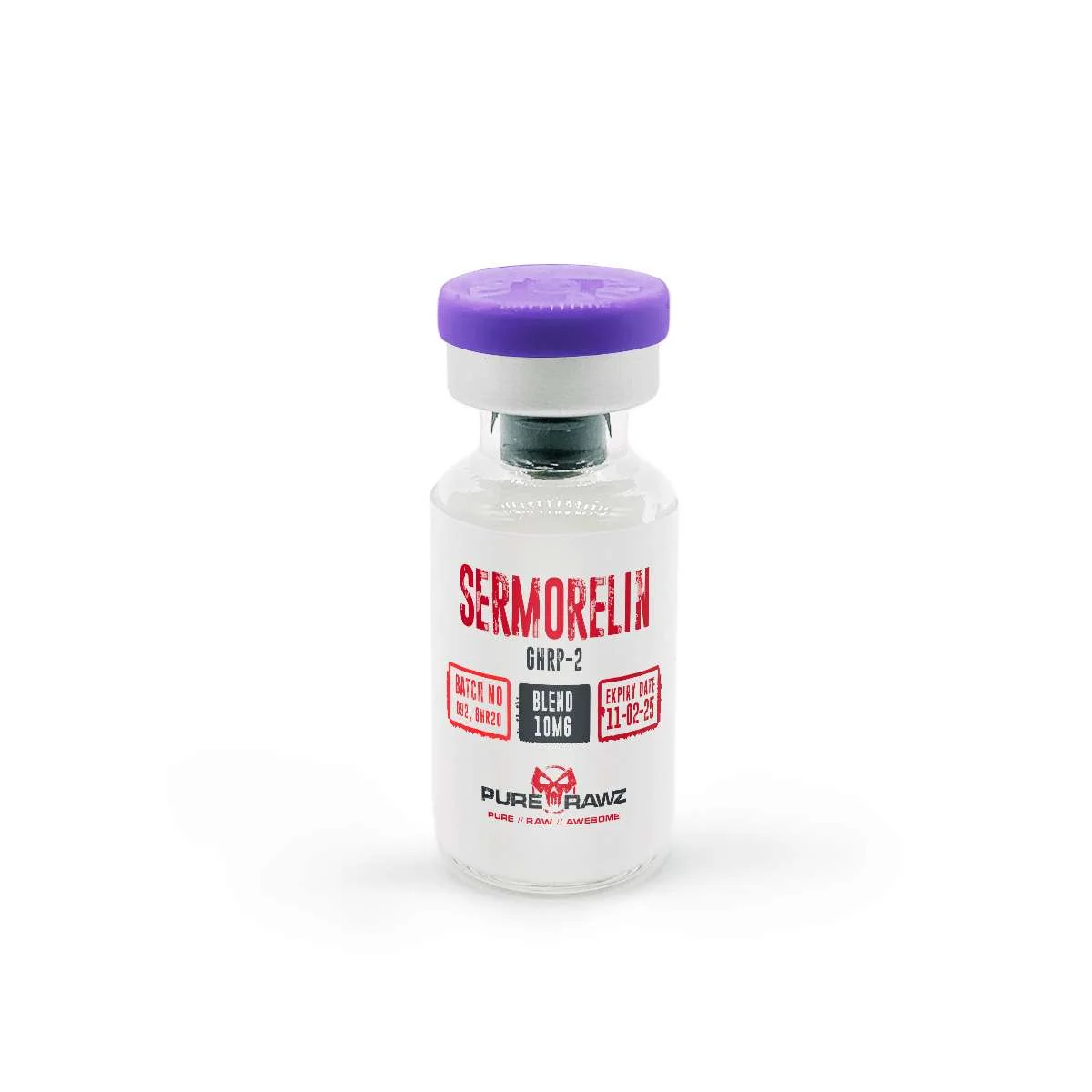
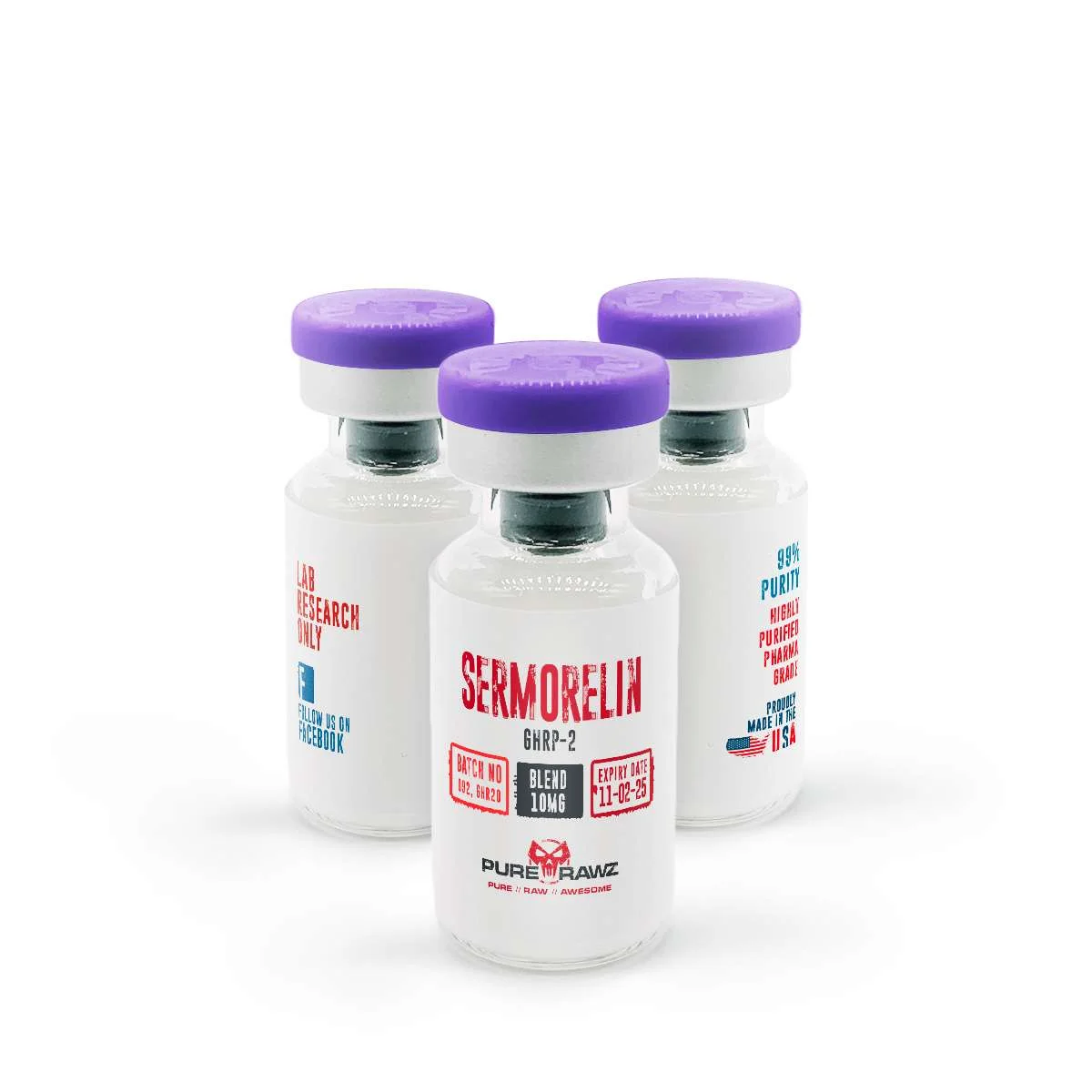

Sermorelin + GHRP-2 Blend
$97.81
Earn 98 points upon purchasing this product.
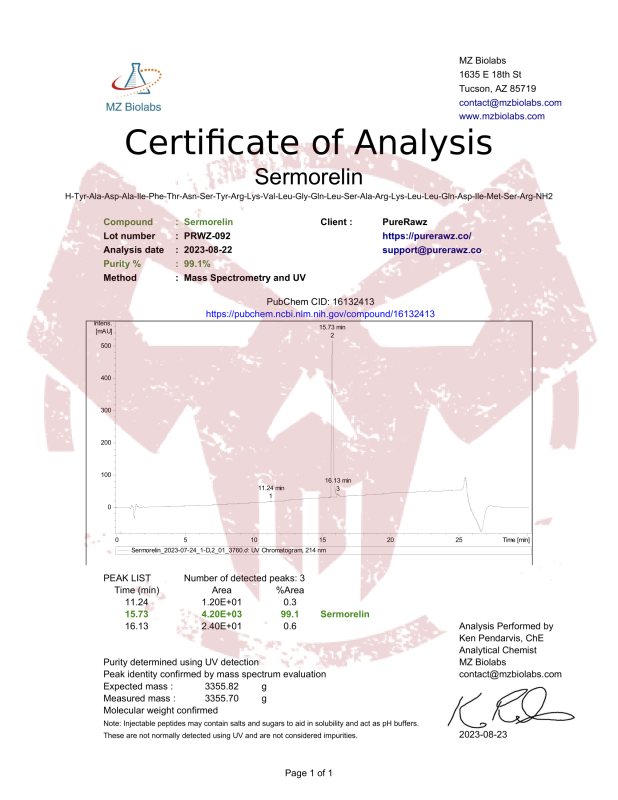
✅ 99% Purity – Third-Party Tested
🚚 Free U.S. Shipping on Orders $100+
 Proudly Made in the USA
⚡ Fast & Reliable Shipping
🔒 Secure Checkout Guaranteed
All products are strictly intended for laboratory and research purposes only and are not approved for veterinary or human use.
Description
Sermorelin + GHRP-2 Overview
Sermorelin + GHRP-2 is a synthetic peptide combination investigated in endocrine and molecular research models for its potential interactions with growth hormone signaling pathways. This blend consists of two distinct investigational peptides.
Sermorelin is a 29-amino-acid fragment derived from the N-terminal region of growth hormone-releasing hormone (GHRH 1-29), commonly used in laboratory studies to examine GHRH receptor-mediated signaling. GHRP-2 is a synthetic hexapeptide belonging to the growth hormone secretagogue (GHS) class, studied for its interaction with GHS-R1a receptors in experimental models.
In research contexts, this combination is used to study coordinated receptor activation, intracellular endocrine signaling cascades, and pituitary hormone regulation within in vitro and preclinical experimental models.
Chemical and Molecular Properties
| Property | Sermorelin | GHRP-2 |
| Chemical Class | GHRH Analog Peptide | Growth Hormone Secretagogue Peptide |
| Molecular Formula | C149H246N44O42S | C45H55N9O6 |
| Molecular Weight | 3357.88 g/mol | 817.99 g/mol |
| CAS Number | 86168-78-7 | 158861-67-7 |
| Peptide Length | 29 amino acids | 6 amino acids |
| Synonyms | Sermorelin, GHRH (1-29) | Pralmorelin, KP-102 |
Working Mechanism
Sermorelin Mechanism
Sermorelin functions as a ligand for the growth hormone-releasing hormone receptor (GHRH-R), a G-protein-coupled receptor (GPCR) located in pituitary-derived cellular models frequently used in endocrine research. The binding of Sermorelin to GHRH-R can initiate Gs protein-mediated signaling, which is associated with the activation of adenylyl cyclase and the subsequent elevation of cyclic adenosine monophosphate (cAMP) levels.
In in vitro cellular studies, increased cAMP concentrations may activate protein kinase A (PKA) pathways, leading to phosphorylation events that regulate transcriptional and signaling processes within endocrine cell models.
GHRP-2 Mechanism
GHRP-2 is investigated as an agonist of the growth hormone secretagogue receptor type 1a (GHS-R1a). This receptor is another G-protein-coupled receptor that is also known to interact with endogenous ghrelin signaling systems.
In experimental biochemical models, activation of GHS-R1a by peptide ligands can influence phospholipase C (PLC) signaling pathways, leading to inositol triphosphate (IP3) production, intracellular calcium mobilization, and downstream regulatory signaling events.
Combined Signaling Context
In research environments, the simultaneous presence of ligands targeting both GHRH-R and GHS-R1a allows investigators to explore:
- Parallel receptor signaling pathways
- Potential receptor cross-talk
- Integrated endocrine signaling networks
- Intracellular messenger regulation within pituitary-derived cell systems
These investigations focus on molecular communication between receptor pathways rather than organism-level outcomes.
Research Applications of the Product in Laboratory Settings
Receptor Binding and Activation Studies
In in vitro receptor assays, the peptides may be used to study ligand binding characteristics and receptor activation patterns involving GHRH receptors and GHS-R1a receptors. These studies help characterize receptor affinity, activation kinetics, and intracellular signaling responses.
Intracellular Signaling Research
Researchers employ peptide ligands in cell culture systems to evaluate downstream signaling events such as:
- cAMP-dependent signaling pathways
- Protein kinase activation cascades
- Calcium signaling and second messenger dynamics
These experiments contribute to the broader understanding of peptide-mediated GPCR signaling mechanisms.
Endocrine Pathway Modeling
In preclinical and experimental endocrine models, investigators may examine how multiple peptide ligands influence interconnected signaling pathways within pituitary-derived or engineered cellular systems.
Peptide Pharmacology and Structure-Function Studies
The peptides may also be utilized in structure-activity relationship (SAR) investigations examining how synthetic peptide fragments interact with GPCR receptor domains, providing insight into ligand recognition and receptor activation mechanisms.
These experimental approaches support fundamental research on peptide-based signaling molecules and endocrine regulatory networks within controlled laboratory environments.
Why Choose Purerawz for Sermorelin + GHRP-2?
Buy Sermorelin + GHRP-2 for laboratory research use from our online shop. At Purerawz, we provide high-quality reference materials. Each research compound comes with a Certificate of Analysis for verification of purity and concentration.
Disclaimer
This information is for educational purposes only and not medical advice. Products are for research use only. Research must follow IRB or IACUC guidelines. Verify information independently before purchasing. By ordering, you agree to our Terms and Conditions. If you are not 100% satisfied with the product you received, please contact us at support@purerawz.co
Reference Links
- Sinha, D. K., Balasubramanian, A., Tatem, A. J., Rivera-Mirabal, J., Yu, J., Kovac, J., Pastuszak, A. W., & Lipshultz, L. I. (2020). Beyond the androgen receptor: the role of growth hormone secretagogues in the modern management of body composition in hypogonadal males. Translational Andrology and Urology, 9(S2), S149-S159. https://doi.org/10.21037/tau.2019.11.30
- Sigalos, J. T., Pastuszak, A. W., Allison, A., Ohlander, S. J., Herati, A., Lindgren, M. C., & Lipshultz, L. I. (2017). Growth hormone secretagogue treatment in hypogonadal men raises serum Insulin-Like growth Factor-1 levels. American Journal of Men S Health, 11(6), 1752-1757. https://doi.org/10.1177/1557988317718662

About Team PureRawz
Team PureRawz is dedicated to providing accurate, science-based information on research chemicals, including Peptides, Nootropics, and SARMs. Our team of expert writers, researchers, and editors is committed to delivering reliable, up-to-date content you can trust.
Our mission is to build an educated and informed community spanning researchers, laboratories, and general readers empowering them to make confident, well-informed decisions when selecting the right research chemical.
Related products
-

Viking 1 (GHRP-2 + GHRP-6 + Sermorelin)
$140.33 Select options This product has multiple variants. The options may be chosen on the product page -

IGF-1 LR3
Price range: $49.49 through $386.03 Select options This product has multiple variants. The options may be chosen on the product page -

Myostatin
$147.55 Select options This product has multiple variants. The options may be chosen on the product page -
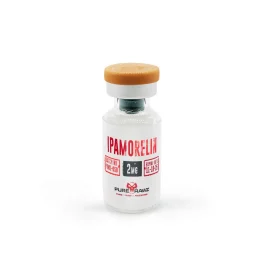
Ipamorelin
Price range: $29.23 through $111.58 Select options This product has multiple variants. The options may be chosen on the product page