

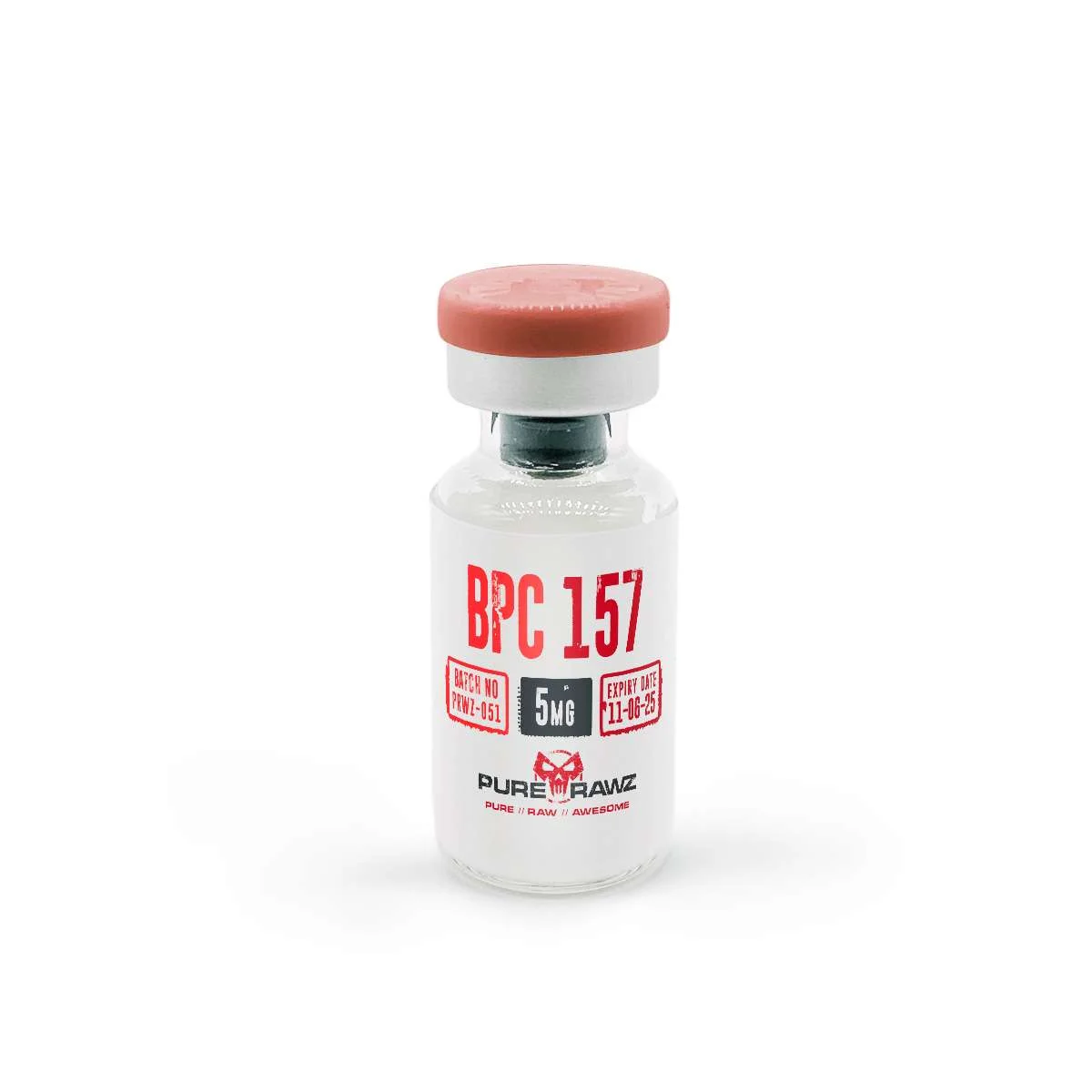

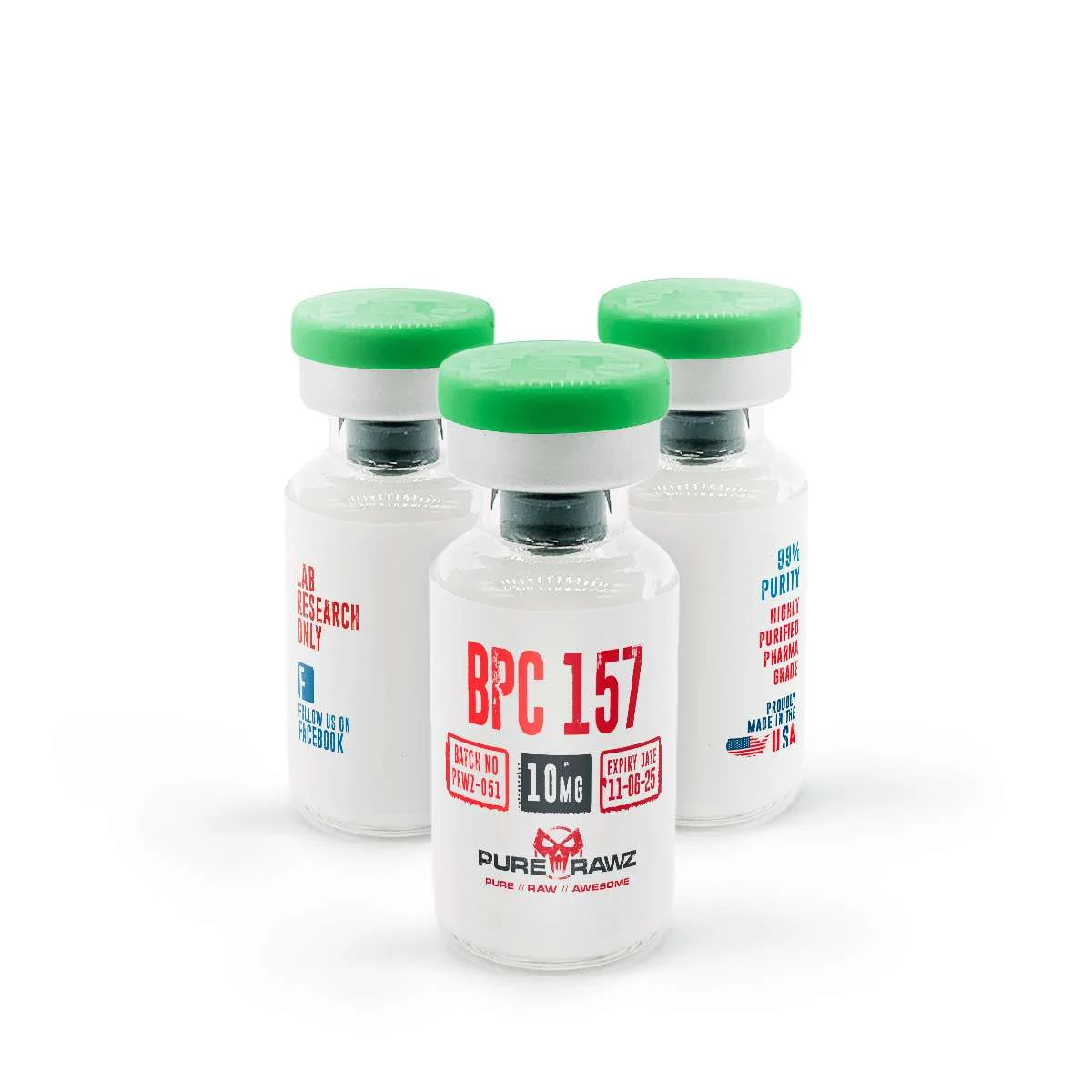

BPC-157
Price range: $71.00 through $429.11
Earn 71 - 429 points upon purchasing this product.
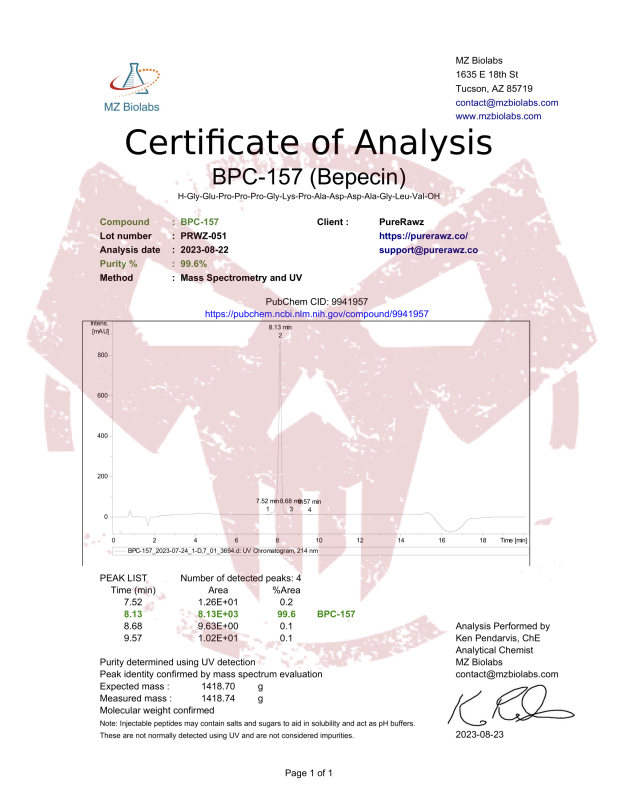
✅ 99% Purity – Third-Party Tested
🚚 Free U.S. Shipping on Orders $100+
 Proudly Made in the USA
⚡ Fast & Reliable Shipping
🔒 Secure Checkout Guaranteed
All products are strictly intended for laboratory and research purposes only and are not approved for veterinary or human use.
Description
BPC-157
BPC-157 (Body Protection Compound-157) is a synthetic pentadecapeptide composed of 15 amino acids. It is derived from a partial sequence of Body Protection Compounds originally isolated from gastric juice.
BPC-157 is studied in preclinical research settings for molecular interactions spanning connective tissue matrix integrity and gastrointestinal mucosal parameters.
RESEARCH USE ONLY: This product is intended for laboratory research purposes only. We do not sell this product for human or animal consumption
Chemical and Molecular Properties
| PubChem CID | 9941957 |
| 2D Structure |  |
| Synonyms | 137525-51-0 Bpc 157 Bpc-157 Bepecin |
| Molecular Formula | C62H98N16O22 |
| Molecular Weight | 1419.5 g/mol |
| IUPAC | glycyl-L-alpha-glutamyl-L-prolyl-L-prolyl-L-prolyl-glycyl-L-lysyl-L-prolyl-L-alanyl-L-alpha-aspartyl-L-alpha-aspartyl-L-alanyl-glycyl-L-leucyl-L-valine |
| CAS | 137525-51-0 |
| Purity | ≥99% (HPLC verified, per batch COA) |
| Physical Form | White lyophilized powder |
| Solubility | Soluble in sterile water or acetic acid |
| Shelf Life | Up to 24 months under recommended storage |
| Classification | Research Use Only (RUO) |
Proposed Working Mechanism of BPC-157
Investigational findings indicate that BPC-157 may interact with the nitric oxide (NO) signaling pathway. In preclinical research models, this interaction has been associated with changes in vascular tone and endothelial function parameters.
Research data from preclinical settings suggests BPC-157's potential to upregulate growth hormone (GH) receptor expression. This mechanism has been proposed to underlie observations related to tissue matrix integrity noted across multiple research studies.
Studies conducted in controlled laboratory environments have observed that BPC-157 may influence VEGF expression. This interaction is of particular investigational interest in the context of neovascularization and connective tissue matrix research.
Note: BPC-157 is an investigational compound. It is not approved for clinical use; all mechanistic data on BPC-157 are derived exclusively from preclinical and in vitro studies. Findings have not been validated through FDA-approved human clinical trials.
Possible Research Applications of BPC-157
BPC-157 is a synthetic peptide that has gained attention in scientific research for its potential research applications, which include:
- Connective Tissue & Musculoskeletal Research
Preclinical investigations in laboratory models have recorded measurable shifts in tendon, ligament, and bone matrix integrity metrics. The collagen fibril organization and fibroblast proliferation markers were documented as key parameters.
- Gastrointestinal Tract Research
Investigational studies have yielded quantifiable data on mucosal barrier integrity parameters, epithelial junction markers, and gastric tissue matrix measurements in research settings.
- Neurological & CNS Research
Investigational findings have documented modulation of dopaminergic and serotonergic pathway activity.
- Angiogenic Research
Preclinical studies have recorded notable shifts in capillary formation indices and endothelial growth factor expression levels within research frameworks.
- Cytoprotective Research
In vitro studies have documented quantifiable changes in oxidative stress biomarkers and mitochondrial membrane potential parameters across cellular integrity research models.
Research Stability & Handling Profile
BPC-157 exhibits notable stability characteristics that distinguish it within the peptide research space.
Storage Recommendations for Research Use:
- Store lyophilized BPC-157 at -20°C in a sealed, desiccated environment
- Once reconstituted for laboratory use, maintain at 2–8°C and utilize within established research protocol timeframes
- Avoid repeated freeze-thaw cycles to preserve peptide integrity for research purposes
- Keep away from UV light exposure during storage
- For reconstitution, use sterile bacteriostatic water. Do not use saline.
Risk & Handling
- BPC-157 is intended for research purposes only and should be handled by trained professionals using appropriate laboratory procedures and safety protocols.
- Due to limited clinical data, the full safety profile, potential adverse effects, dosage standards, and long-term implications remain under investigation.
- Researchers should avoid direct exposure through inhalation, ingestion, or skin contact and use suitable protective equipment during handling.
- Materials should be stored in a cool, dry, and controlled environment away from heat, moisture, and direct sunlight to maintain stability and integrity.
- All preparation and handling equipment should be sterile and properly maintained to reduce the risk of contamination or compromised results.
- BPC-157 should not be marketed or represented as an approved treatment, cure, or preventive solution for any medical condition without regulatory authorization.
- Proper documentation, labeling, and disposal procedures should be followed in accordance with institutional, local, and national regulations.
- Individuals with underlying medical conditions, those taking medications, or anyone considering experimental applications should seek guidance from qualified healthcare or research professionals.
PureRawz Quality & Purity Standards
PureRawz is committed to supplying the USA research community with the highest-integrity investigational compounds available. Every batch of BPC-157 is confirmed by independent
third-party HPLC analysis, with a Certificate of Analysis (COA) available per lot.
Note:
BPC-157 is an investigational compound and has not been established as safe or effective for any therapeutic use.
FAQs
What is BPC-157 commonly researched for?
BPC-157 is being studied in preclinical models for its potential role in angiogenic activity, cellular migration, and tissue-response pathways.
Is BPC-157 FDA-approved?
No. BPC-157 is not approved by the FDA for human or veterinary use. It is classified as an investigational research compound and is supplied strictly for laboratory research purposes only
How is BPC-157 typically stored?
Store lyophilized BPC-157 at −20°C in a sealed, desiccated environment protected from light, heat, and moisture. Once reconstituted, maintain at 2-8°C. Avoid repeated freeze-thaw cycles.
Are there known side effects of BPC-157?
Since BPC-157 has not completed formal Phase I–III clinical trials, data on long-term safety, immunogenicity, and adverse effects are unknown.
Can BPC-157 be used as a medical treatment?
No. BPC-157 is not approved for human use and cannot be used as a medical treatment. It is supplied strictly for controlled laboratory research purposes only.
Disclaimer
This information is for educational purposes only and not medical advice. Products are for research use only. Research must follow IRB or IACUC guidelines. Verify information independently before purchasing. By ordering, you agree to our Terms and Conditions. If you are not 100% satisfied with the product you received, please contact us at support@purerawz.co
ATTENTION: All our products are for LABORATORY AND RESEARCH PURPOSES ONLY, not for veterinary or human use.
Reference Links
Gwyer, D., Wragg, N. M., & Wilson, S. L. (2019). Gastric pentadecapeptide body protection compound BPC 157 and its role in accelerating musculoskeletal soft tissue healing. Cell and Tissue Research, 377(2), 153–159. https://doi.org/10.1007/s00441-019-03016-8
Chang, C.-H., Tsai, W.-C., Hsu, Y.-H., & Su Pang, J.-H. (2014). Pentadecapeptide BPC 157 Enhances the Growth Hormone Receptor Expression in Tendon Fibroblasts. Molecules, 19(11), 19066–19077. https://doi.org/10.3390/molecules191119066

About Team PureRawz
Team PureRawz is dedicated to providing accurate, science-based information on research chemicals, including Peptides, Nootropics, and SARMs. Our team of expert writers, researchers, and editors is committed to delivering reliable, up-to-date content you can trust.
Our mission is to build an educated and informed community spanning researchers, laboratories, and general readers empowering them to make confident, well-informed decisions when selecting the right research chemical.
Related products
-

PNC-27
$163.40 Select options This product has multiple variants. The options may be chosen on the product page -

Thymalin
Price range: $76.92 through $321.92 Select options This product has multiple variants. The options may be chosen on the product page -

GHRP-6
Price range: $37.28 through $122.22 Select options This product has multiple variants. The options may be chosen on the product page -

Triptorelin (GnRH)
Price range: $45.90 through $67.21 Select options This product has multiple variants. The options may be chosen on the product page