

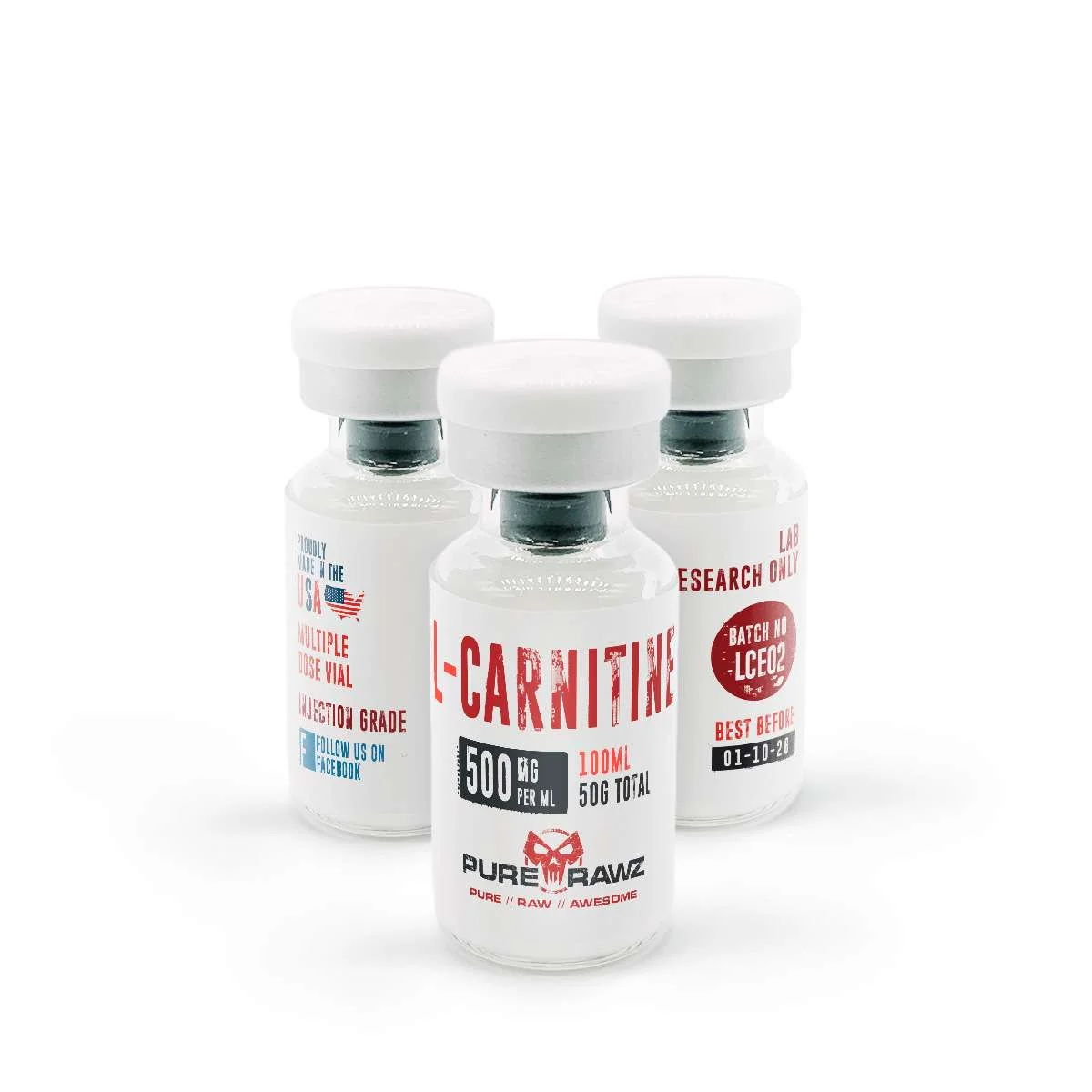
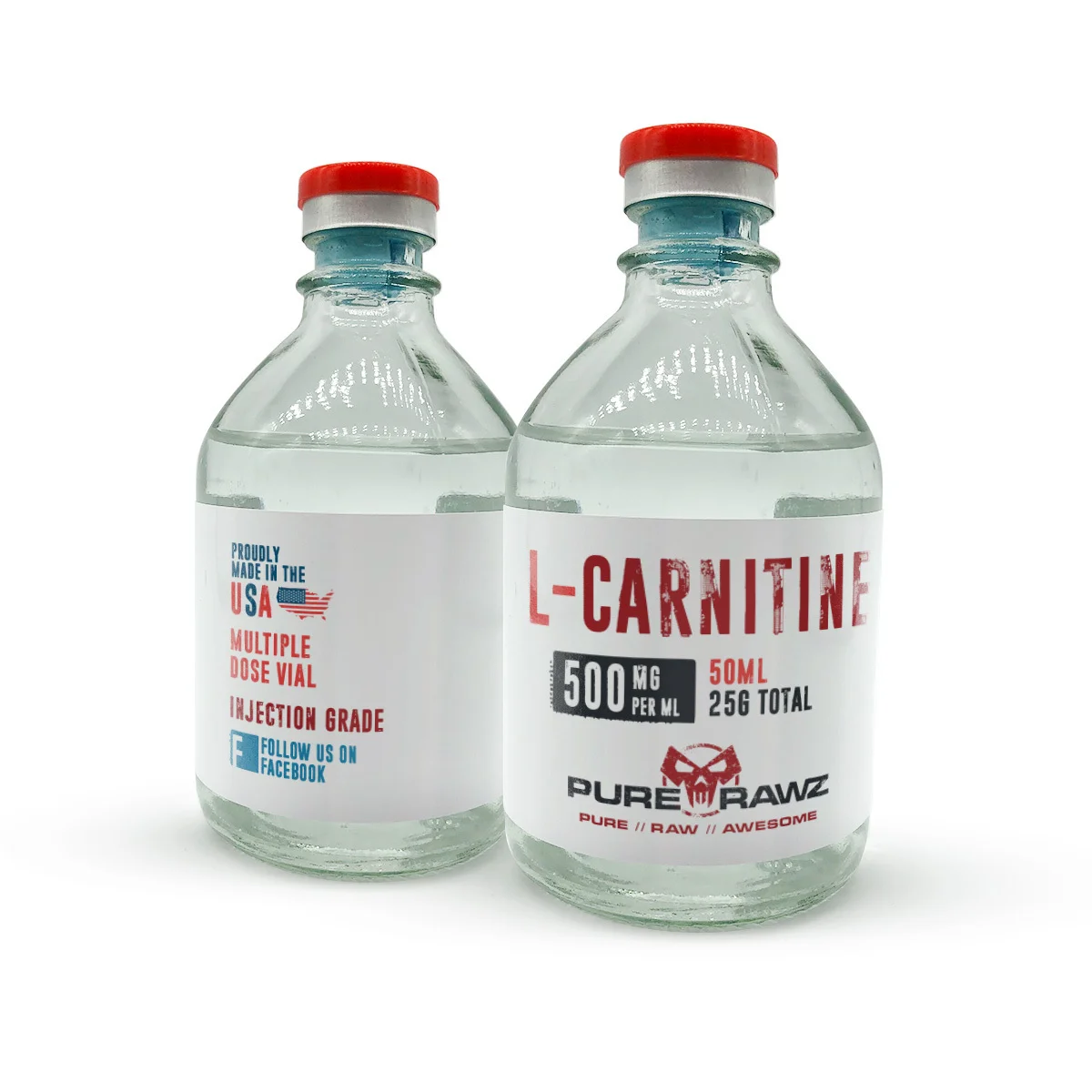
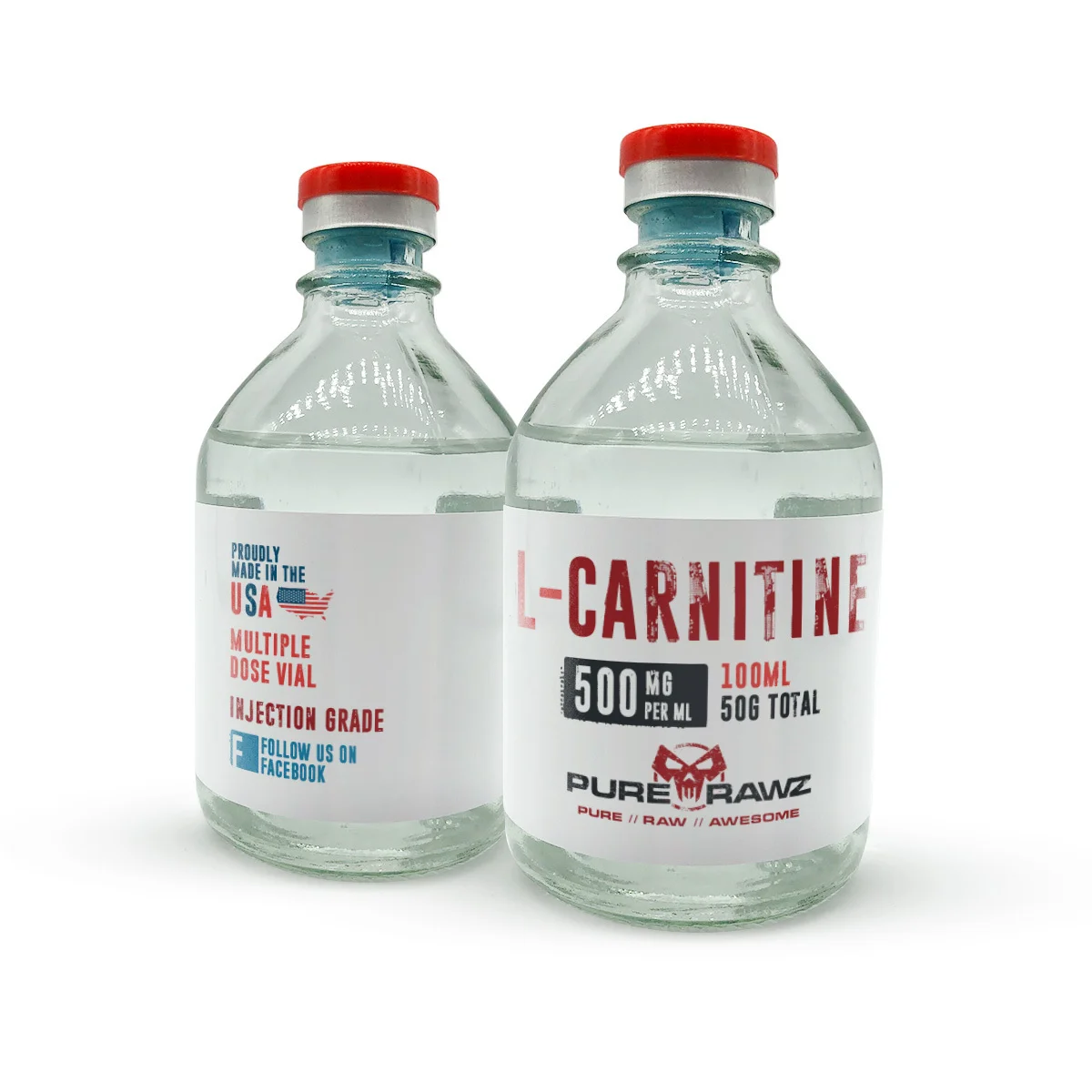
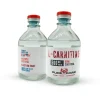
L-Carnitine
Price range: $23.24 through $190.38
Earn 23 - 190 points upon purchasing this product.
✅ 99% Purity – Third-Party Tested
🚚 Free U.S. Shipping on Orders $100+
 Proudly Made in the USA
⚡ Fast & Reliable Shipping
🔒 Secure Checkout Guaranteed
All products are strictly intended for laboratory and research purposes only and are not approved for veterinary or human use.
Description
What is L-Carnitine?
L-carnitine is a quaternary ammonium compound involved in mitochondrial fatty-acid transport mechanisms.
L-Carnitine is an essential component of the carnitine shuttle, which facilitates the translocation of long-chain fatty acyl groups across the inner mitochondrial membrane. Researchers continue to investigate how this established mechanism influences cellular metabolism under different experimental conditions. This transport mechanism enables β-oxidation of long-chain fatty acids within the mitochondrial matrix.
Chemical Properties
| Property | Value |
| Compound Name | L-Carnitine |
| IUPAC Name | (R)-3-Hydroxy-4-(trimethylazaniumyl)butanoate |
| CAS Number | 541-15-1 |
| Molecular Formula | C7H15NO3 |
| Molecular Weight | 161.20 g/mol |
| Chemical Classification | Quaternary ammonium compound |
| Structural Features | Hydroxyl group, carboxylate group, trimethylammonium moiety |
| Chirality | L-isomer (biologically relevant stereoisomer) |
Mechanism of Action of L-Carnitine
L-Carnitine is an essential component of the carnitine shuttle that transports long-chain fatty acyl groups into mitochondria for β-oxidation. Ongoing research investigates how this established transport mechanism influences cellular metabolism and mitochondrial function under various experimental conditions.
Potential Research Applications of L-Carnitine
-
Carnitine Shuttle Research
Studied in experimental models involving the carnitine shuttle system and long-chain fatty acyl group translocation across mitochondrial membranes.
-
Mitochondrial Transport Mechanism Studies
Investigated in laboratory settings examining carrier-mediated transport processes associated with mitochondrial membrane systems.
-
Bioenergetics Research
Examined in studies involving mitochondrial bioenergetic pathways and substrate utilization under controlled conditions.
-
Lipid Metabolism Pathway Analysis
Used in research involving fatty acyl-CoA metabolism and related biochemical pathways.
-
Metabolic Flux Studies
Investigated in experimental models analyzing metabolic flux and pathway interactions within cellular systems.
-
Cellular Metabolism Research
Studied in in vitro systems involving biochemical processes related to cellular metabolic activity.
-
Transporter Interaction Studies
Examined in research involving carnitine transporters, substrate affinity, and molecular transport dynamics.
-
Comparative Compound Research
Used in structure–activity relationship (SAR) studies involving carnitine analogs and related compounds.
Why Choose L-Carnitine for Purerawz?
Our products are supported by analytical verification processes used to assess compound identity, purity, and batch consistency. Independent third-party testing and batch-specific documentation, including
Certificates of Analysis (COAs) are available to support quality assessment and product transparency. Materials are handled and stored in accordance with laboratory research requirements. Compound identity, purity, and batch consistency are assessed using validated analytical methods, as documented in batch-specific Certificates of Analysis (COAs).
Disclaimer
This information is for educational purposes only and does not constitute medical advice. THE PRODUCTS DESCRIBED HEREIN ARE FOR LABORATORY AND RESEARCH USE ONLY. Our content is intended to be used and must be used for informational purposes only.
By completing and paying for your order, you agree to our Terms and Conditions. Customer satisfaction is our number one priority. If you are not 100% satisfied with the product you received, please contact us at support@purerawz.co
ATTENTION: All our products are for LABORATORY AND RESEARCH PURPOSES ONLY, not for veterinary or human usage.
Reference Links
- National Institutes of Health. (2017). Office of Dietary Supplements - Carnitine. Nih.gov. https://ods.od.nih.gov/factsheets/Carnitine-HealthProfessional/
- Alhasaniah, A. H. (2023). l-carnitine: Nutrition, pathology, and health benefits. Saudi Journal of Biological Sciences, 30(2), 103555. https://doi.org/10.1016/j.sjbs.2022.103555
- Bremer, J. (1983). Carnitine—Metabolism and Functions. Physiological Reviews, 63(4), 1420–1480. https://doi.org/10.1152/physrev.1983.63.4.1420
- Flanagan, J. L., Simmons, P. A., Vehige, J., Willcox, M. D. P., & Garrett, Q. (2010). Role of carnitine in disease. Nutrition & Metabolism, 7, 30. https://doi.org/10.1186/1743-7075-7-30
- Houten, S. M., Violante, S., Ventura, F. V., & Wanders, R. J. A. (2016). The Biochemistry and Physiology of Mitochondrial Fatty Acid β-Oxidation and Its Genetic Disorders. Annual Review of Physiology, 78, 23–44. 10.1146/annurev-physiol-021115-105045

About Team PureRawz
Team PureRawz is dedicated to providing accurate, science-based information on research chemicals, including Peptides, Nootropics, and SARMs. Our team of expert writers, researchers, and editors is committed to delivering reliable, up-to-date content you can trust.
Our mission is to build an educated and informed community spanning researchers, laboratories, and general readers empowering them to make confident, well-informed decisions when selecting the right research chemical.
Related products
-

S-23 SARM
Price range: $57.83 through $139.79 Select options This product has multiple variants. The options may be chosen on the product page -

Cardarine (GW-501516)
Price range: $49.42 through $171.06 Select options This product has multiple variants. The options may be chosen on the product page -

Pre-Reactor 3.0 injectable (Ornithine + Arginine + Lysine + Citrulline + L-Isoleucine + L-Leucine + Valine)
$209.32 Select options This product has multiple variants. The options may be chosen on the product page -

Pre Reactor 1.0 Injectable (Ornithine + Arginine + Lysine + Citrulline)
$166.68 Select options This product has multiple variants. The options may be chosen on the product page