

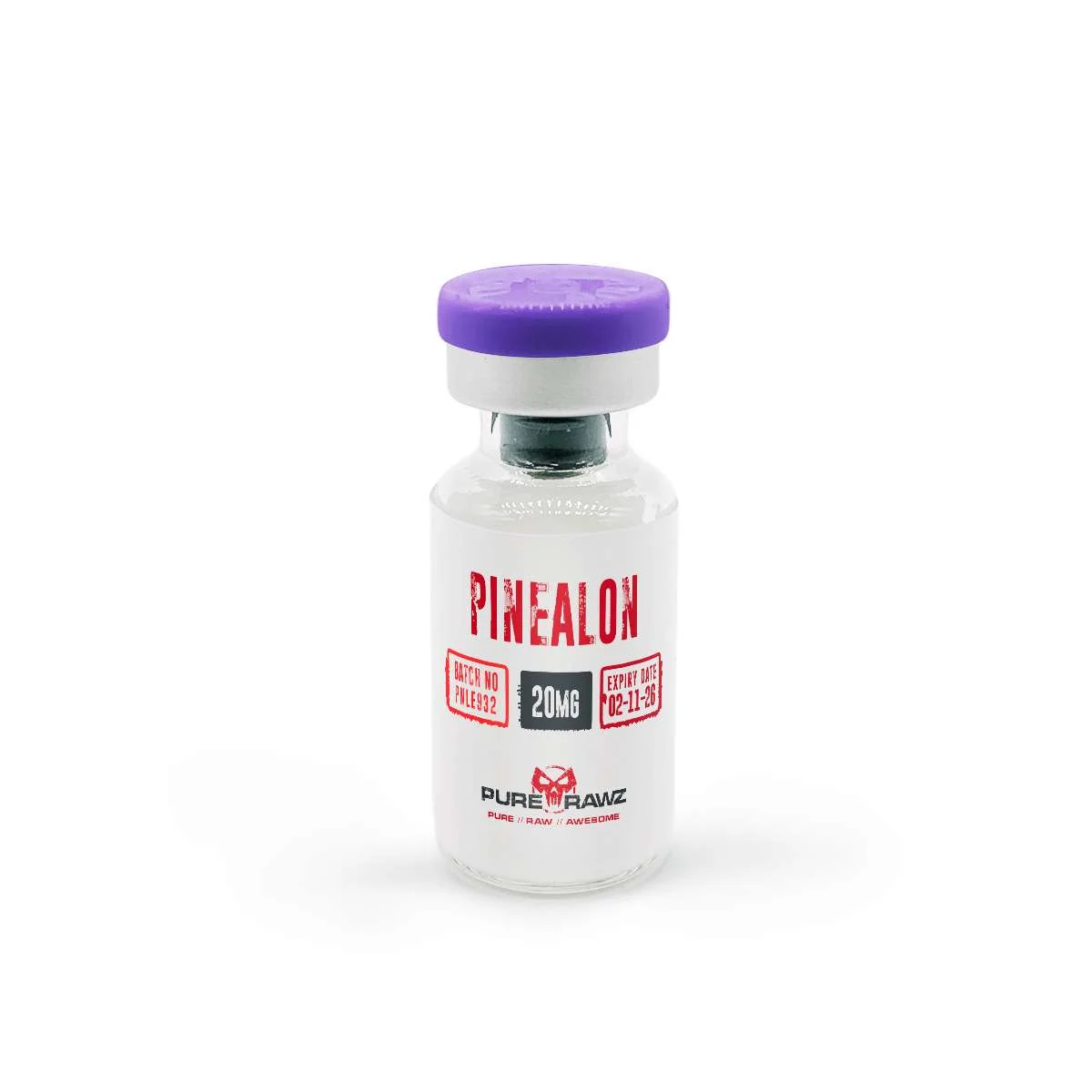
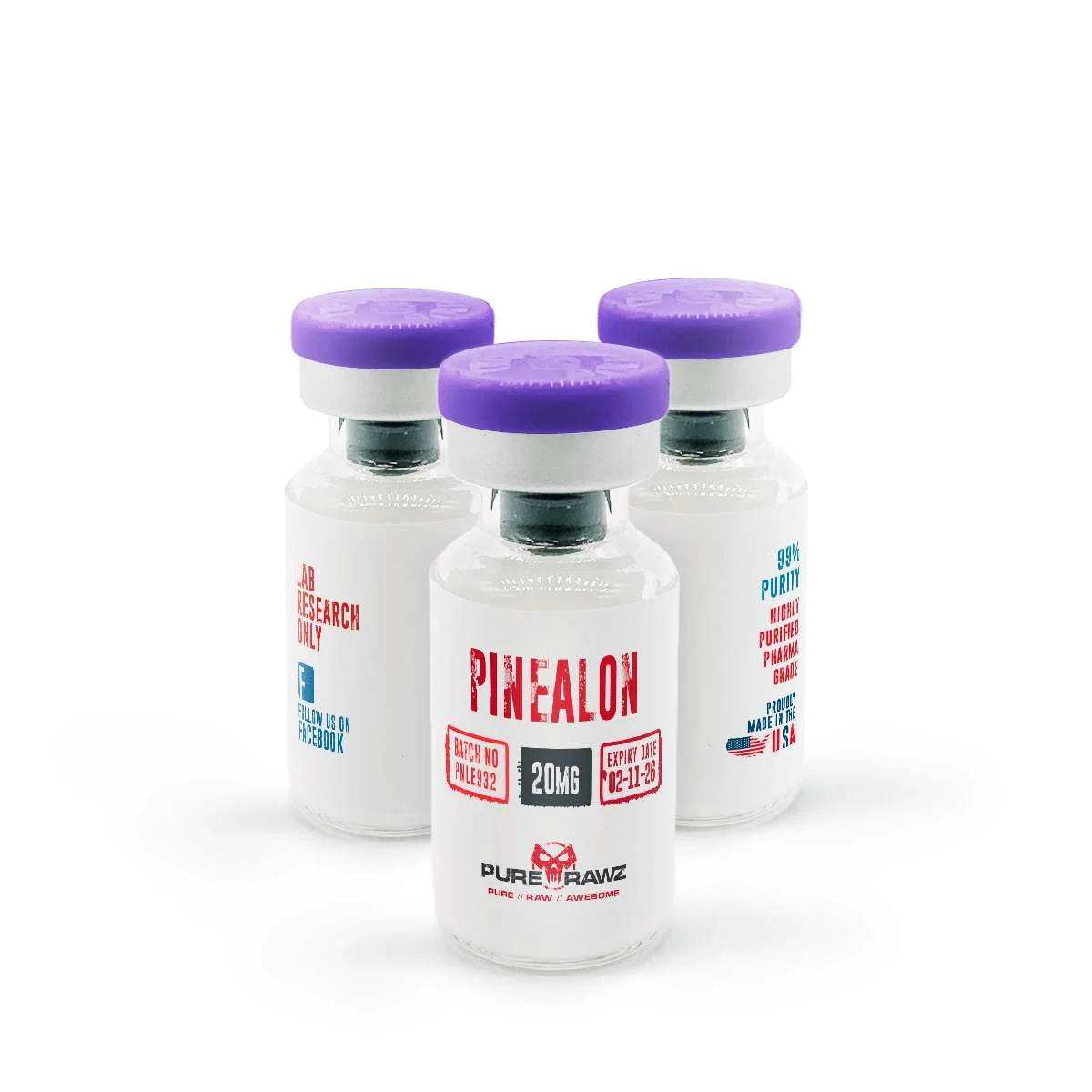


Pinealon
$81.42
Earn 81 points upon purchasing this product.
✅ 99% Purity – Third-Party Tested
🚚 Free U.S. Shipping on Orders $100+
 Proudly Made in the USA
⚡ Fast & Reliable Shipping
🔒 Secure Checkout Guaranteed
All products are strictly intended for laboratory and research purposes only and are not approved for veterinary or human use.
Description
Pinealon Overview
Pinealon is a short synthetic peptide composed of three amino acid residues: glutamic acid, aspartic acid, and arginine. The sequence Glu-Asp-Arg (EDR) places this compound within the category of small regulatory peptides investigated in molecular biology and biochemical research.
Laboratory investigations frequently evaluate short peptides such as Pinealon as molecular probes for studying gene regulation, chromatin interaction, and cellular signaling pathways. Due to its compact structure, the peptide provides a simplified model for examining how small regulatory fragments interact with nucleic acids and intracellular protein systems.
Chemical and Molecular Properties
| Property | Details |
| Name | Pinealon |
| Amino Acid Sequence | Glu-Asp-Arg |
| Molecular Formula | C15H26N6O8 |
| Molecular Weight | 418.4 g/mol |
| Synonyms | Glu-Asp-Arg, H-Glu-Asp-Arg-OH |
Pinealon is a short tripeptide with charged side chains that contribute to electrostatic interactions with nucleic acids and regulatory proteins in cellular models.
Working Mechanism
Interactions With Gene Regulatory Pathways
In preclinical experimental models, Pinealon has been used to examine its capacity to associate with DNA sequences and influence transcriptional activity in cell culture systems. Its charged residues facilitate molecular contacts with genomic regions under investigation.
Cellular Stress Response Mechanisms
Laboratory studies monitor how Pinealon exposure correlates with shifts in transcription factors and intracellular signaling related to oxidative stress, mitochondrial regulatory pathways, and apoptosis regulation. These analyses are conducted using in vitro assays focusing on molecular markers rather than organismal outcomes.
Regulation of Protein Synthesis Pathways
Pinealon's small peptide structure enables researchers to probe aspects of protein expression and regulatory processes, including effects on translation initiation factors and messenger RNA profile changes in cultured cell lines.
Research Applications in Laboratory Settings
Gene Expression Analysis
Pinealon is integrated into experimental models to observe changes in gene expression patterns related to cellular stress responses. Research protocols may involve RNA sequencing, promoter activity assays, and chromatin interaction studies.
In Vitro Oxidative Stress Models
Investigators use Pinealon in oxidative stress paradigms to assess molecular pathway modulation, including measurements of reactive oxygen species (ROS) and antioxidant enzyme expression within cultured cells.
Molecular Signaling Pathway Studies
Controlled research environments apply Pinealon to examine its influence on signaling cascades such as MAPK/ERK, mitochondrial function pathways, and transcriptional regulators, focusing on biochemical outcomes at the cellular level.
Comparative Peptide Structure-Function Research
As a defined tripeptide, Pinealon supports structural-functional investigations in peptide biochemistry, enabling comparisons between peptide motifs and their regulatory impacts in standardized laboratory systems.
Why Choose Purerawz for Pinealon?
Buy Pinealon for laboratory research use from our online shop. At Purerawz, we provide high-quality reference materials. Each research compound comes with a Certificate of Analysis for verification of purity and concentration.
Disclaimer
This information is for educational purposes only and not medical advice. Products are for research use only. Research must follow IRB or IACUC guidelines. Verify information independently before purchasing. By ordering, you agree to our Terms and Conditions. If you are not 100% satisfied with the product you received, please contact us at support@purerawz.co
Reference Links
- Arutjunyan, A., Kozina, L., Stvolinskiy, S., Bulygina, Y., Mashkina, A., & Khavinson, V. (2012, April 6). Pinealon protects the rat offspring from prenatal hyperhomocysteinemia. https://pmc.ncbi.nlm.nih.gov/articles/PMC3342713/
- Khavinson, V., Linkova, N., Kozhevnikova, E., & Trofimova, S. (2020). EDR peptide: possible mechanism of gene expression and protein synthesis regulation involved in the pathogenesis of Alzheimer's disease. Molecules, 26(1), 159. https://doi.org/10.3390/molecules26010159

About Team PureRawz
Team PureRawz is dedicated to providing accurate, science-based information on research chemicals, including Peptides, Nootropics, and SARMs. Our team of expert writers, researchers, and editors is committed to delivering reliable, up-to-date content you can trust.
Our mission is to build an educated and informed community spanning researchers, laboratories, and general readers empowering them to make confident, well-informed decisions when selecting the right research chemical.
Related products
-

Mod GRF 1-29 (CJC-1295 No Dac)
Price range: $39.60 through $72.30 Select options This product has multiple variants. The options may be chosen on the product page -

Adipotide
Price range: $50.62 through $119.07 Select options This product has multiple variants. The options may be chosen on the product page -

Thymalin
Price range: $76.92 through $321.92 Select options This product has multiple variants. The options may be chosen on the product page -

Spartan 3 (Mod GRF 1-29 + GHRP-6)
$97.81 Select options This product has multiple variants. The options may be chosen on the product page