

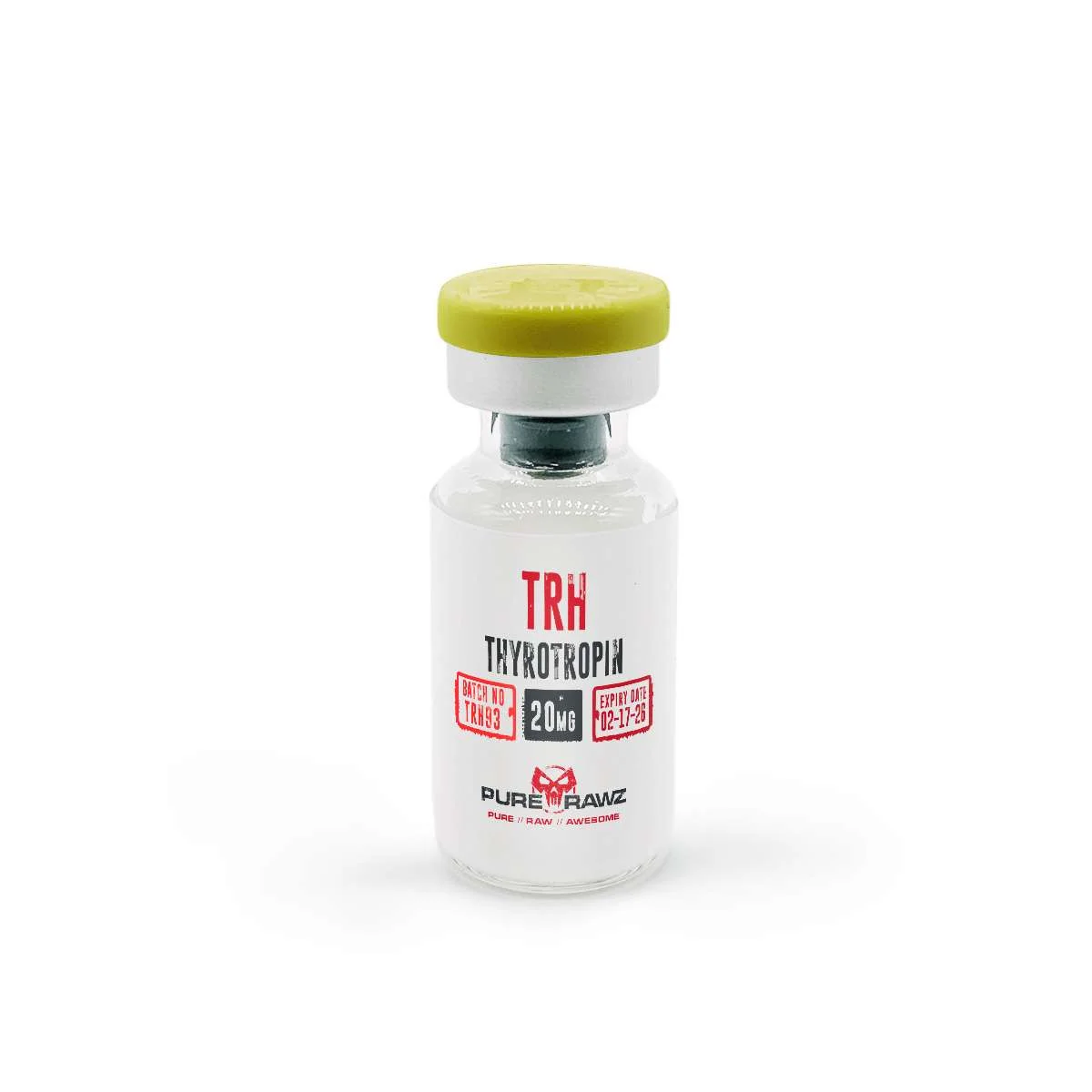
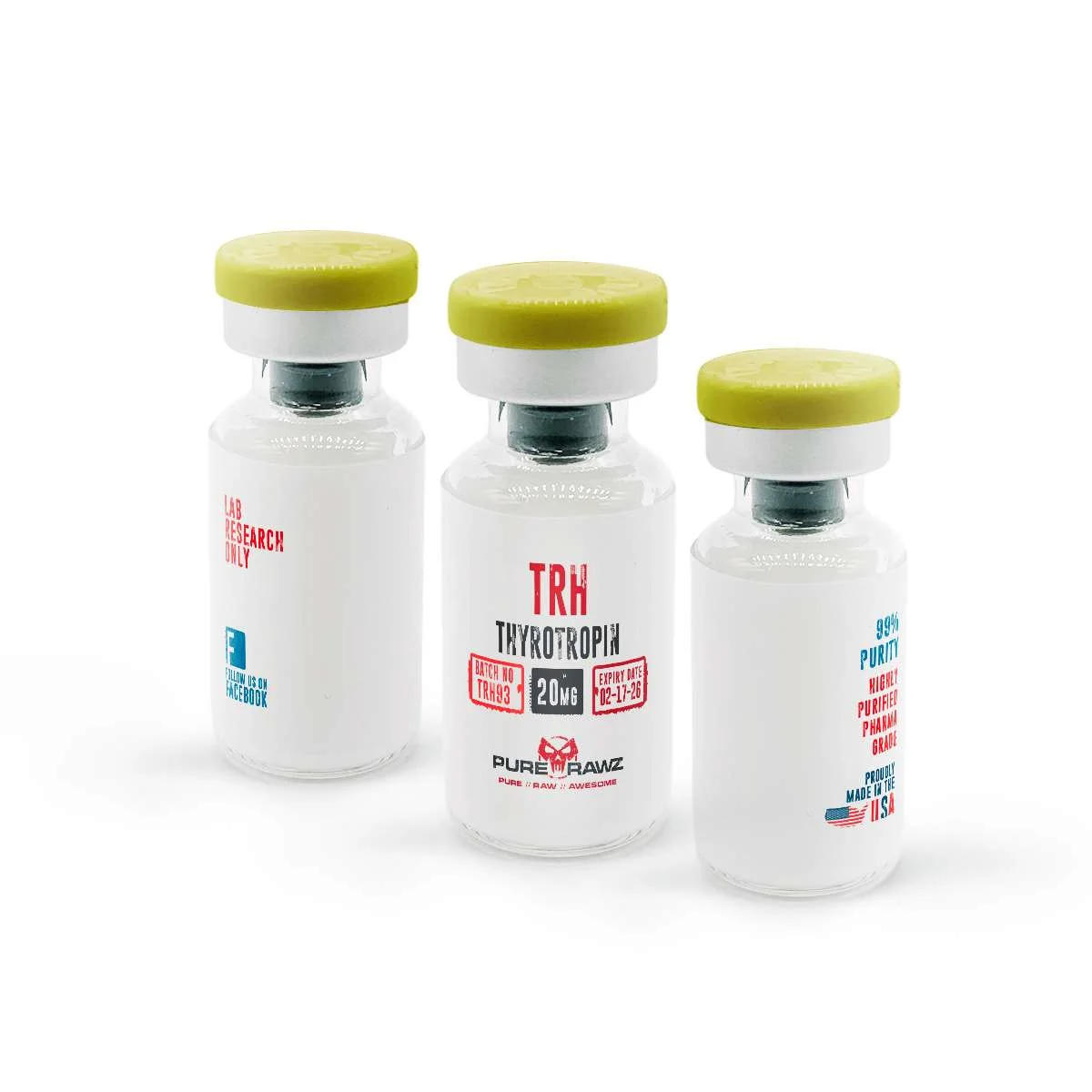
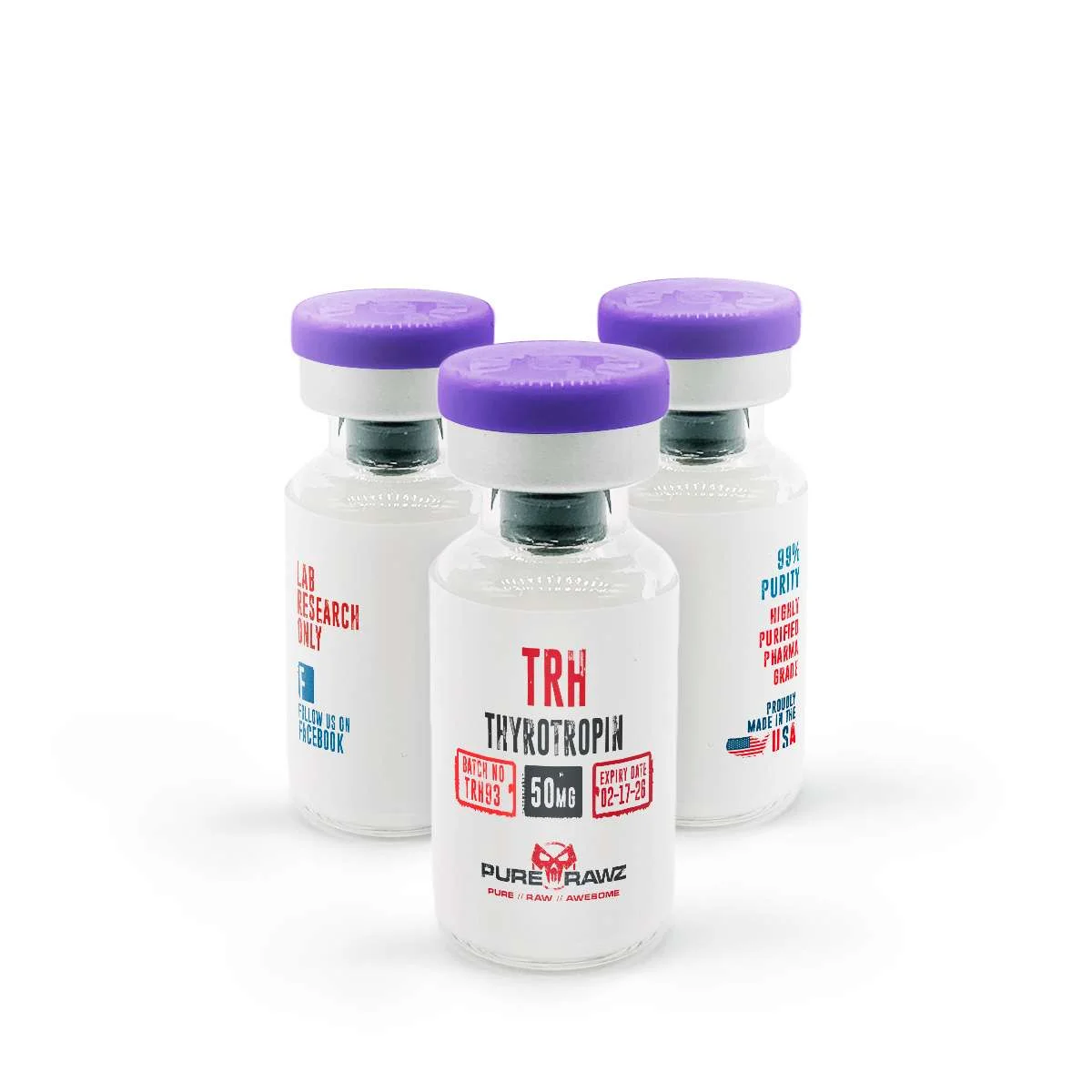

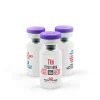
Protirelin (TRH Thyrotropin)
Price range: $101.33 through $212.78
Earn 101 - 213 points upon purchasing this product.
Note: We recommend using sterile Bacteriostatic Water for reconstitution.
✅ 99% Purity – Third-Party Tested
🚚 Free U.S. Shipping on Orders $100+
 Proudly Made in the USA
⚡ Fast & Reliable Shipping
🔒 Secure Checkout Guaranteed
All products are strictly intended for laboratory and research purposes only and are not approved for veterinary or human use.
Description
Overview of Thyrotropin Protirelin
Protirelin, also referred to as thyrotropin–releasing hormone (TRH), is a naturally occurring tripeptide neuropeptide composed of L–pyroglutamyl–L–histidyl–L–prolinamide. It was first identified as a hypothalamic neurohormone that initiates regulatory signals within the hypothalamic–pituitary axis. In biochemical research, protirelin is widely used as a reference peptide in experimental models of receptor signaling and neuroendocrine regulation because of its well‑defined molecular identity and receptor interactions
Chemical and Molecular Properties
| Thyrotropin Protirelin | |
| PubChem CID | 638678 |
| Molecular Formula | C16H22N6O4 |
| Molecular Weight | 362.38 g/mol |
| Synonyms | protirelin 24305-27-9 Thyroliberin Lopremone Synthetic TRH |
| IUPAC | (2S)-N-[(2S)-1-[(2S)-2-carbamoylpyrrolidin-1-yl]-3-(1H-imidazol-5-yl)-1-oxopropan-2-yl]-5-oxopyrrolidine-2-carboxamide |
| CAS | 24305-27-9 |
| Labeling | Research Use Only (RUO), not for human or animal consumption. |
| Chemical Structure Depiction |  |
| Purity | ≥98% |
| Classification | Research Use Only (RUO) |
| Storage Temperature | Store at −18 °C or lower |
| Solubility | Soluble in water and aqueous research solvents |
| Safety | Handle with gloves, a lab coat, eye protection; use a fume hood if dust/aerosol is possible |
Various Mechanisms of Protirelin
TRH Receptor Interaction
Protirelin binds to thyrotropin–releasing hormone receptors (TRHRs), which are members of the class A G protein‑coupled receptor (GPCR) family. TRHR engagement has been characterized in cell‑based receptor pharmacology models and structural studies. Upon ligand binding, TRHR undergoes conformational changes that enable coupling to Gq/G11 proteins, initiating downstream signaling pathways.
GPCR Signal Transduction
Activation of TRHR by protirelin leads to stimulation of phospholipase C (PLC) activity. PLC catalyzes the hydrolysis of membrane phosphatidylinositol bisphosphate to produce:
- Inositol–1,4,5–trisphosphate (IP3)
- Diacylglycerol (DAG)
These second messengers are hallmarks of GPCR–mediated signal transduction in biochemical studies. IP3 induces the release of intracellular Ca2+ ions, while DAG participates in the activation of protein kinase C (PKC) pathways.
Intracellular Calcium Mobilization
IP3–mediated calcium release from internal stores results in elevated intracellular calcium concentrations in experimental models. Increased Ca2+ is a key signal in cellular response cascades and is routinely measured in receptor activation assays to characterize protirelin‑dependent signaling.
Research Applications of Protirelin
Protirelin is utilized as an investigational research peptide in laboratory and preclinical studies. It serves primarily to examine TRH receptor signaling, GPCR activation, and calcium–dependent intracellular pathways. Researchers also employ it to explore neuroendocrine regulation, peptide–receptor interactions, and neurotransmitter-related signaling in in vitro systems and experimental models.
Why Choose Purerawz for Protirelin?
Buy Protirelin for laboratory research use from our online shop. At Purerawz, we provide high-quality reference materials. Each research compound comes with a Certificate of Analysis for verification of purity and concentration.
Note:
Protirelin is an investigational compound currently undergoing clinical evaluation and has not been established as safe or effective for any therapeutic use
Disclaimer
This information is for educational purposes only and not medical advice. Products are for research use only. Research must follow IRB or IACUC guidelines. Verify information independently before purchasing. By ordering, you agree to our Terms and Conditions. If you are not 100% satisfied with the product you received, please contact us at support@purerawz.co
ATTENTION: All our products are for LABORATORY AND RESEARCH PURPOSES ONLY, not for veterinary or human use
Reference Links
Chiba T., Yamada M., Hashimoto Y., et al. Development of a femtomolar‑acting humanin derivative named Colivelin by attaching activity–dependent neurotrophic factor to its N terminus: characterization of Colivelin–mediated neuroprotection against Alzheimer’s disease–relevant insults in vitro and in vivo. Journal of Neuroscience. 25(44):10252–10261. https://pubmed.ncbi.nlm.nih.gov/16267233/
Arakawa T., Niikura T., Arisaka F., et al. Activity‑dependent neurotrophic factor, ADNF, determines the structure characteristics of Colivelin, a fusion protein of ADNF9 and Humanin analog. Journal of Peptide Science. 14(5):631–636. https://pubmed.ncbi.nlm.nih.gov/17994638/
Matsuoka M., Hashimoto Y., Aiso S., et al. Humanin and Colivelin: neuronal–death–suppressing peptides for Alzheimer’s disease and amyotrophic lateral sclerosis. CNS Drug Reviews. 12(2):113–122. https://pubmed.ncbi.nlm.nih.gov/16958985/
PubChem Compound Summary for CID 638678. PubChem. National Center for Biotechnology Information, U.S. National Library of Medicine. https://pubchem.ncbi.nlm.nih.gov/compound/638678#section=Molecular-Formula

About Team PureRawz
Team PureRawz is dedicated to providing accurate, science-based information on research chemicals, including Peptides, Nootropics, and SARMs. Our team of expert writers, researchers, and editors is committed to delivering reliable, up-to-date content you can trust.
Our mission is to build an educated and informed community spanning researchers, laboratories, and general readers empowering them to make confident, well-informed decisions when selecting the right research chemical.
Related products
-

Triptorelin (GnRH)
Price range: $45.90 through $67.21 Select options This product has multiple variants. The options may be chosen on the product page -
Ipamorelin
Price range: $29.23 through $111.58 Select options This product has multiple variants. The options may be chosen on the product page -

Mod GRF 1-29 (CJC-1295 No Dac)
Price range: $39.60 through $72.30 Select options This product has multiple variants. The options may be chosen on the product page -

MOTS-c
Price range: $50.59 through $404.72 Select options This product has multiple variants. The options may be chosen on the product page