

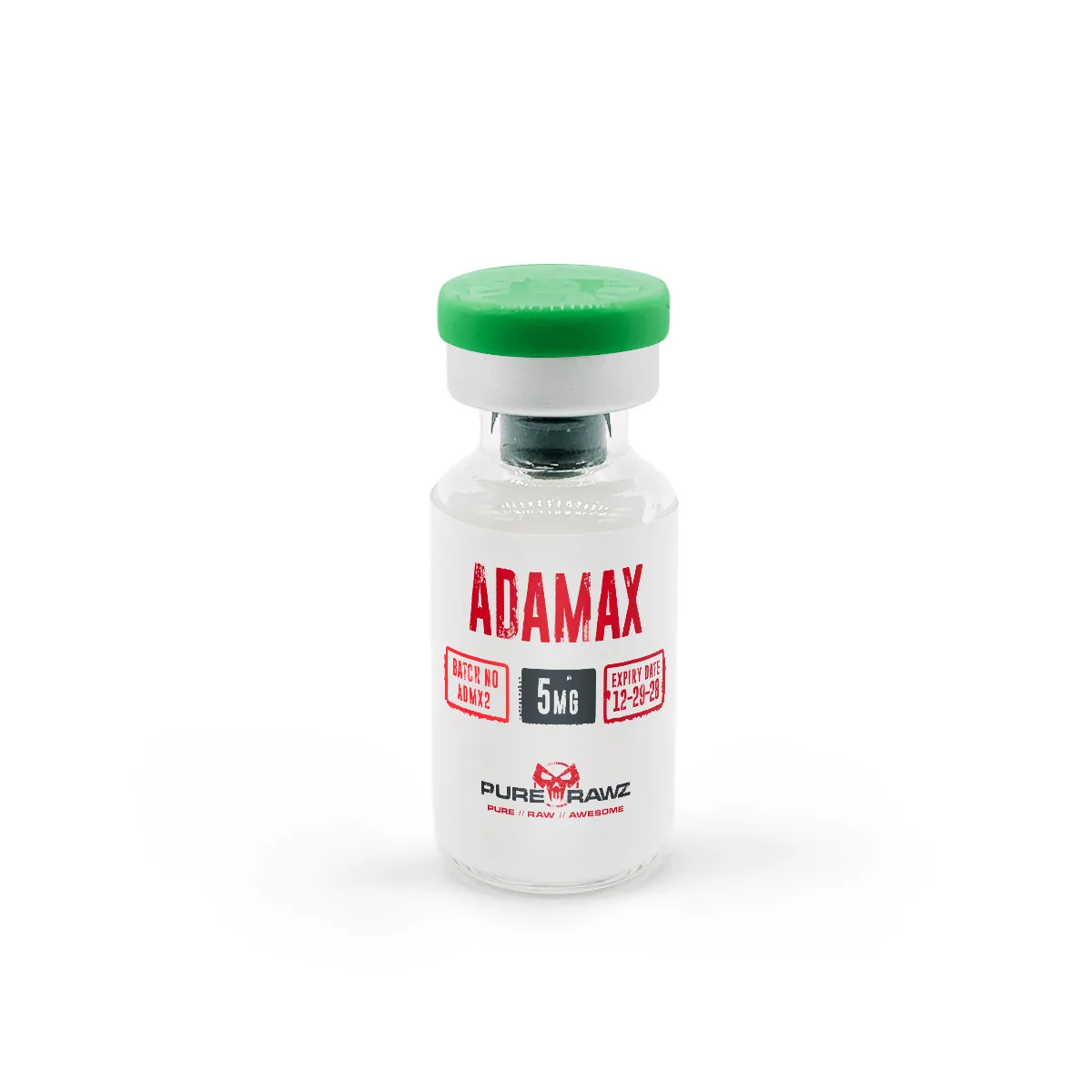


Adamax
Price range: $55.00 through $67.77
Earn 55 - 68 points upon purchasing this product.
✅ 99% Purity – Third-Party Tested
🚚 Free U.S. Shipping on Orders $100+
 Proudly Made in the USA
⚡ Fast & Reliable Shipping
🔒 Secure Checkout Guaranteed
All products are strictly intended for laboratory and research purposes only and are not approved for veterinary or human use.
Description
Adamax Research Chemical
Product Information
Adamax is a synthetic peptide compound examined within experimental biochemical research. The molecule was developed to resemble structural features observed in certain endogenous regulatory peptides. Because of this similarity, Adamax has attracted interest in laboratory settings focused on cellular signaling, tissue adaptation, and peptide-mediated metabolic pathways.
Peptides of this class are typically explored for their ability to influence receptor-mediated signaling networks that regulate cellular growth and repair processes. In controlled experimental environments, such compounds are sometimes used to observe how short peptide chains affect intracellular communication and protein expression.
| Property | Data |
| Compound Name | Adamax Peptide |
| CAS Number | 1421227-52-2 |
| Molecular Formula | C44H61N11O13S |
| Molecular Weight | 984.10 g/mol |
| Peptide Sequence | Ac-Met-Glu-His-Phe-Pro-Gly-Pro-Ala-Gly-OH |
| Chemical Class | Synthetic peptide |
| Appearance | White lyophilized powder |
| Solubility | Soluble in dimethyl sulfoxide (DMSO) |
| Storage Conditions | −20°C recommended |
| Reference Database | PubChem (NCBI) |
Working Mechanism
Peptide signaling operates through receptor-mediated processes that transmit information across cellular membranes. When a peptide ligand binds to a compatible receptor, intracellular enzymes can become activated. This process may alter transcription factors or signaling proteins that influence cellular metabolism and structural remodeling.
Laboratory investigations involving peptides structurally related to Adamax sometimes focus on pathways associated with skeletal muscle adaptation and cellular recovery following metabolic stress. In these experimental systems, researchers attempt to determine whether specific peptide sequences influence anabolic or protective signaling responses.
Another aspect occasionally examined in peptide research involves interactions with endocrine regulatory systems. Short peptides can affect pathways associated with hormone signaling because receptors involved in these systems frequently recognize small peptide ligands.
Current data on Adamax remain limited, and the exact molecular targets of the compound have not been conclusively characterized. Experimental work continues to clarify receptor affinity, metabolic stability, and downstream signaling behavior.
Research Application
Early laboratory observations have explored how synthetic peptides influence cellular environments exposed to metabolic or mechanical stress. Some experimental models have examined peptide behavior in cultured cells to determine whether they influence pathways associated with protein turnover and cellular regeneration.
Animal studies investigating peptide signaling frequently focus on models of tissue remodeling or metabolic adaptation. Such work is typically conducted to observe biochemical markers associated with cellular repair processes. These experiments provide preliminary information but cannot establish definitive biological effects without further controlled investigation.
Because Adamax remains an emerging research compound, available literature describing its activity is relatively limited. Continued experimental work is necessary before its biological characteristics can be clearly defined.
Why Buy from PureRawz
As implied by the terms "Pure" and "Raw," PureRawz takes its commitment to creating research compounds of the highest caliber seriously. Through third-party testing and product handling from production to delivery, PureRawz provides transparency regarding product details. Research may also get discounts upon subscribing to the PureRawz Newsletter.
Note: Adamax is supplied strictly as a research material intended for analytical, biochemical, or laboratory investigation. The compound has not been approved by the U.S. Food and Drug Administration (FDA) for therapeutic, diagnostic, veterinary, or nutritional applications.
Research Disclaimer
This information is for educational purposes only and not medical advice. All experimental work involving laboratory compounds should follow institutional regulatory standards, including Institutional Review Board (IRB) or Institutional Animal Care and Use Committee (IACUC) guidelines when applicable.
Verify information independently before purchasing. By ordering, you agree to our Terms and Conditions. If you are not 100% satisfied with the product you received, please contact us at support@purerawz.co
ATTENTION: All our products are for LABORATORY AND RESEARCH PURPOSES ONLY, not for veterinary or human use
References
National Center for Biotechnology Information. (2024). PubChem compound database. National Library of Medicine. https://pubchem.ncbi.nlm.nih.gov
Fosgerau, K., & Hoffmann, T. (2015). Peptide therapeutics: Current status and future directions. Drug Discovery Today, 20(1), 122–128. https://pubmed.ncbi.nlm.nih.gov/25450771/
Lau, J. L., & Dunn, M. K. (2018). Therapeutic peptides: Historical perspectives and future directions. Bioorganic & Medicinal Chemistry, 26(10), 2700-2707. https://pubmed.ncbi.nlm.nih.gov/29307418/
National Library of Medicine. (2024). Peptide signaling pathways and receptor interactions. https://www.nlm.nih.gov
ClinicalTrials.gov. (2024). Peptide-related research database. https://clinicaltrials.gov

About Team PureRawz
Team PureRawz is dedicated to providing accurate, science-based information on research chemicals, including Peptides, Nootropics, and SARMs. Our team of expert writers, researchers, and editors is committed to delivering reliable, up-to-date content you can trust.
Our mission is to build an educated and informed community spanning researchers, laboratories, and general readers empowering them to make confident, well-informed decisions when selecting the right research chemical.
Related products
-

Thymalin
Price range: $76.92 through $321.92 Select options This product has multiple variants. The options may be chosen on the product page -

Adipotide
Price range: $50.62 through $119.07 Select options This product has multiple variants. The options may be chosen on the product page -

Sermorelin + Ipamorelin Blend
Price range: $113.85 through $223.22 Select options This product has multiple variants. The options may be chosen on the product page -

Sermorelin + GHRP-2 Blend
$97.81 Select options This product has multiple variants. The options may be chosen on the product page