

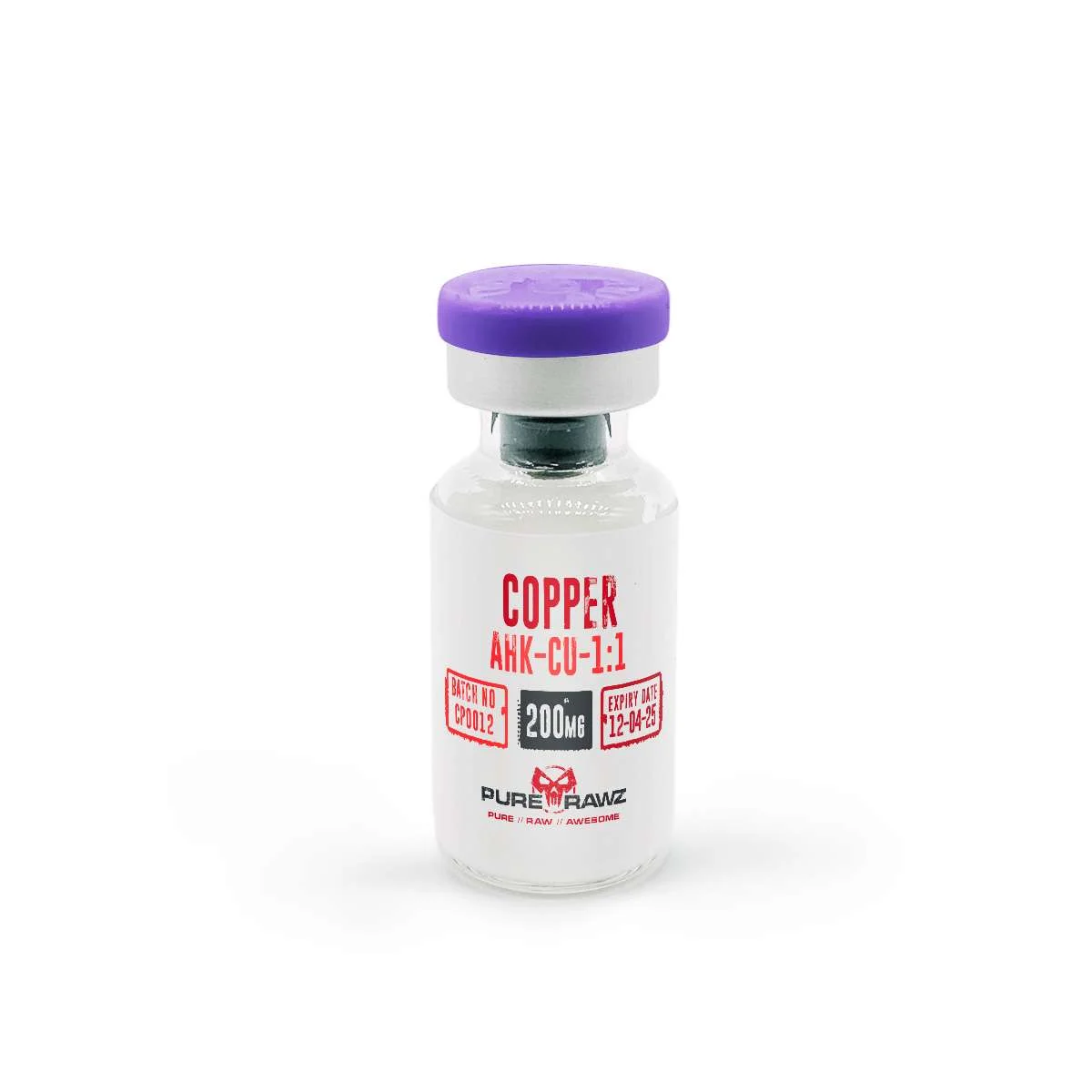
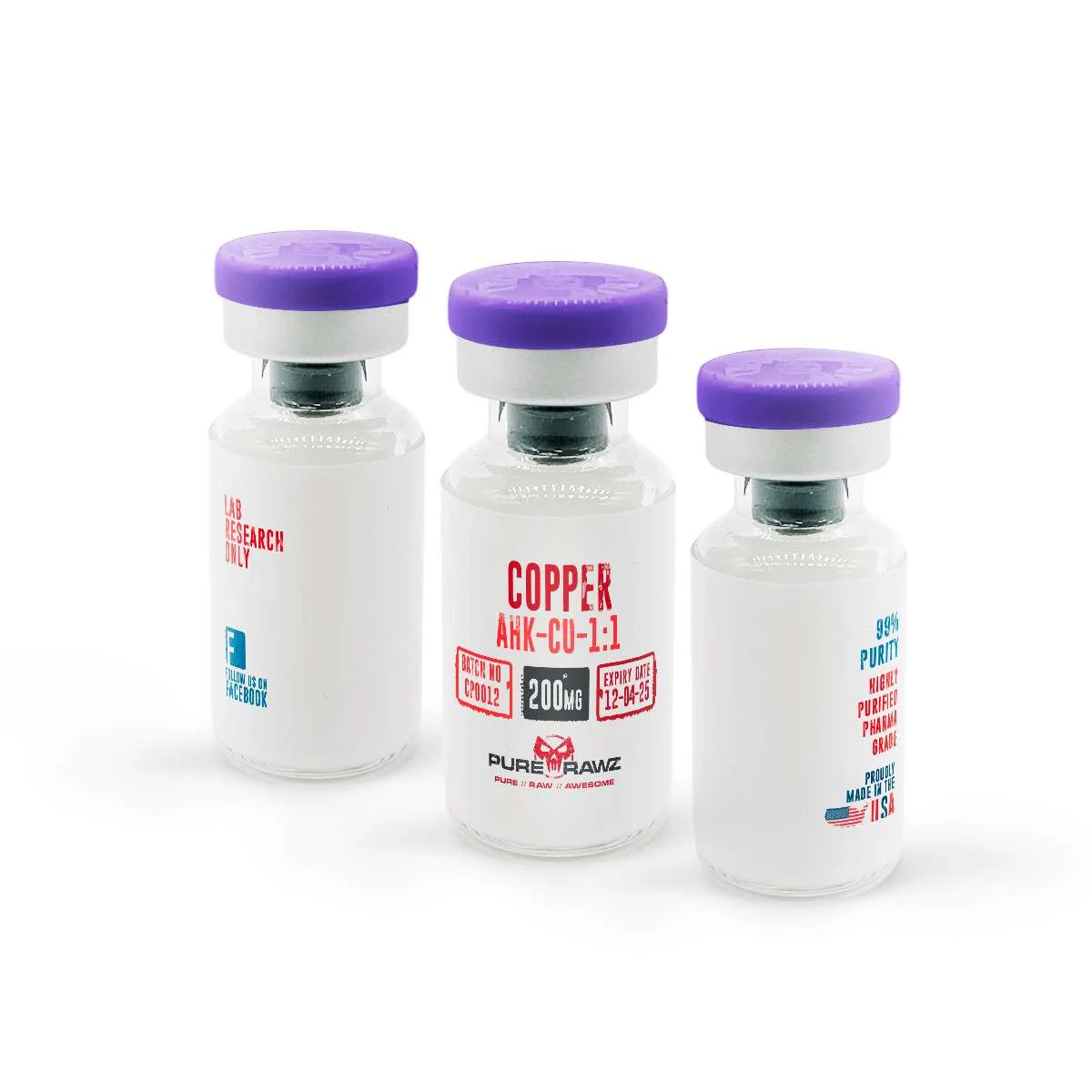
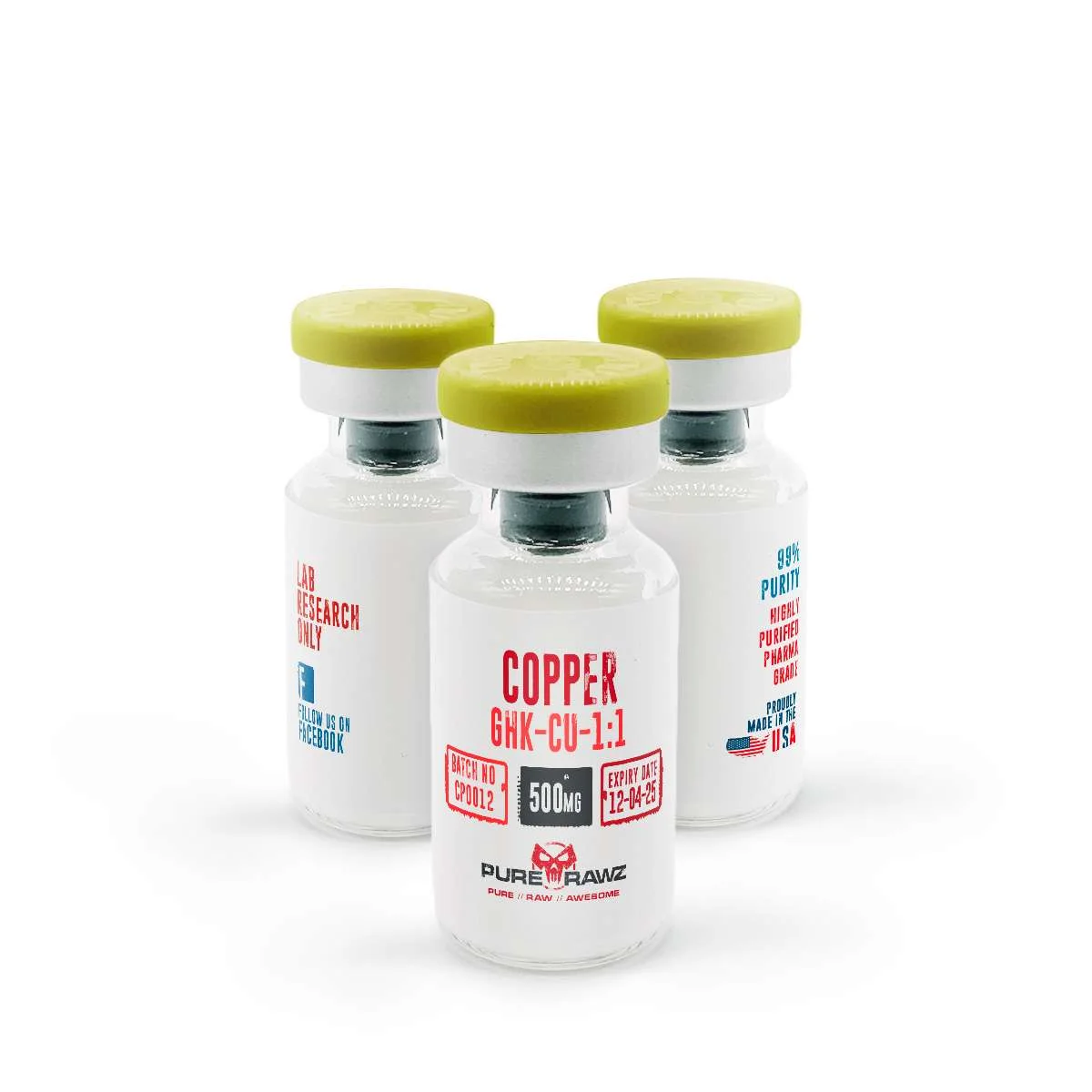
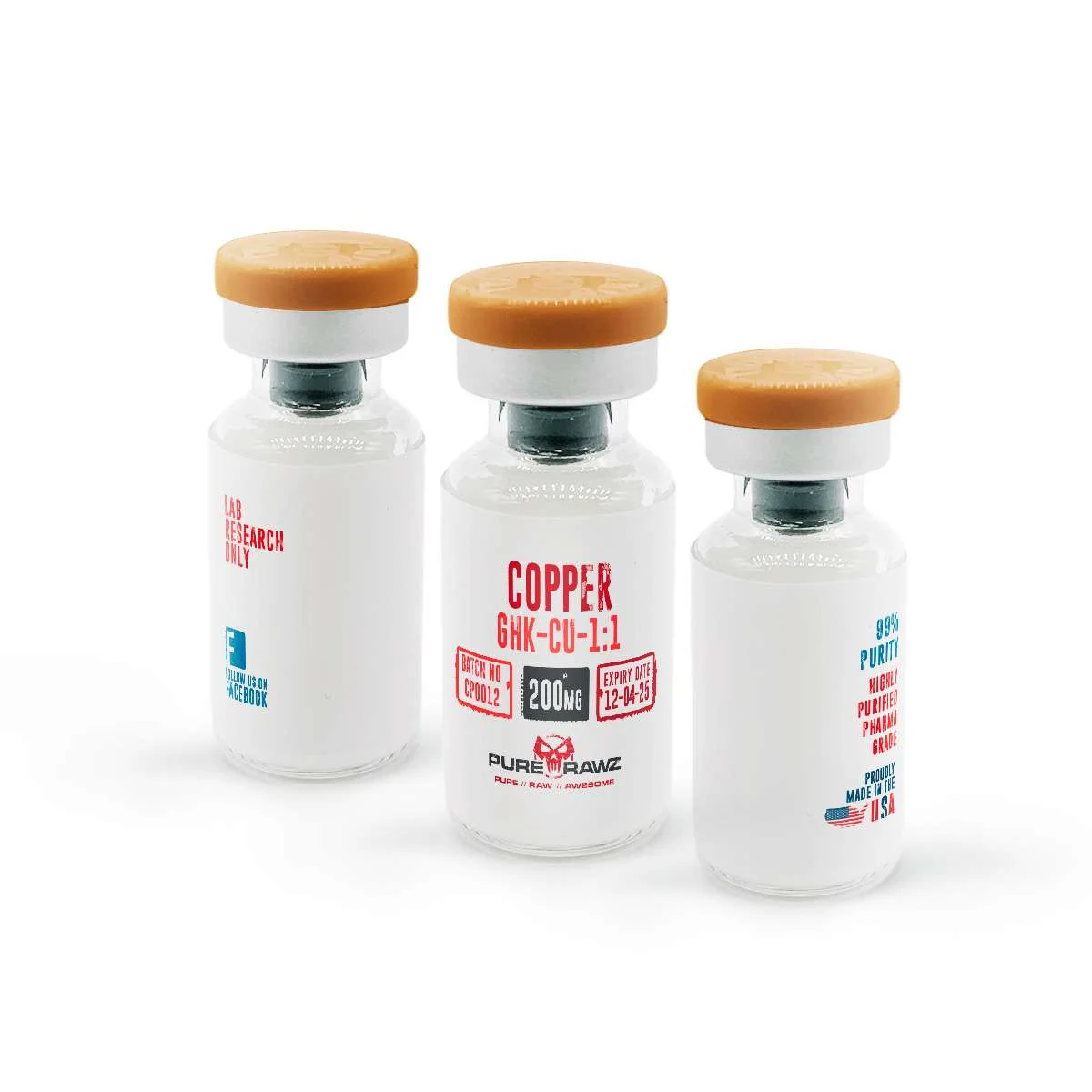
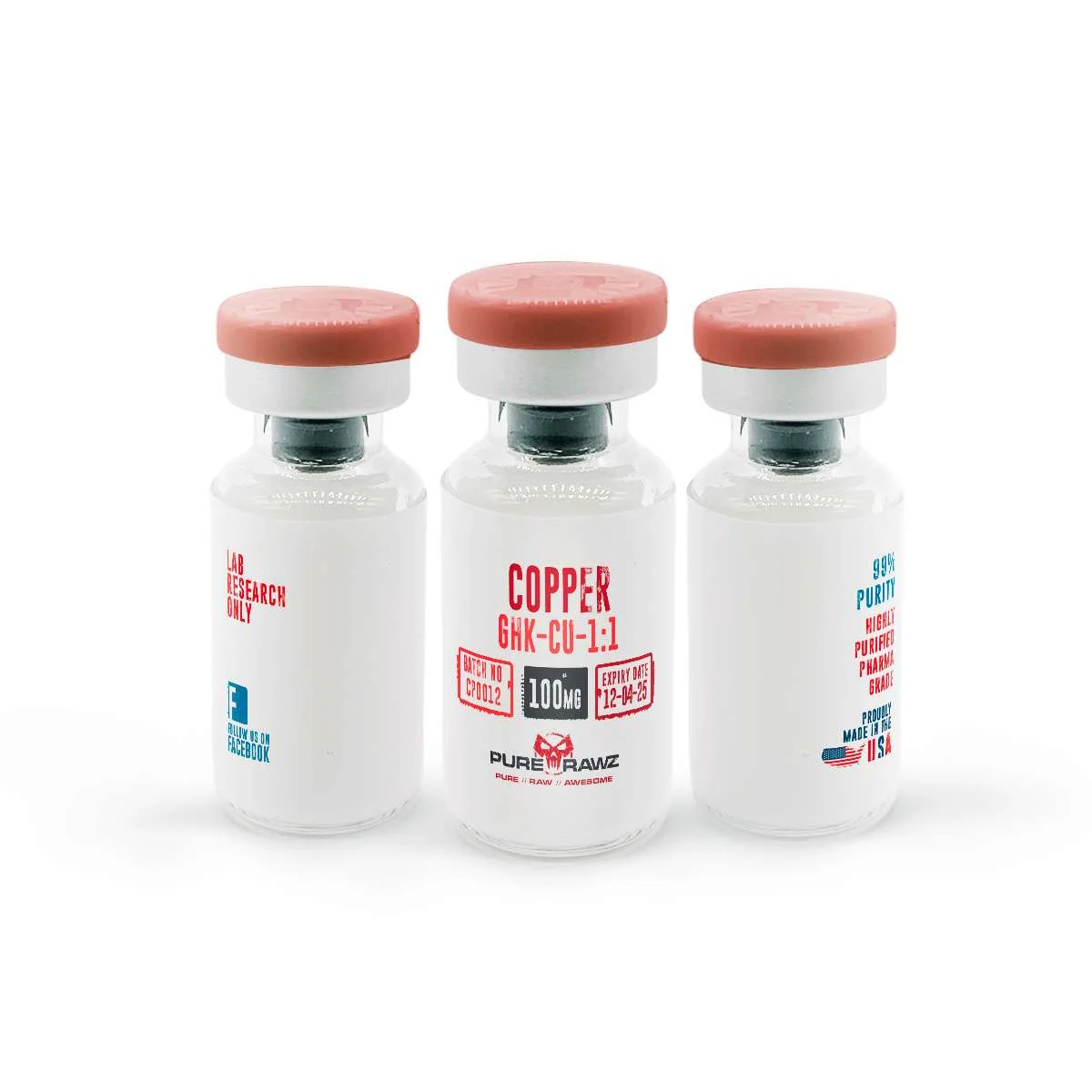
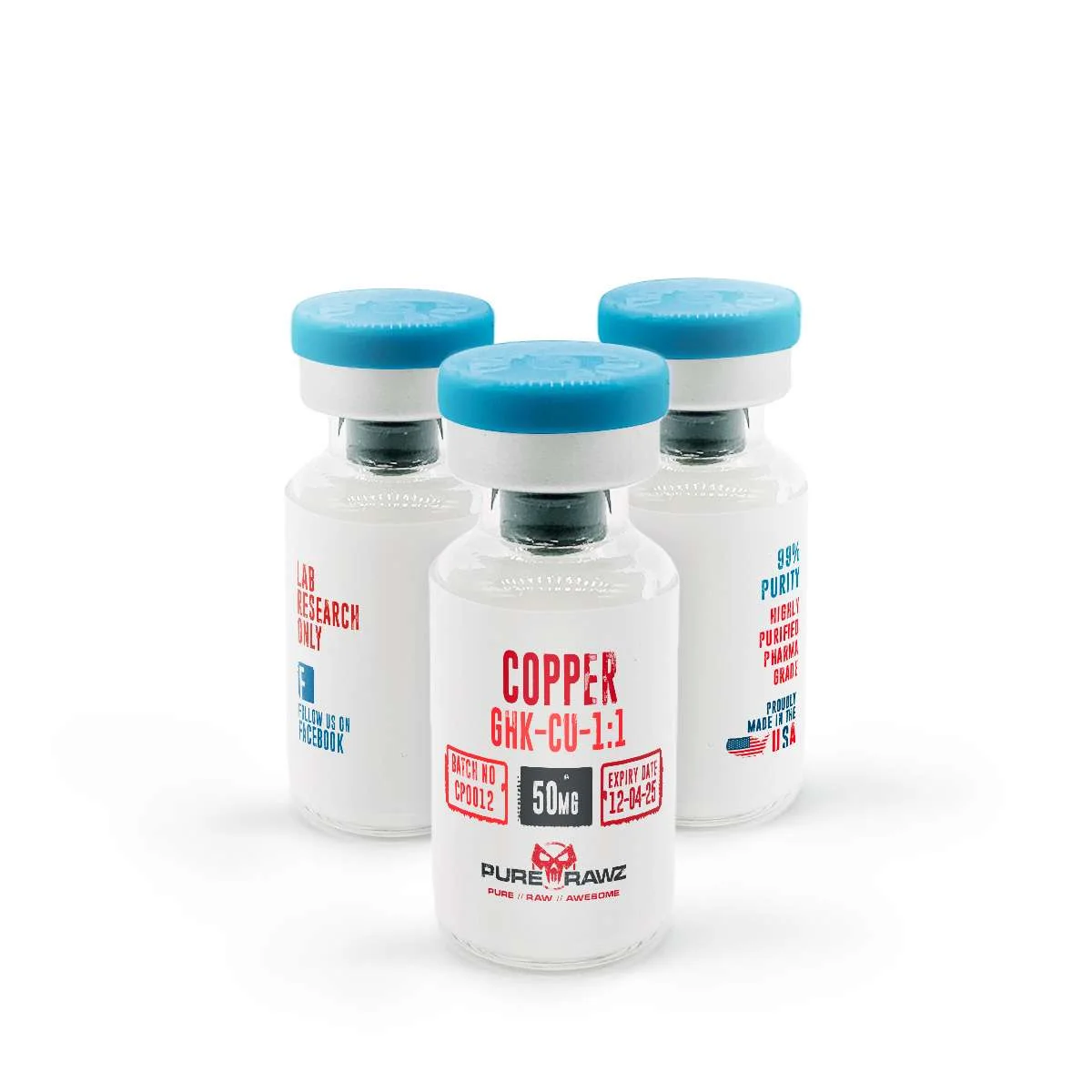
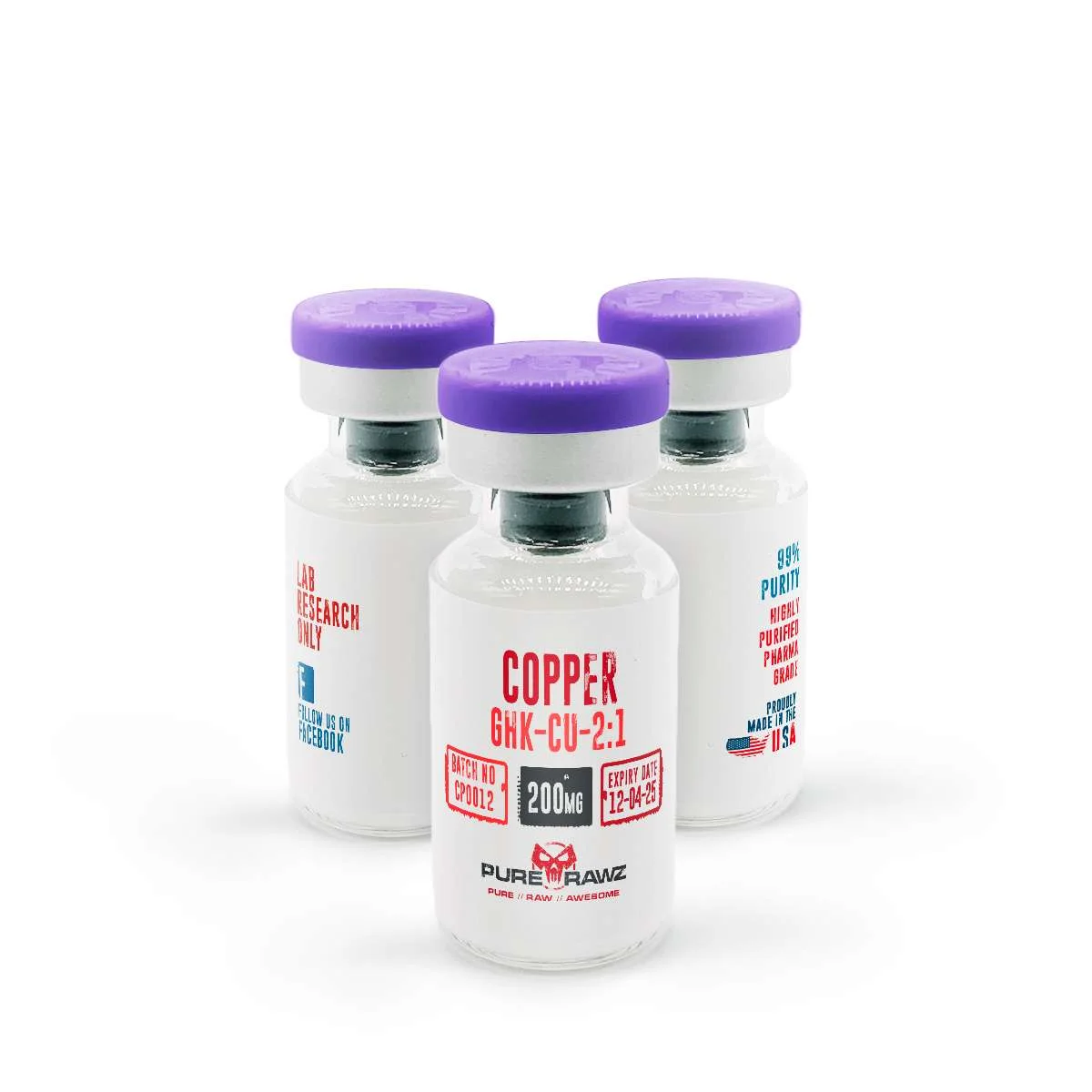
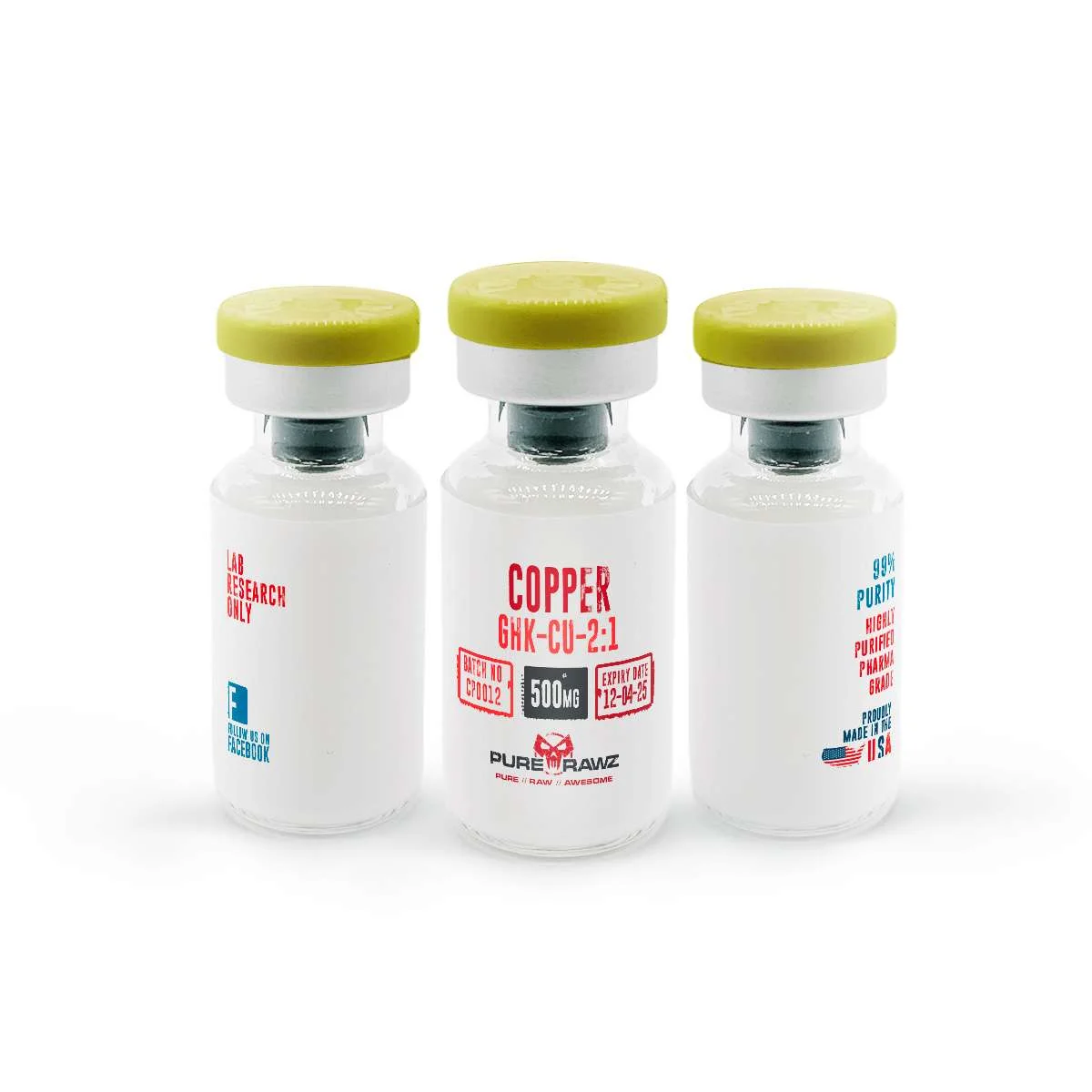
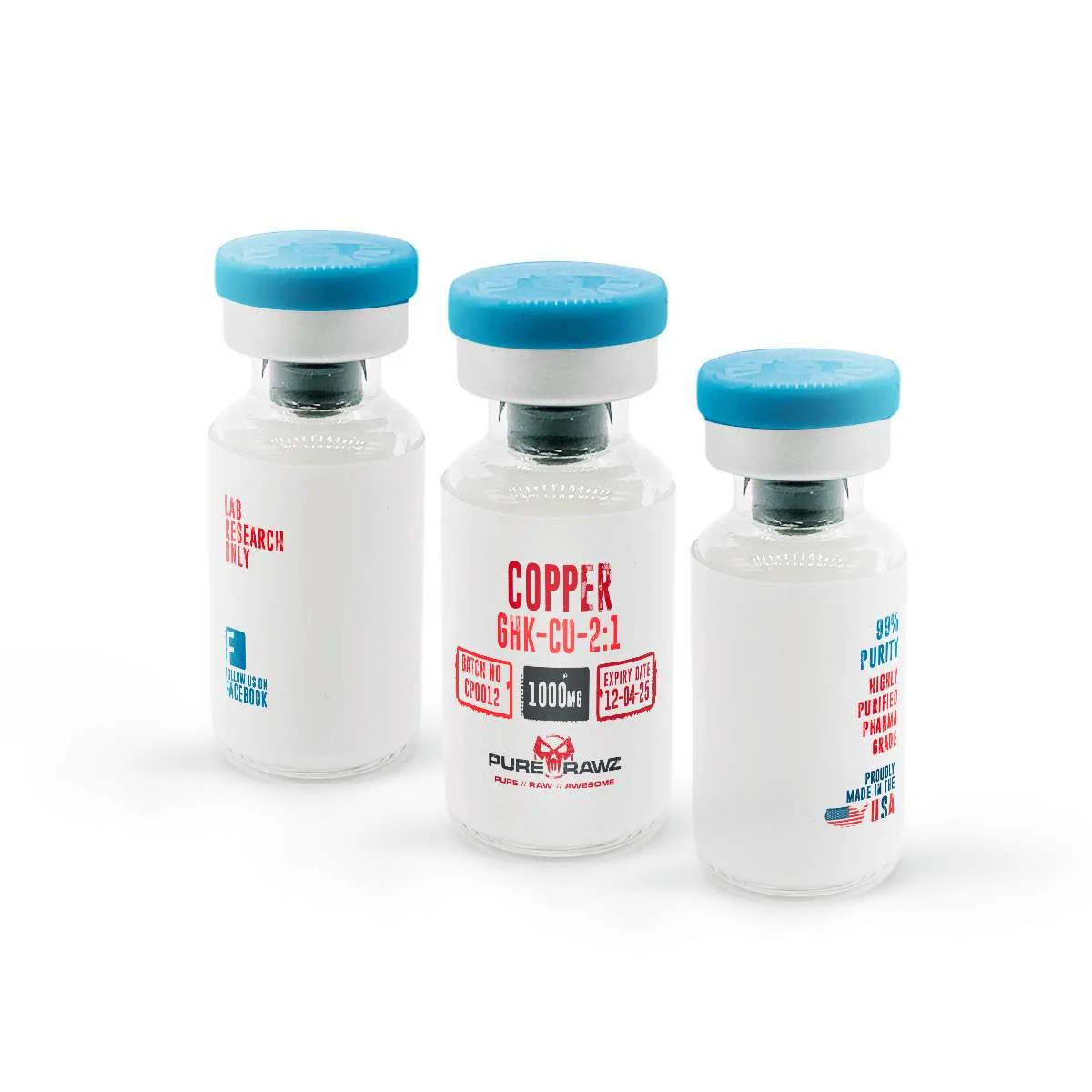
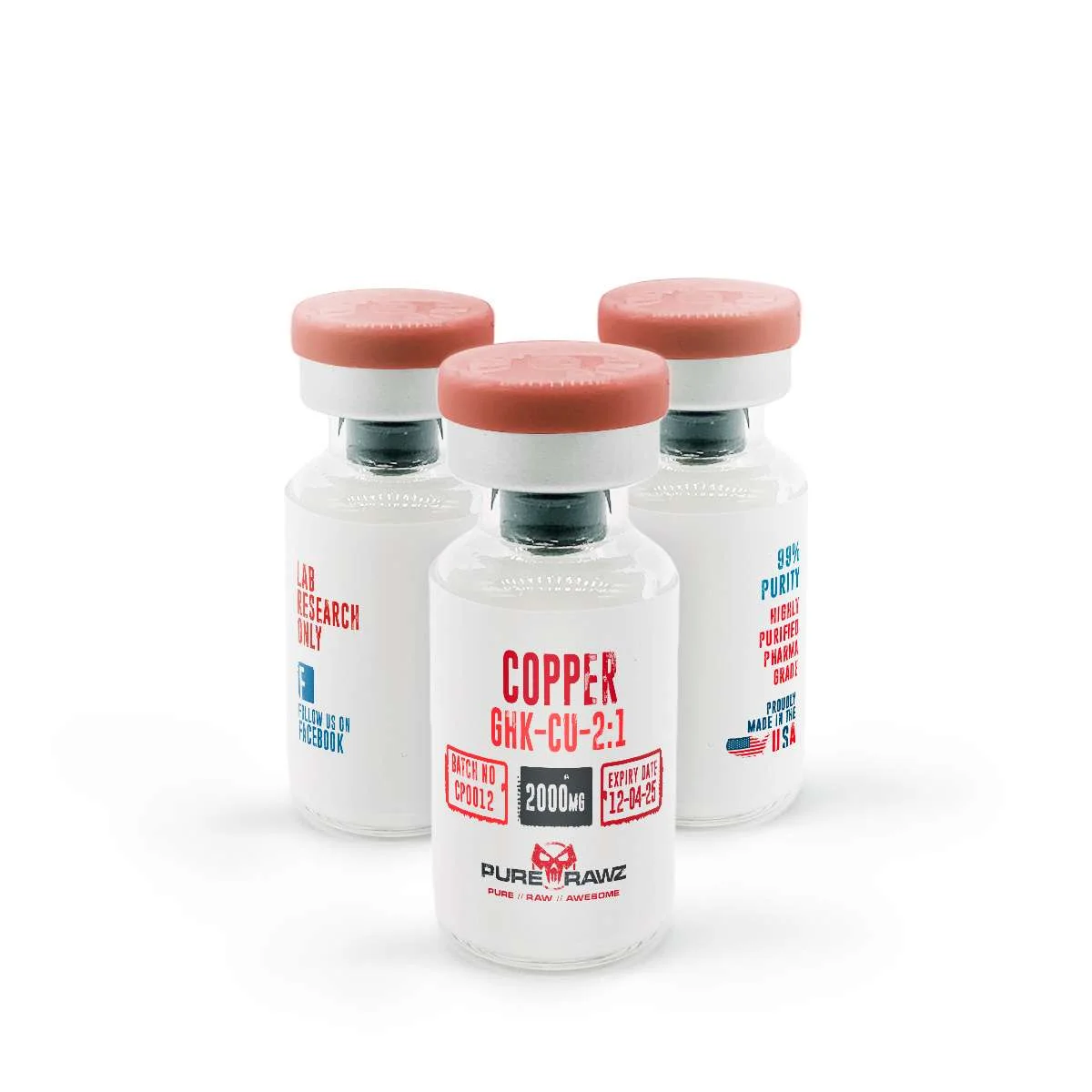
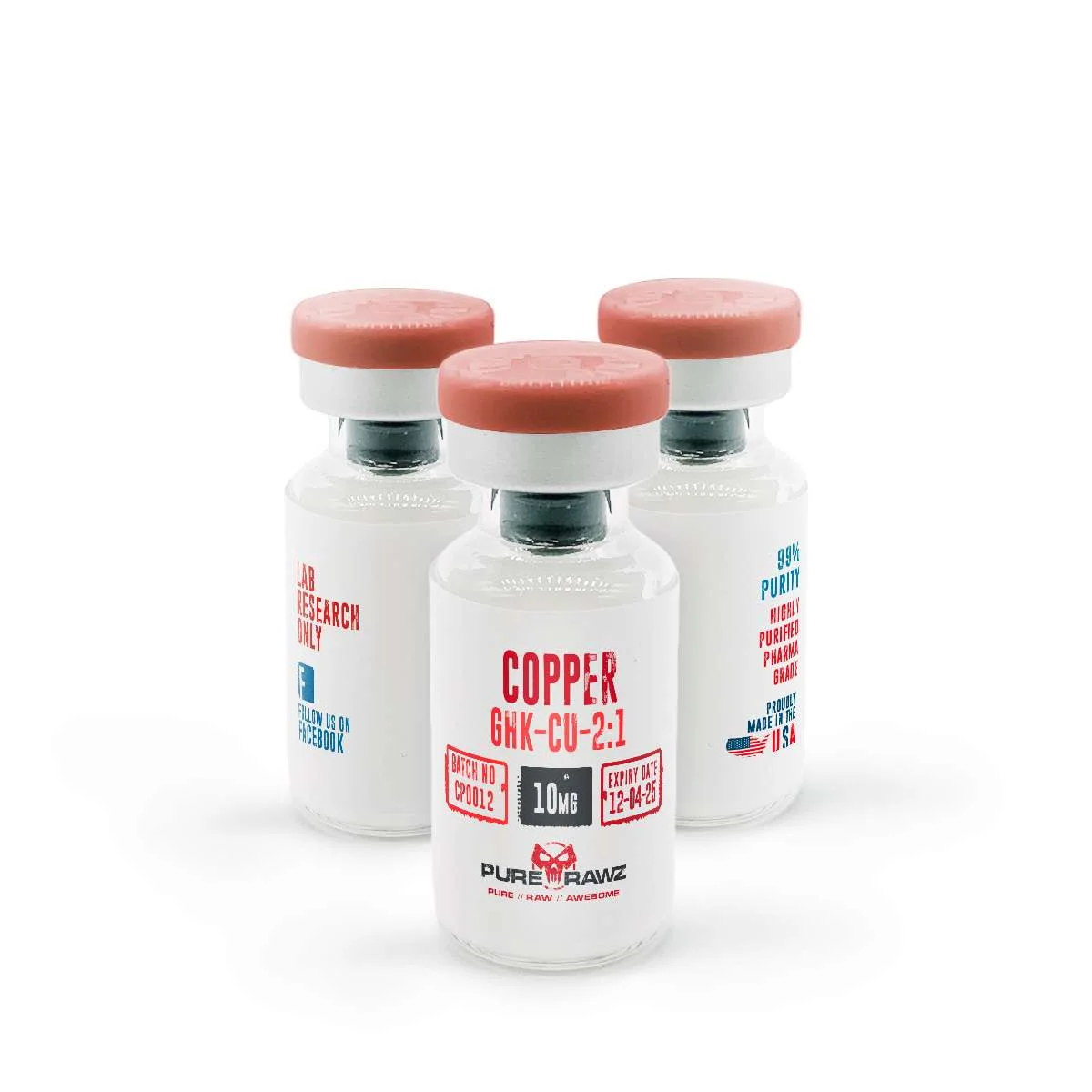
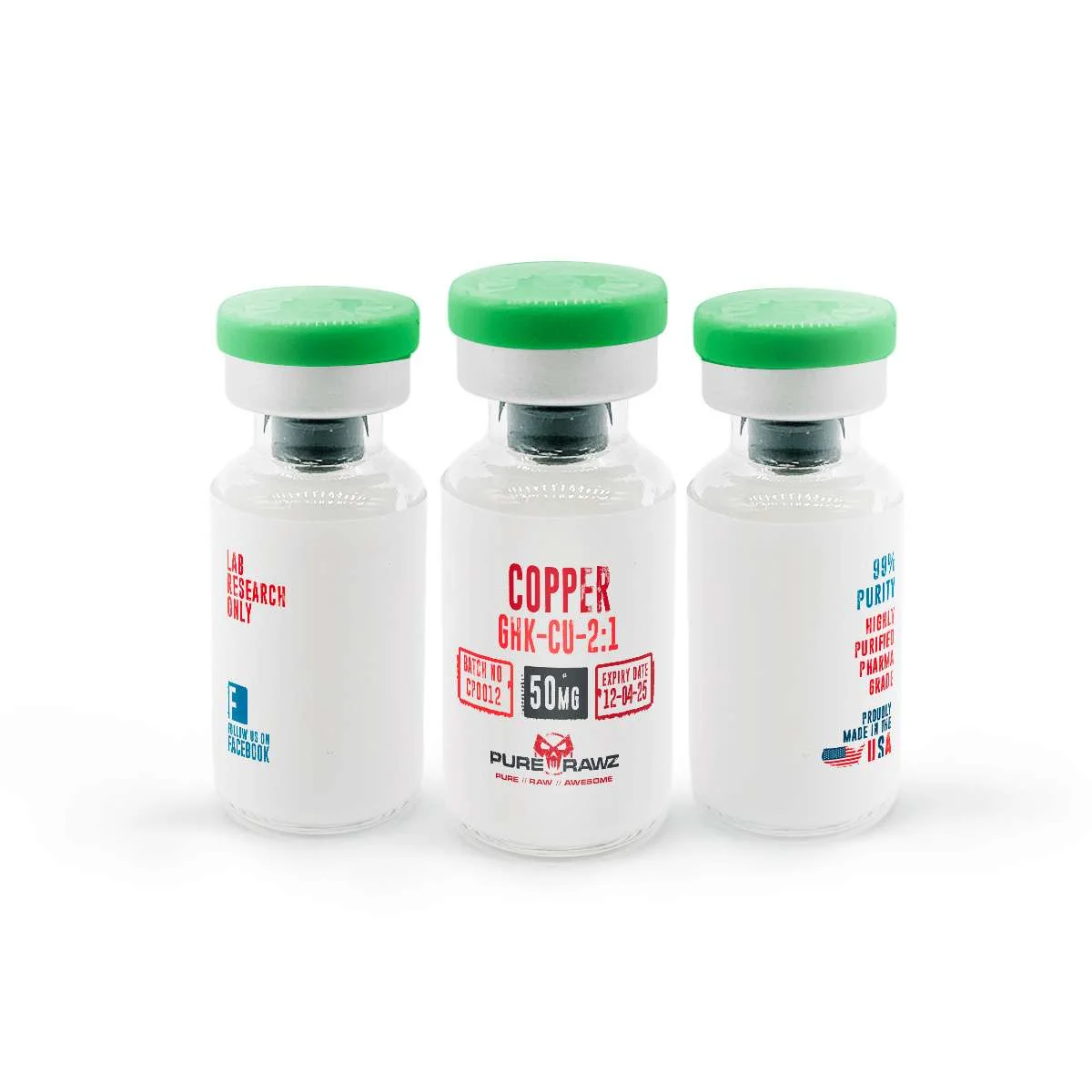

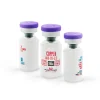
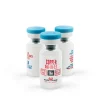
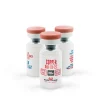
Copper Peptide
Price range: $38.77 through $1,151.91
Earn 39 - 1152 points upon purchasing this product.
✅ 99% Purity – Third-Party Tested
🚚 Free U.S. Shipping on Orders $100+
 Proudly Made in the USA
⚡ Fast & Reliable Shipping
🔒 Secure Checkout Guaranteed
All products are strictly intended for laboratory and research purposes only and are not approved for veterinary or human use.
Description
Copper Peptide Overview
Copper Peptide is a synthetic laboratory compound studied in controlled research environments. It is investigated for its potential interactions with cellular signaling pathways, protein regulation mechanisms, and molecular biochemical systems.
Copper Peptide generally refers to copper-binding peptide complexes. The most commonly studied form is the GHK-Cu structure, also known as glycyl-L-histidyl-L-lysine copper complex. Researchers investigate these compounds in biochemical and molecular biology studies due to their interaction with protein signaling networks and metal-binding molecular systems.
In experimental laboratory contexts, Copper Peptide compounds are examined to analyze cellular regulatory pathways and peptide-mediated molecular signaling. Researchers also study metal-peptide biochemical interactions within controlled experimental models.
Copper Peptide is categorized as a laboratory chemical preparation intended strictly for investigational and analytical research purposes.
Chemical and Molecular Properties
| Property | Description |
| Compound Name | Copper Peptide (GHK-Cu complex) |
| Category | Synthetic peptide-based research chemical |
| Chemical Type | Copper binding peptide complex |
| Molecular Components | Glycyl-L-histidyl-L-lysine peptide bound to copper ions |
| Chemical Class | Metal-peptide laboratory compound |
| Lab Safety Required | Handle as a laboratory chemical reagent and follow standard laboratory safety protocols |
| Storage Conditions | Store in a cool, dry environment away from direct light |
| Status | Not for human or animal consumption |
| Regulatory Status | Not FDA - Approved |
The molecular structure of Copper Peptide allows researchers to examine metal-peptide coordination systems in laboratory research. It also provides a basis for studying peptide-mediated signaling pathways within controlled experimental settings.
Working Mechanism of Copper Peptide
Below are the biochemical interaction pathways currently being investigated in controlled laboratory research environments.
Copper Peptide complexes are studied in biochemical research due to their metal-binding peptide structure. In laboratory experiments, researchers analyze how copper-binding peptides interact with:
metal ion transport systems
protein-binding molecular networks
enzyme-related signaling pathways
intracellular metal coordination mechanisms
These studies help scientists examine how peptide-bound metal ions participate in biochemical signaling processes.
Cellular Signaling Pathway Investigation
Copper-binding peptides are investigated as research chemicals in molecular biology studies due to their potential interaction with cellular regulatory systems.
Experimental research may analyze:
- intracellular signaling pathway modulation
- transcription-associated regulatory networks
- peptide-protein interaction systems
- cellular communication signaling cascades
These experimental approaches allow researchers to analyze how peptide-based compounds influence intracellular signaling events in laboratory models.
Enzyme and Protein Interaction Analysis
In biochemical research environments, Copper Peptide compounds are examined for their interaction with enzyme activity and protein regulatory pathways.
Laboratory investigations may explore:
- enzyme interaction mechanisms
- protein-binding molecular pathways
- peptide-mediated biochemical signaling
- intracellular regulatory network responses
Such studies enable scientists to observe molecular interactions between peptide complexes and cellular biochemical systems.
Molecular Regulatory Network Investigation
Copper Peptide complexes are also used in laboratory experiments to analyze intracellular molecular regulatory networks.
Researchers may investigate:
- peptide-associated signaling pathways
- protein regulatory interaction networks
- metal-mediated biochemical signaling systems
- intracellular molecular coordination pathways
these experimental studies help expand understanding of peptide-based biochemical interactions within molecular biology research.
Buy Copper Peptide from Purerawz for Research Use
Research institutions and laboratory professionals can obtain Copper Peptide through our online platform for investigational laboratory studies.
At Purerawz, this compound is supplied exclusively as a research chemical preparation intended for scientific evaluation and controlled experimental analysis. Each batch is independently tested and accompanied by Certificates of Analysis (COA) to support transparency and reliability in laboratory research.
Disclaimer
The information presented is intended strictly for educational and scientific reference. All procedures involving these laboratory chemicals should be conducted in suitable laboratory environments following institutional research policies and laboratory safety guidelines.
By placing an order through our website, you agree to Purerawz Terms and Conditions. If there is any issue with the product received, please contact support@purerawz.co
ATTENTION: The products mentioned are laboratory chemicals intended solely for research purposes and must not be used for human or animal consumption.
Reference Links
Copper peptide (GHK-Cu) molecular structure https://pubchem.ncbi.nlm.nih.gov/compound/16219761
Copper peptide biochemical properties and molecular research https://pubmed.ncbi.nlm.nih.gov/16023969
Peptide - metal complex interactions in biological systems https://pubmed.ncbi.nlm.nih.gov/19538172
Copper-binding peptides and molecular signaling pathways https://pubmed.ncbi.nlm.nih.gov/21242196

About Team PureRawz
Team PureRawz is dedicated to providing accurate, science-based information on research chemicals, including Peptides, Nootropics, and SARMs. Our team of expert writers, researchers, and editors is committed to delivering reliable, up-to-date content you can trust.
Our mission is to build an educated and informed community spanning researchers, laboratories, and general readers empowering them to make confident, well-informed decisions when selecting the right research chemical.
Related products
-

Sermorelin + Ipamorelin Blend
Price range: $112.78 through $223.22 Select options This product has multiple variants. The options may be chosen on the product page - Sale!

FOXO4-DRI (Proxofim)
Original price was: $327.39.$271.69Current price is: $271.69. Select options This product has multiple variants. The options may be chosen on the product page -

Sermorelin + GHRP-2 Blend
$97.81 Select options This product has multiple variants. The options may be chosen on the product page -

MOTS-c
Price range: $76.96 through $412.40 Select options This product has multiple variants. The options may be chosen on the product page