

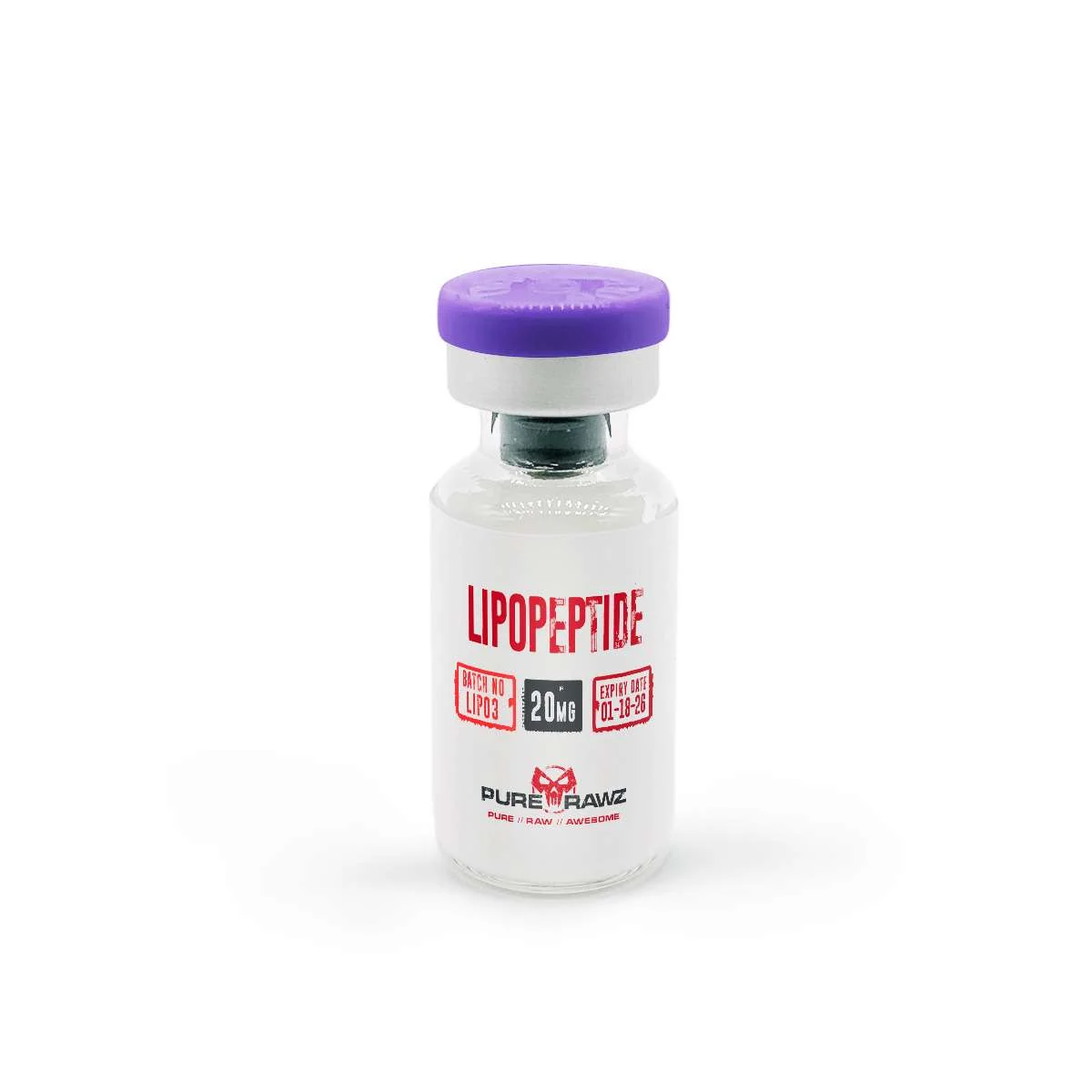
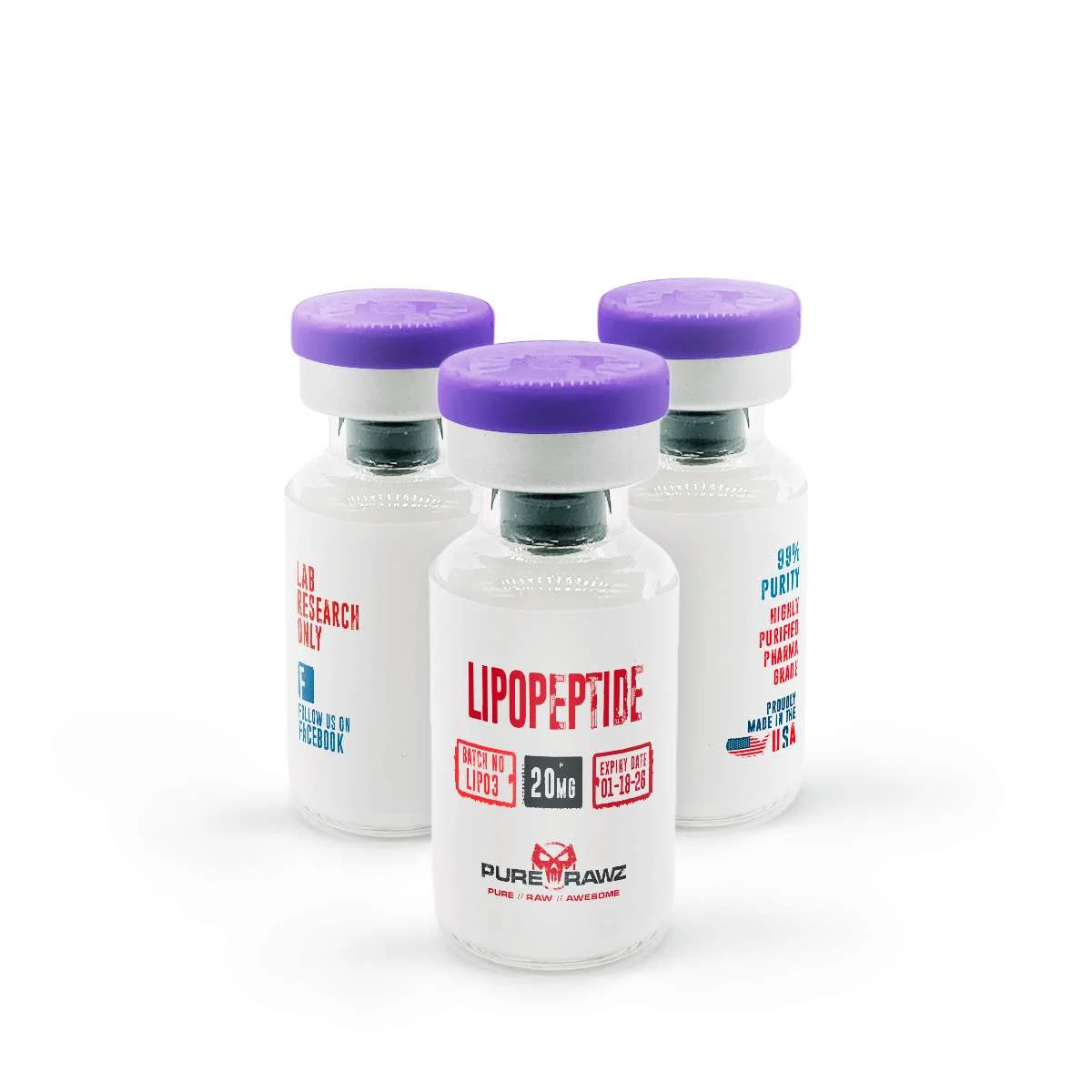
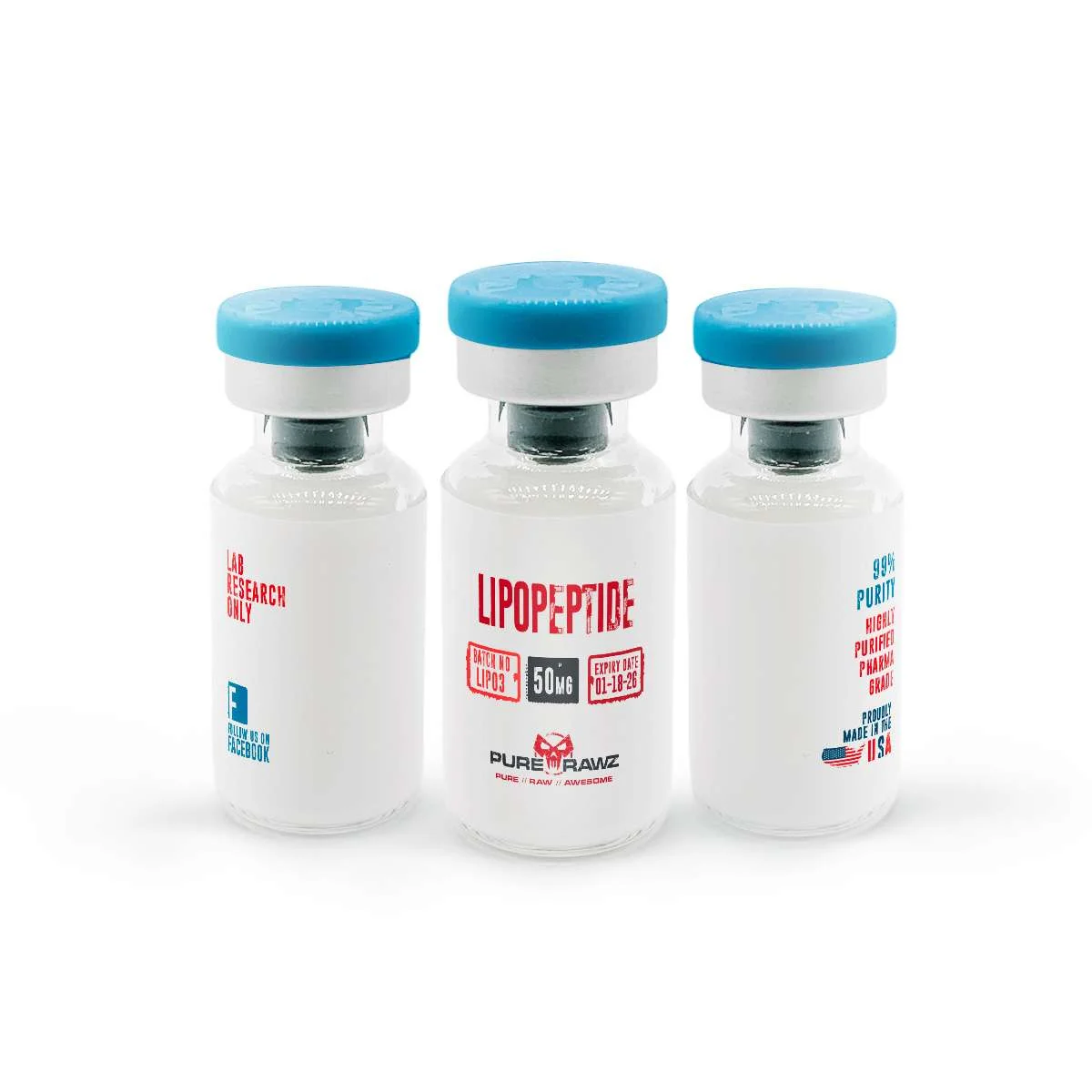

Lipopeptide
Price range: $25.12 through $55.19
Earn 25 - 55 points upon purchasing this product.
✅ 99% Purity – Third-Party Tested
🚚 Free U.S. Shipping on Orders $100+
 Proudly Made in the USA
⚡ Fast & Reliable Shipping
🔒 Secure Checkout Guaranteed
All products are strictly intended for laboratory and research purposes only and are not approved for veterinary or human use.
Description
Overview of Lipopeptide
Lipopeptides are molecules made of a lipid linked to short chains of amino acids. They naturally occur in some bacteria. These molecules interact with cell membranes at the molecular level. Their activity is studied in laboratory research only.
Chemical and Molecular Properties
| Lipopeptides | |
| PubChem CID | Not applicable (generic mixture) |
| Molecular Formula | Not applicable |
| Labeling | Research Use Only (RUO), not for human or animal consumption |
| Purity | ≥98% |
| Classification | Lipopeptide, synthetic peptide conjugated to lipid |
| Storage Temperature | Store at −20 °C, protect from light (standard for lipopeptides) |
| Solubility | Soluble in DMSO, partial solubility in aqueous buffers |
| Safety | For laboratory research use only; follow standard laboratory safety protocols; avoid direct human or animal exposure |
Mechanism of Lipopeptides
Lipopeptides contain both lipid and peptide components, giving them amphiphilic properties that allow interaction with lipid membranes. The lipid portion can insert into membrane bilayers, while the peptide portion can interact with nearby proteins or signaling molecules.
In experimental systems, these interactions can alter membrane structure, influence lipid organization, or increase membrane permeability. Some lipopeptides have been observed to create transient pores or disrupt ion balance across membranes in model systems.
Certain lipopeptides are also investigated for their ability to activate receptor-mediated signaling pathways involved in microbial recognition and cellular responses.
Researchers commonly study these mechanisms using cell culture models, liposome systems, and membrane-mimicking experimental platforms.
Research Applications
- Investigating membrane interactions
- Studying molecular signaling pathways
- Exploring microbial and cellular activity in laboratory settings
Why Choose PureRawz for Lipopeptide?
Buy lipopeptides for laboratory research use from our online shop. At Purerawz, we provide high-quality reference materials. Each research compound comes with a Certificate of Analysis for verification of purity and concentration.
Note:
Lipopeptides is an investigational compound currently undergoing clinical evaluation and has not been established as safe or effective for any therapeutic use
Disclaimer
This information is for educational purposes only and not medical advice. Products are for research use only. Research must follow IRB or IACUC guidelines. Verify information independently before purchasing. By ordering, you agree to our Terms and Conditions. If you are not 100% satisfied with the product you received, please contact us at support@purerawz.co
ATTENTION: All our products are for LABORATORY AND RESEARCH PURPOSES ONLY, not for veterinary or human use
Reference Links
Strieker, M., & Marahiel, M. A. (2009). The structural diversity of acidic lipopeptide antibiotics. ChemBioChem, 10(4), 607–616. https://doi.org/10.1002/cbic.200800546
Akpa, E., Jacques, P., Wathelet, B., Paquot, M., Fuchs, R., Budzikiewicz, H., & Thonart, P. (2001). Influence of Culture Conditions on Lipopeptide Production by Bacillus subtilis.Applied Biochemistry and Biotechnology,91–93(1–9), 551–562. https://doi.org/10.1385/abab:91-93:1-9:551

About Team PureRawz
Team PureRawz is dedicated to providing accurate, science-based information on research chemicals, including Peptides, Nootropics, and SARMs. Our team of expert writers, researchers, and editors is committed to delivering reliable, up-to-date content you can trust.
Our mission is to build an educated and informed community spanning researchers, laboratories, and general readers empowering them to make confident, well-informed decisions when selecting the right research chemical.
Related products
-

Thymalin
Price range: $76.92 through $321.92 Select options This product has multiple variants. The options may be chosen on the product page -

Adipotide
Price range: $50.62 through $119.07 Select options This product has multiple variants. The options may be chosen on the product page -

Mod GRF 1-29 (CJC-1295 No Dac)
Price range: $39.60 through $72.30 Select options This product has multiple variants. The options may be chosen on the product page -

PNC-27
$163.40 Select options This product has multiple variants. The options may be chosen on the product page