

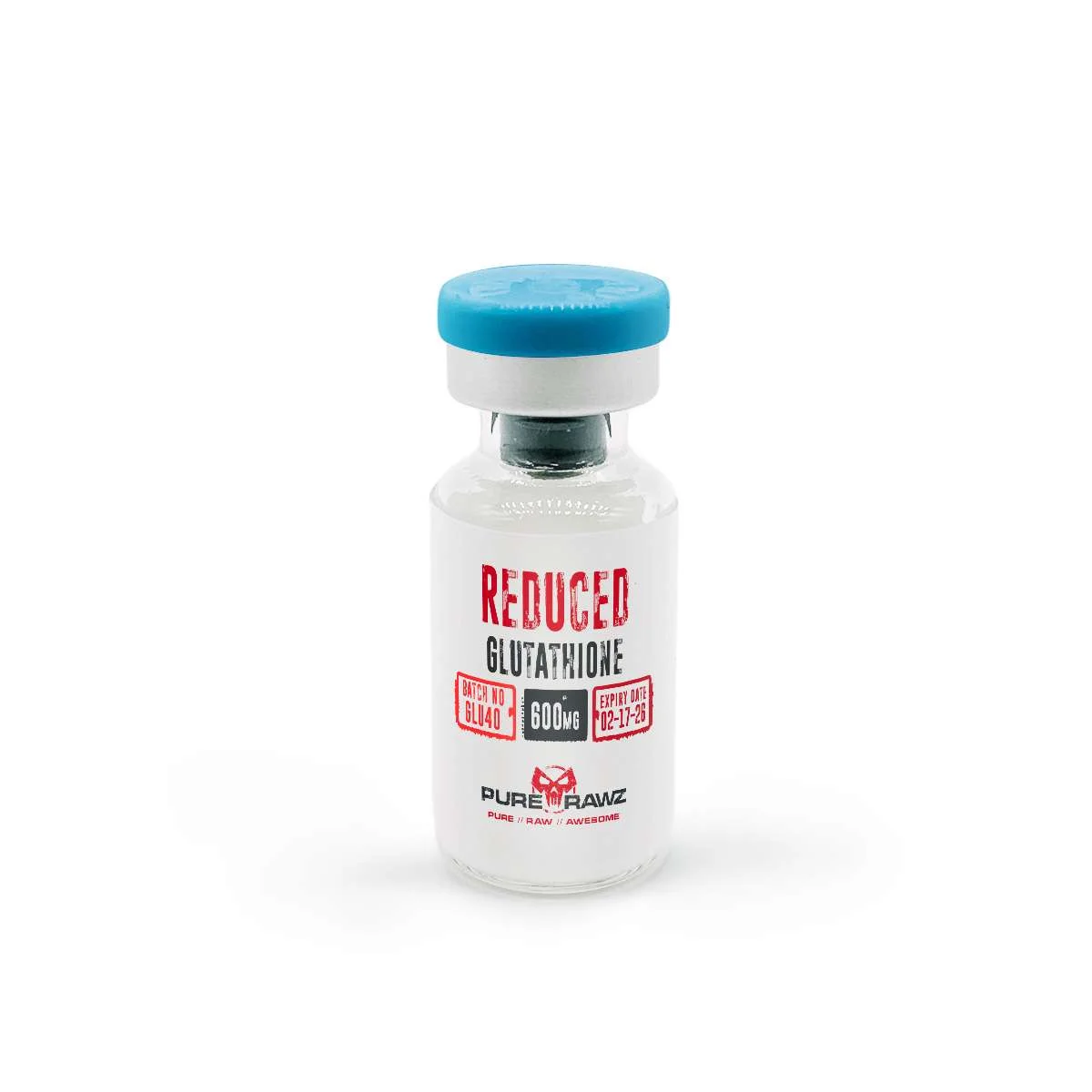
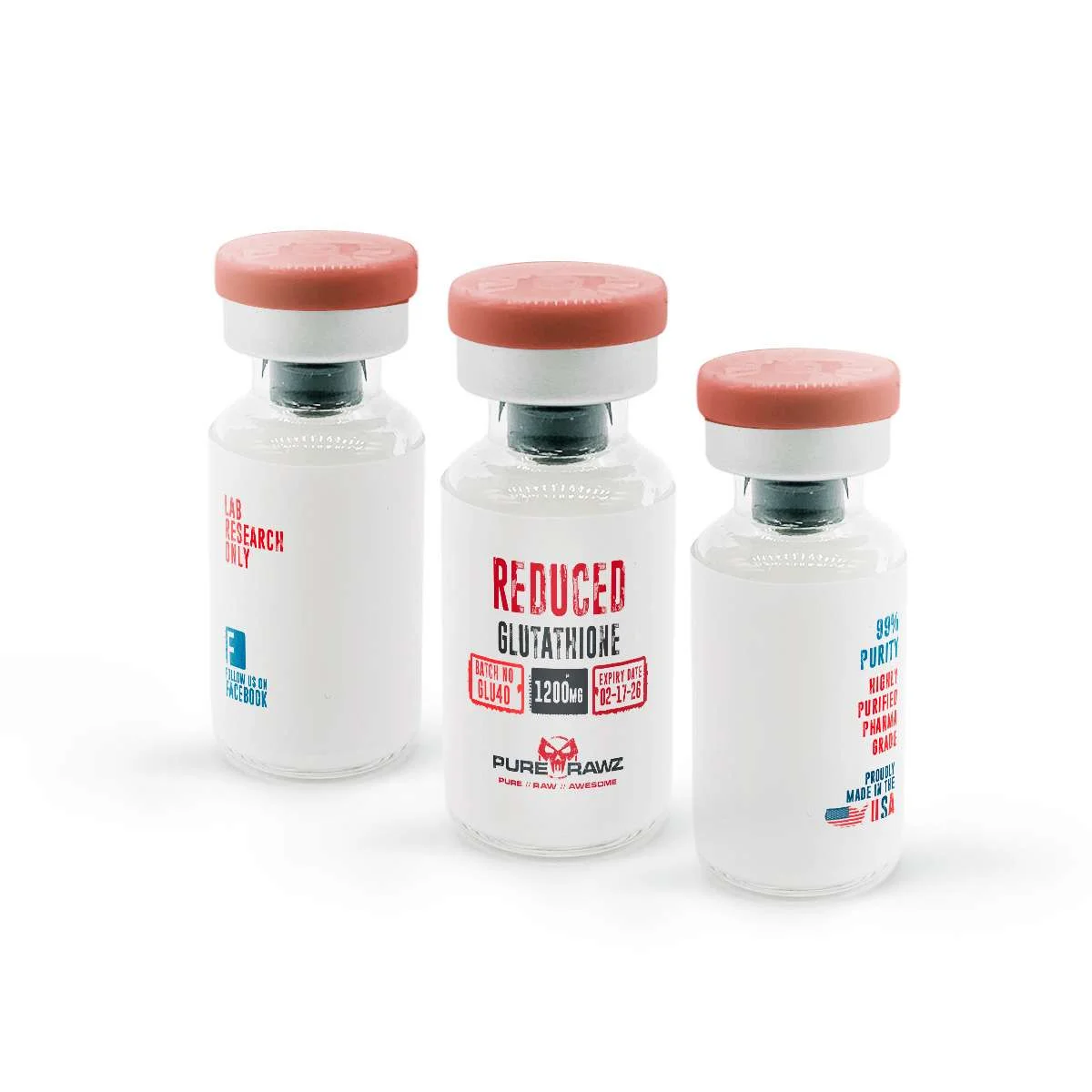
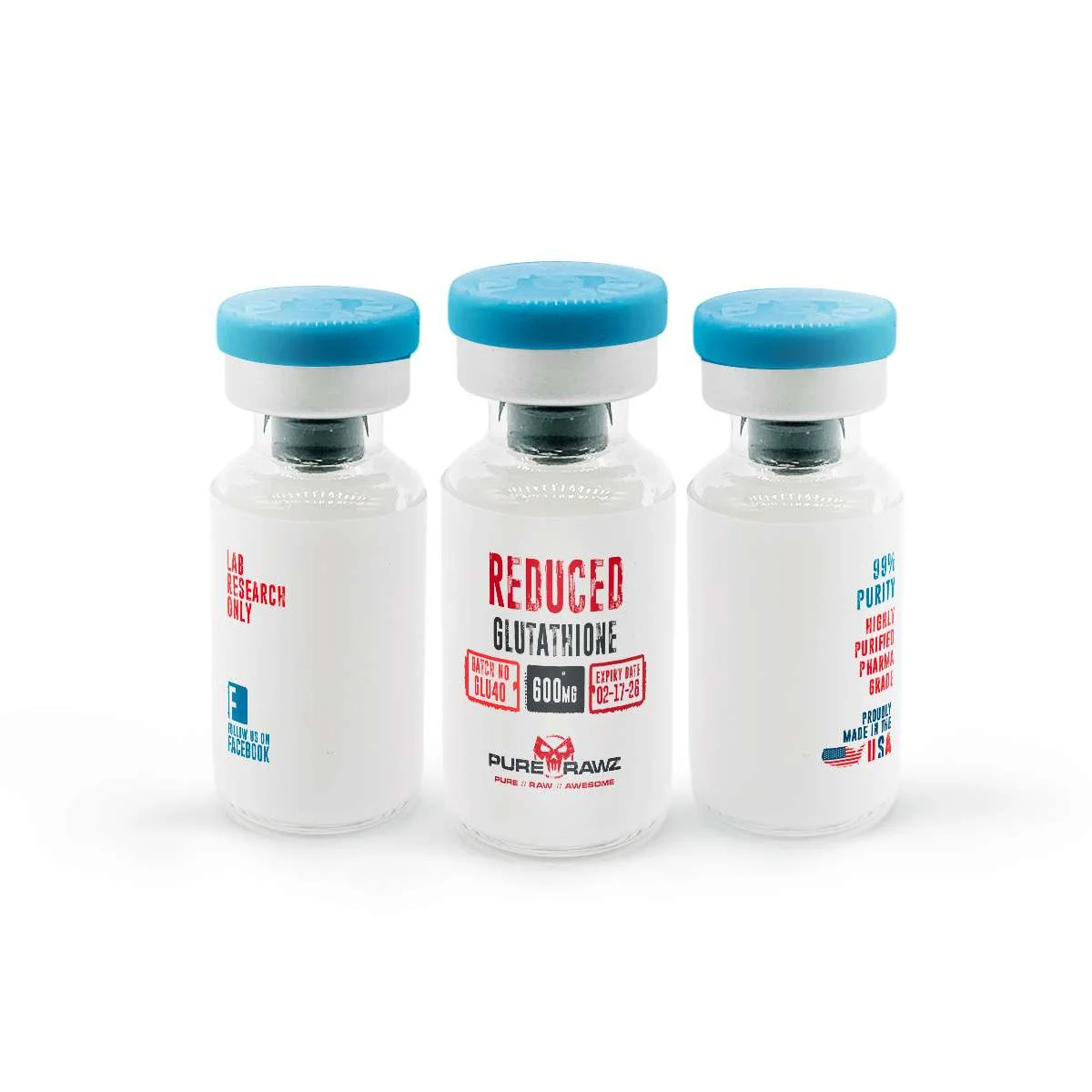
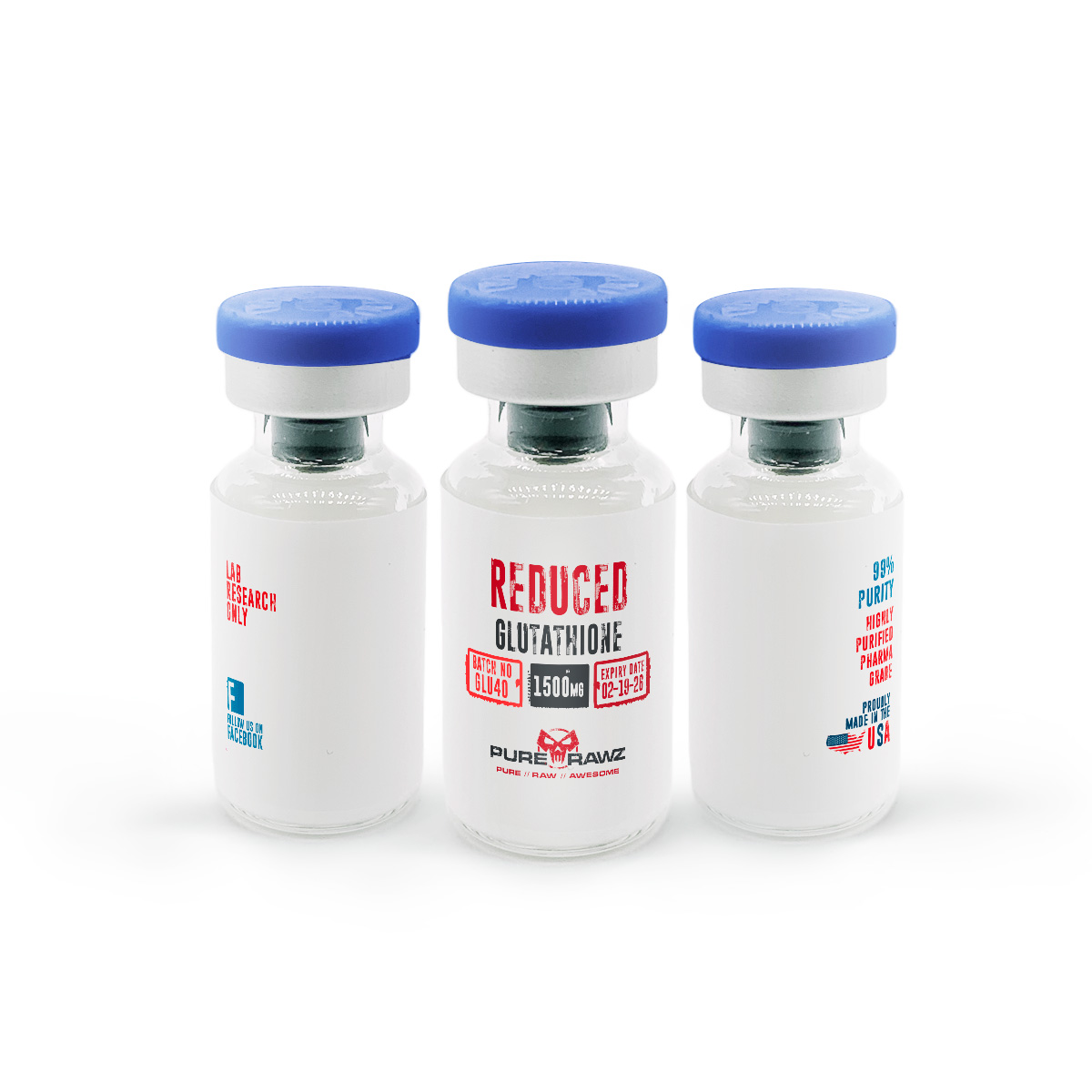

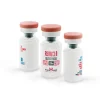
Reduced Glutathione
Price range: $76.30 through $557.25
Earn 76 - 557 points upon purchasing this product.
Note: We recommend using sterile Bacteriostatic Water for reconstitution.
✅ 99% Purity – Third-Party Tested
🚚 Free U.S. Shipping on Orders $100+
 Proudly Made in the USA
⚡ Fast & Reliable Shipping
🔒 Secure Checkout Guaranteed
All products are strictly intended for laboratory and research purposes only and are not approved for veterinary or human use.
Description
What is Reduced Glutathione?
Research indicates that Reduced glutathione (GSH) is a vital tripeptide antioxidant. It is studied for its role in cellular responses to oxidative imbalance. It has been observed in biochemical systems to interact with reactive species and conjugate certain compounds.
Researchers study reduced glutathione (GSH) in laboratory models to understand its role in redox balance in controlled research settings.
Note: Reduced Glutathione is not approved by the U.S. Food and Drug Administration as a drug for therapeutic claims. Its use varies by jurisdiction, including research and dietary supplement contexts. It is not intended for human or animal use.
Glutathione exists in two forms:
- Reduced (GSH)
- Oxidized (GSSG)
The reduced form (GSH) is the biologically active state commonly studied in research systems. In contrast, the oxidized form (GSSG) is produced when GSH participates in redox reactions and is converted after interacting with reactive molecules.
Chemical Properties
| Pubchem CID | 124886 |
| Molecular Formula | C10H17N3O6S |
| CAS | 70-18-8 |
| IUPAC Name | (2S)-2-amino-5-[[(2R)-1-(carboxymethylamino)-1-oxo-3-sulfanylpropan-2-yl]amino]-5-oxopentanoic acid |
| Solubility | H2O: 20 mg/ml |
| Storage | -20°C |
| Molecular Weight | 307.33 g/mol |
| Primary Health Hazard |  |
| Synonyms | glutathione 70-18-8 L-Glutathione reduced L-Glutathione Glutathion… |
| Purity | ≥95% |
| 2D Structure Depiction |  |
| 3D Structure Depiction |  |
| Crystal Structure Depiction | |
How Does Reduced Glutathione Work?
Reduced glutathione functions as a key redox-active molecule that helps maintain cellular chemical balance in research preclinical models.
Experimental studies have shown that reduced glutathione donates electrons to reactive oxygen species (ROS). It can also donate electrons to other unstable compounds, contributing to their neutralization and preventing damage.
In the process, GSH is oxidized to glutathione disulfide (GSSG), as observed in laboratory models. The cells then may regenerate GSH from GSSG using specific enzymes, allowing the system to continuously cycle between reduced and oxidized states.
Researchers believe that this recycling makes glutathione a key component of the intracellular antioxidant network.
Potential Research Applications of Reduced Glutathione
Reduced Glutathione is studied in controlled laboratory models for the following potential research applications.
- Studying oxidative stress mechanisms and how reactive species are neutralized
- Evaluating redox balance using the GSH to GSSG ratio as an indicator of system conditions
- Investigating detoxification pathways and interactions with harmful compounds
- Exploring responses to environmental or chemical stressors in experimental models
- Serving as a biochemical marker to monitor changes in system stability and oxidative conditions
Where to buy Reduced Glutathione online for research purposes?
If you are looking to buy reduced glutathione for research purposes, Purerawz is a reliable choice.
We provide reference materials with each product we sell. Each of our products comes with an independent, third-party-issued Certificate of Analysis for identification, purity, and concentration.
Disclaimer
This information is for educational purposes only and not medical advice. Products are for research use only. Research must follow IRB or IACUC guidelines. Verify information independently before purchasing. By placing an order, you agree to our Terms and Conditions. If you are not 100% satisfied with the product you received, please contact us at support@purerawz.co
ATTENTION: All our products are for LABORATORY AND RESEARCH PURPOSES ONLY, not for veterinary or human usage.
Reference Links
- Weschawalit, S., Thongthip, S., Phutrakool, P., & Asawanonda, P. (2017). Glutathione and its antiaging and antimelanogenic effects. Clinical, Cosmetic and Investigational Dermatology, Volume 10, 147–153. https://doi.org/10.2147/ccid.s128339
- Chatterjee, A. (2013). Reduced glutathione: a radioprotector or a modulator of DNA-repair activity? Nutrients, 5(2), 525–542. https://doi.org/10.3390/nu5020525
- Averill-Bates, D. A. (2023). The antioxidant glutathione. Vitamins and Hormones, 109–141. https://doi.org/10.1016/bs.vh.2022.09.002

About Team PureRawz
Team PureRawz is dedicated to providing accurate, science-based information on research chemicals, including Peptides, Nootropics, and SARMs. Our team of expert writers, researchers, and editors is committed to delivering reliable, up-to-date content you can trust.
Our mission is to build an educated and informed community spanning researchers, laboratories, and general readers empowering them to make confident, well-informed decisions when selecting the right research chemical.
Related products
-

MOTS-c
Price range: $50.59 through $404.72 Select options This product has multiple variants. The options may be chosen on the product page - Sale!

FOXO4-DRI (Proxofim)
Original price was: $327.39.$271.69Current price is: $271.69. Select options This product has multiple variants. The options may be chosen on the product page -

BPC-157 ARG
Price range: $85.34 through $462.55 Select options This product has multiple variants. The options may be chosen on the product page -

Sermorelin + GHRP-2 Blend
$97.81 Select options This product has multiple variants. The options may be chosen on the product page